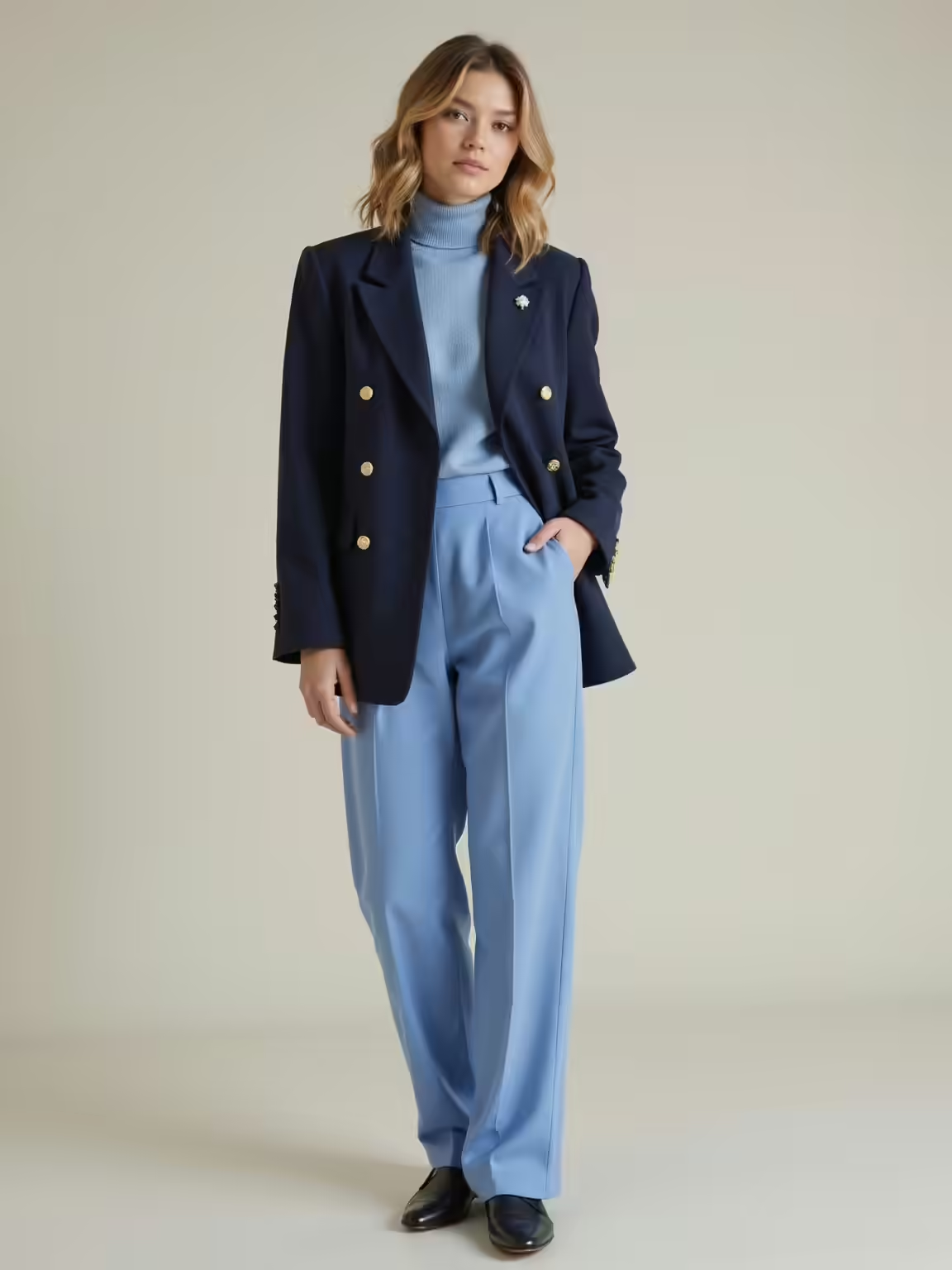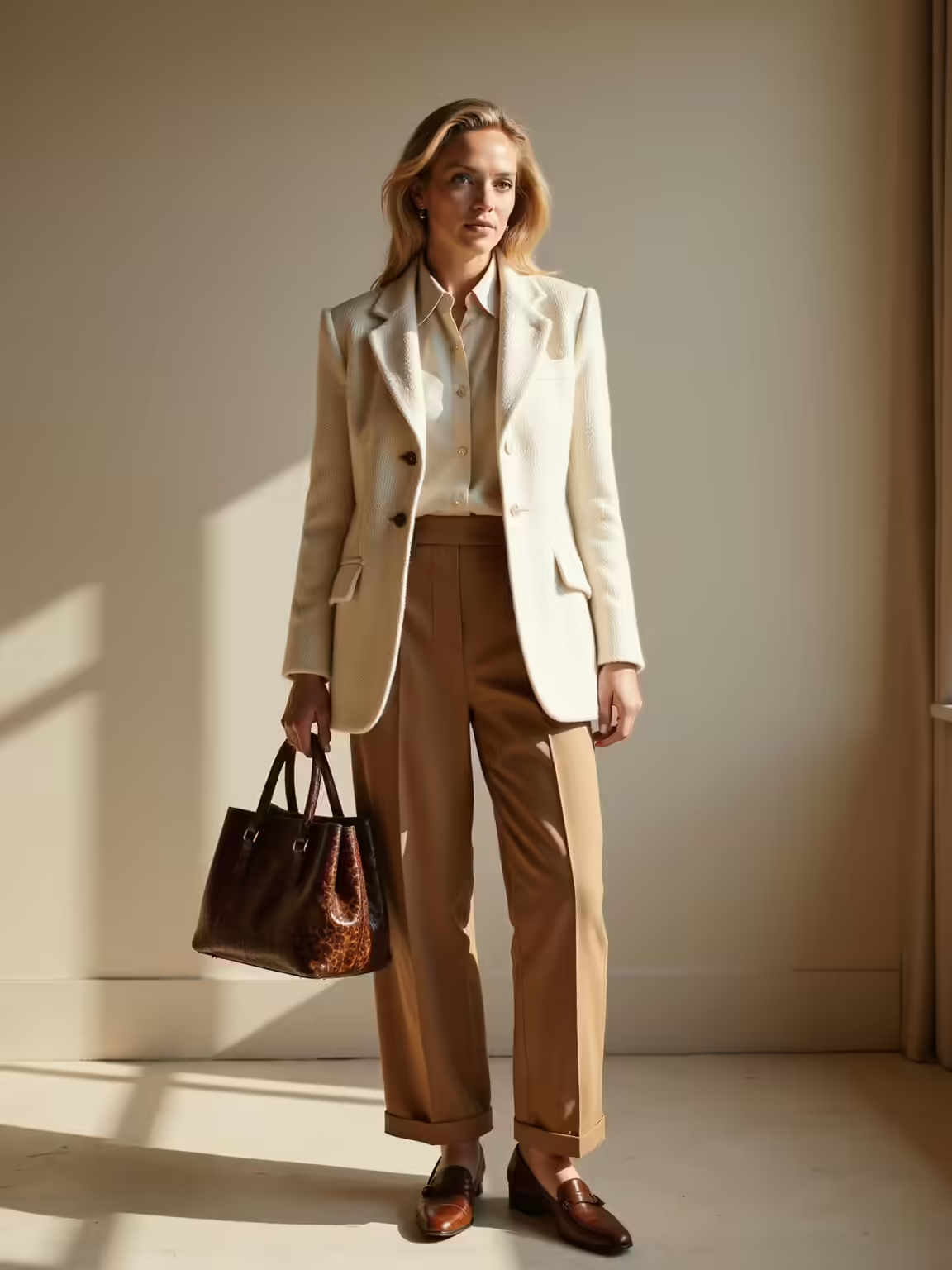

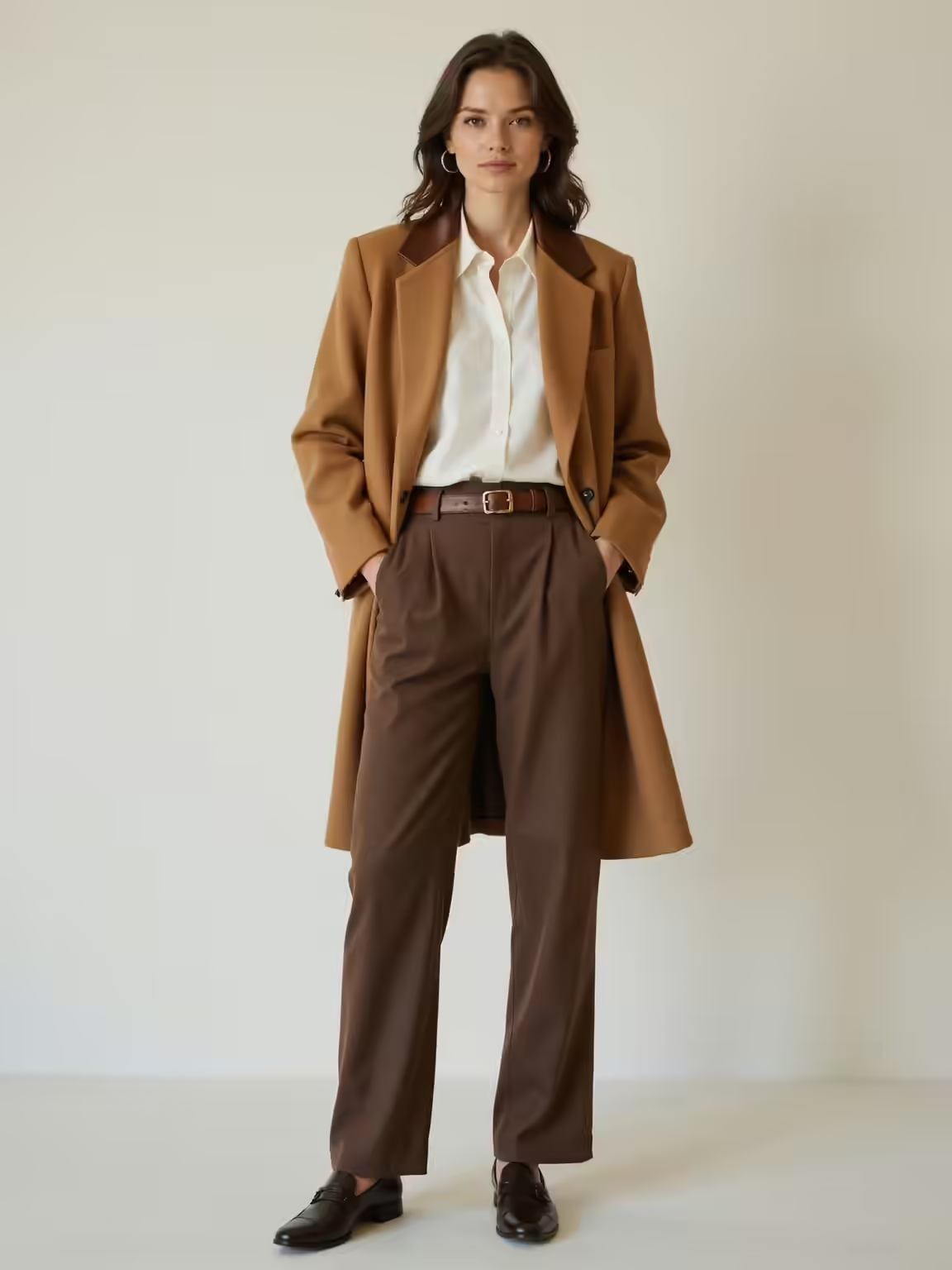
I’ll show you how to look quietly wealthy without breaking the bank: start with thrifted classics—a crisp white shirt, wool trousers, camel coat—and get them tailored for clean lines.
I mix neutrals, texture, and one muted accent, swap flashy logos for matte leather shoes and a slim belt, and fix hems and buttons myself. Small details like pressed collars and minimal jewelry make cheap pieces feel deliberate. Stick with this approach and you’ll learn easy ways to elevate every outfit.
Old‑Money Rules You Can Use on a Budget
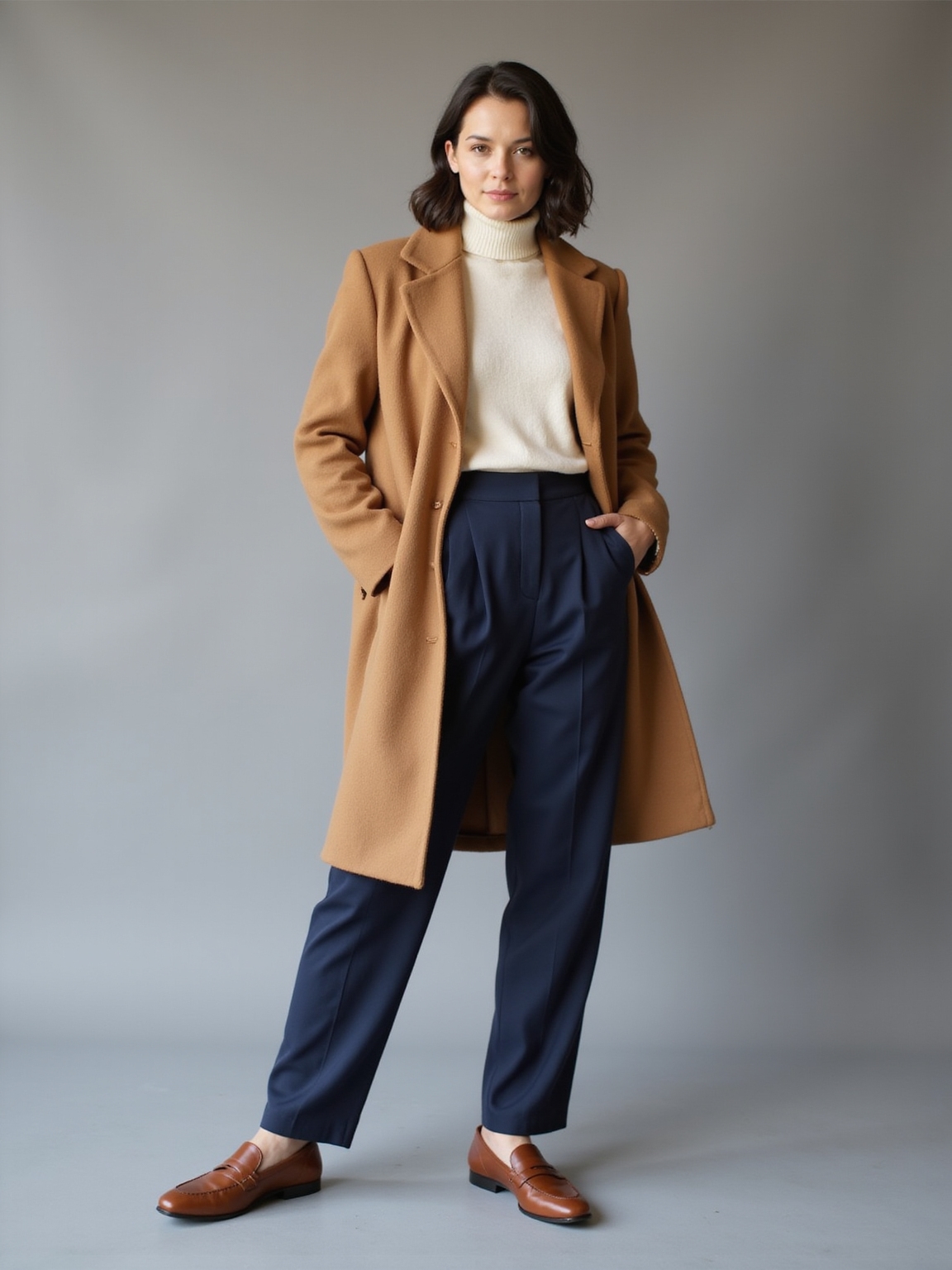
When I say “old‑money rules,” I don’t mean you need a trust fund—just a set of styling habits that make anything look thoughtfully curated.
I focus on fit, neutral palettes, quality over quantity, and classic silhouettes. I mend, tailor, and pick versatile pieces.
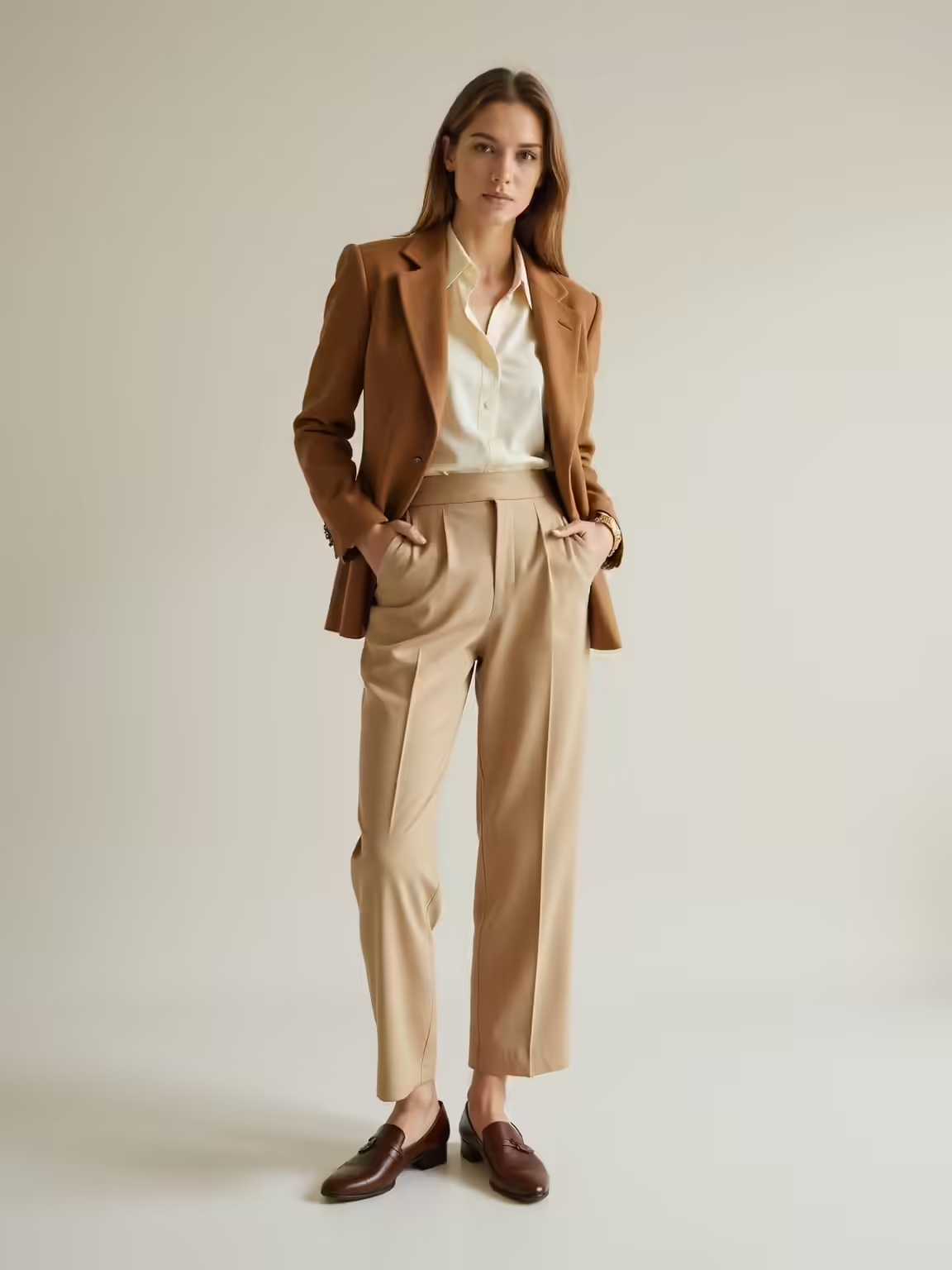
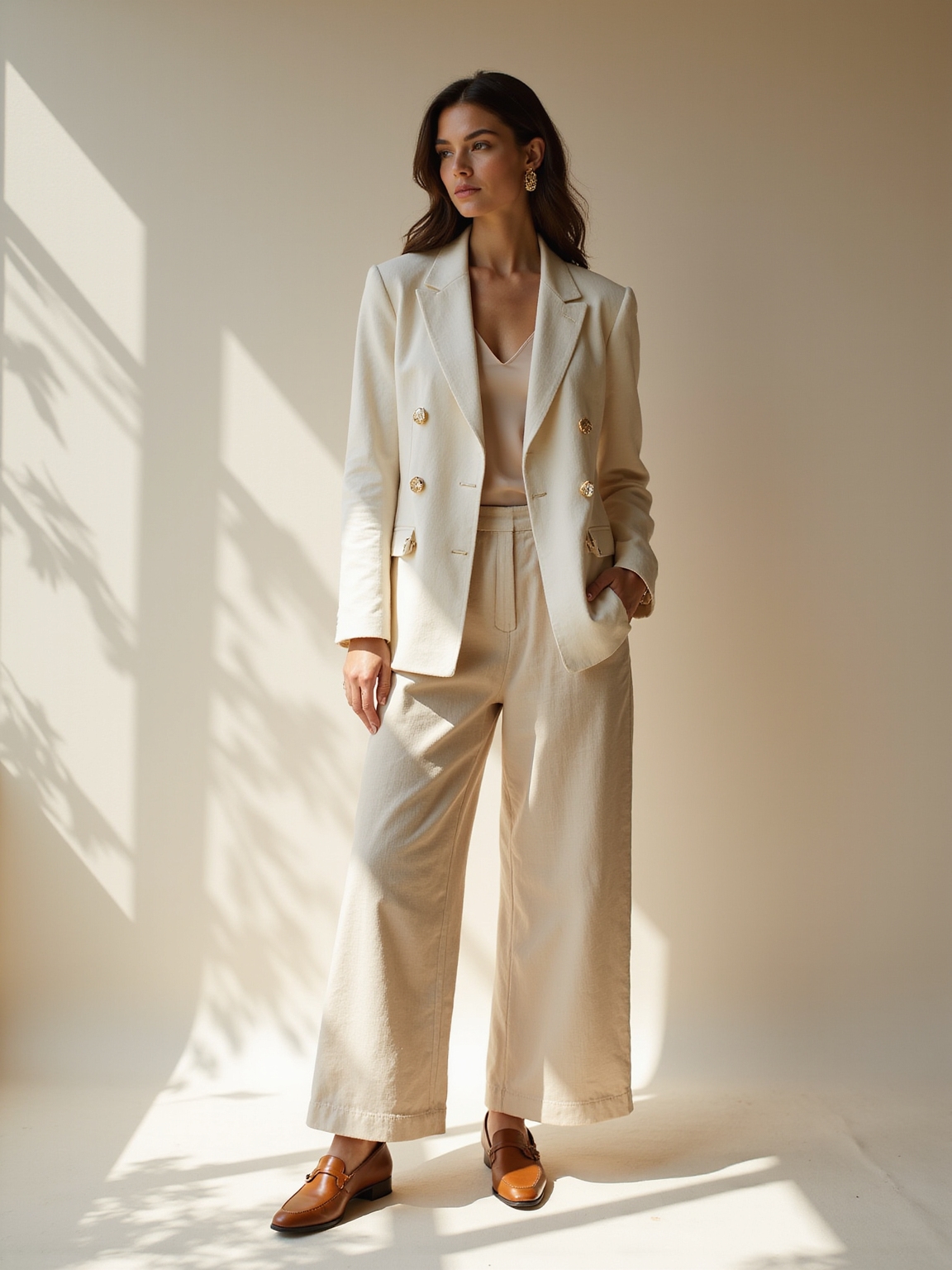
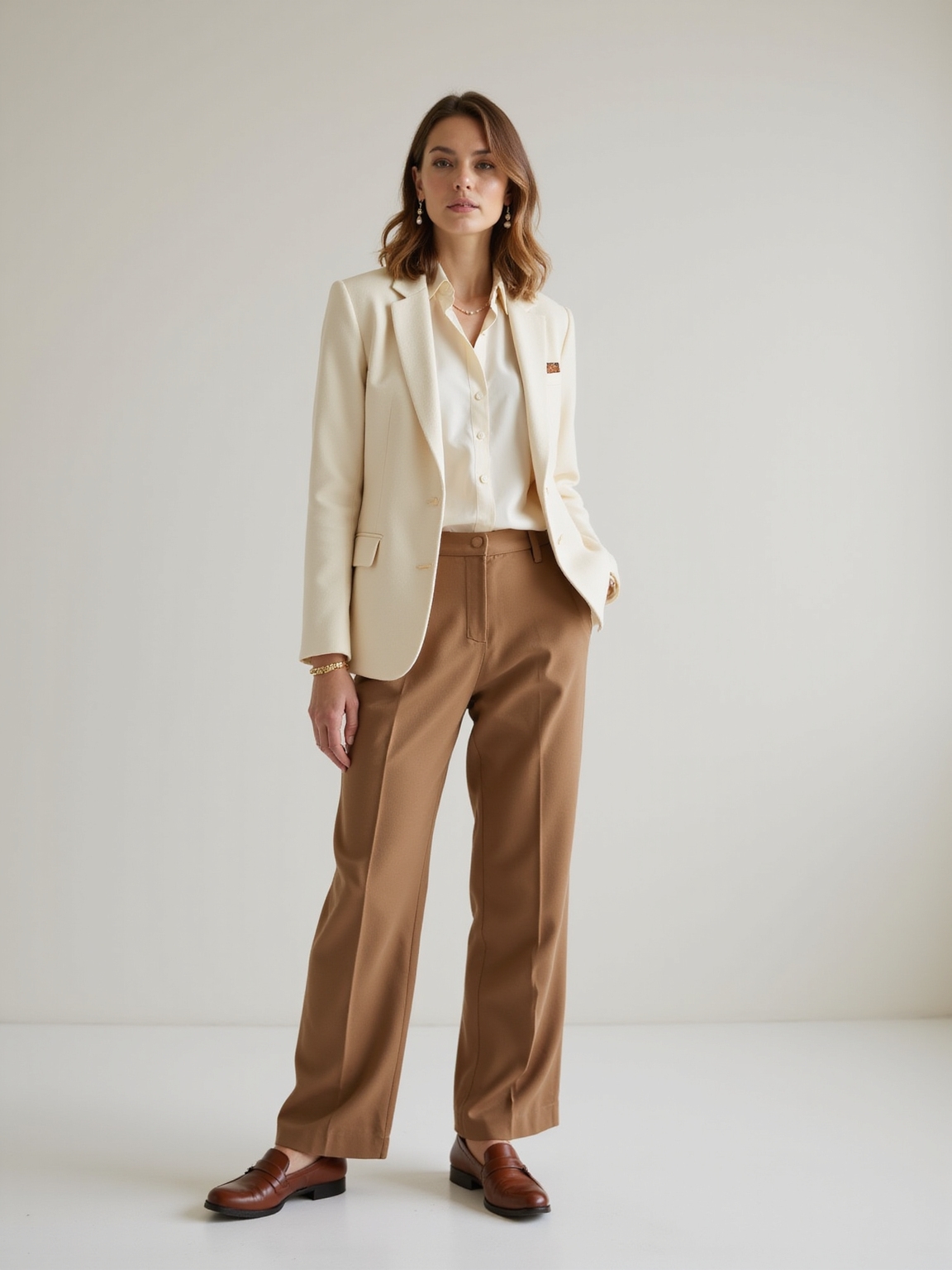
I mix thrifted finds with one reliable investment item, and I keep accessories understated to let the outfit whisper rather than shout. Blazers, especially those cut in timeless shapes, are central to achieving that timeless polish.
7 Easy Old‑Money Outfits You Can Copy Now
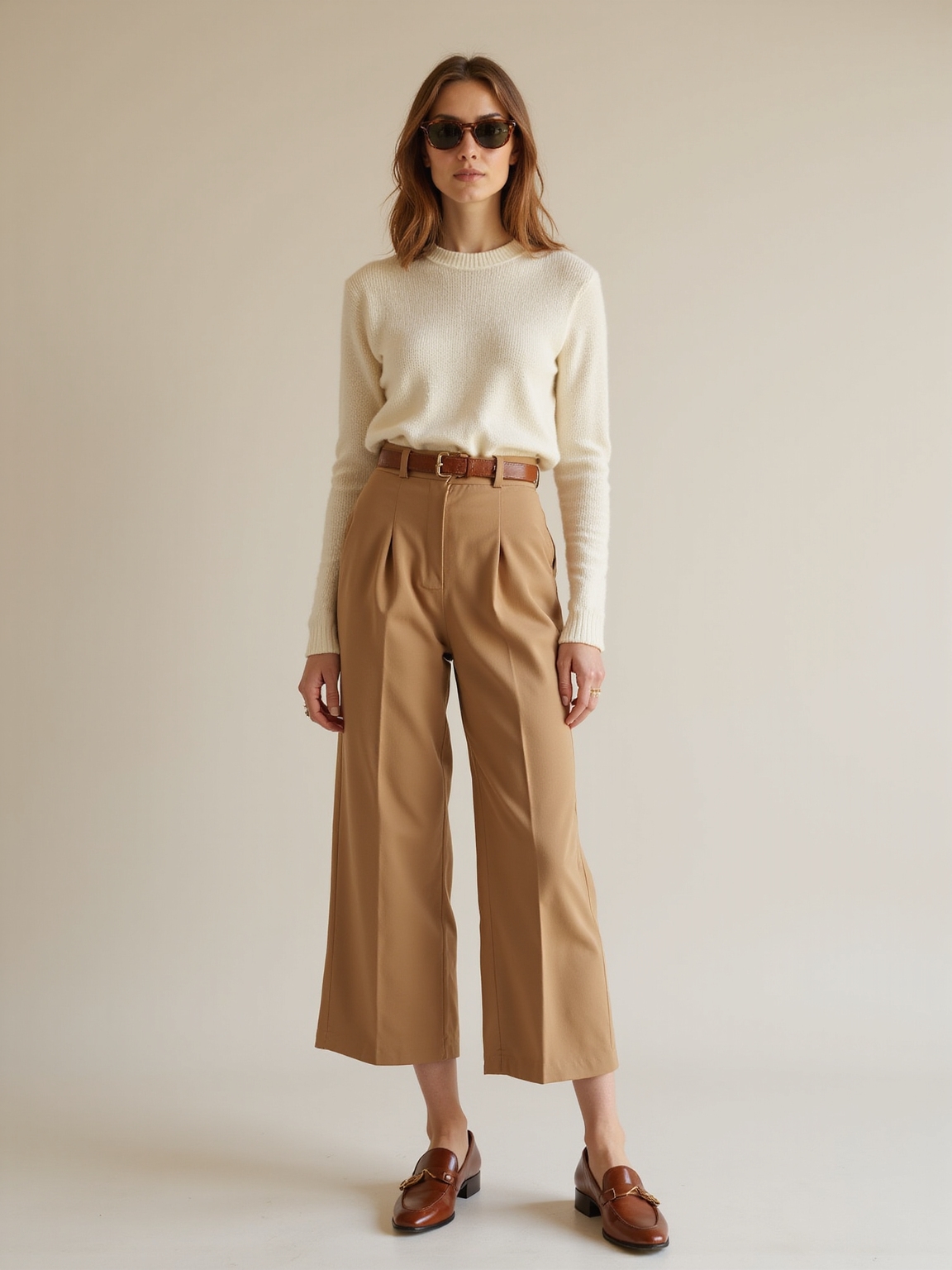
I’ll show you how a few timeless neutral staples—think camel coat, crisp white shirt, and tailored trousers—can form the backbone of multiple old‑money looks without breaking the bank.
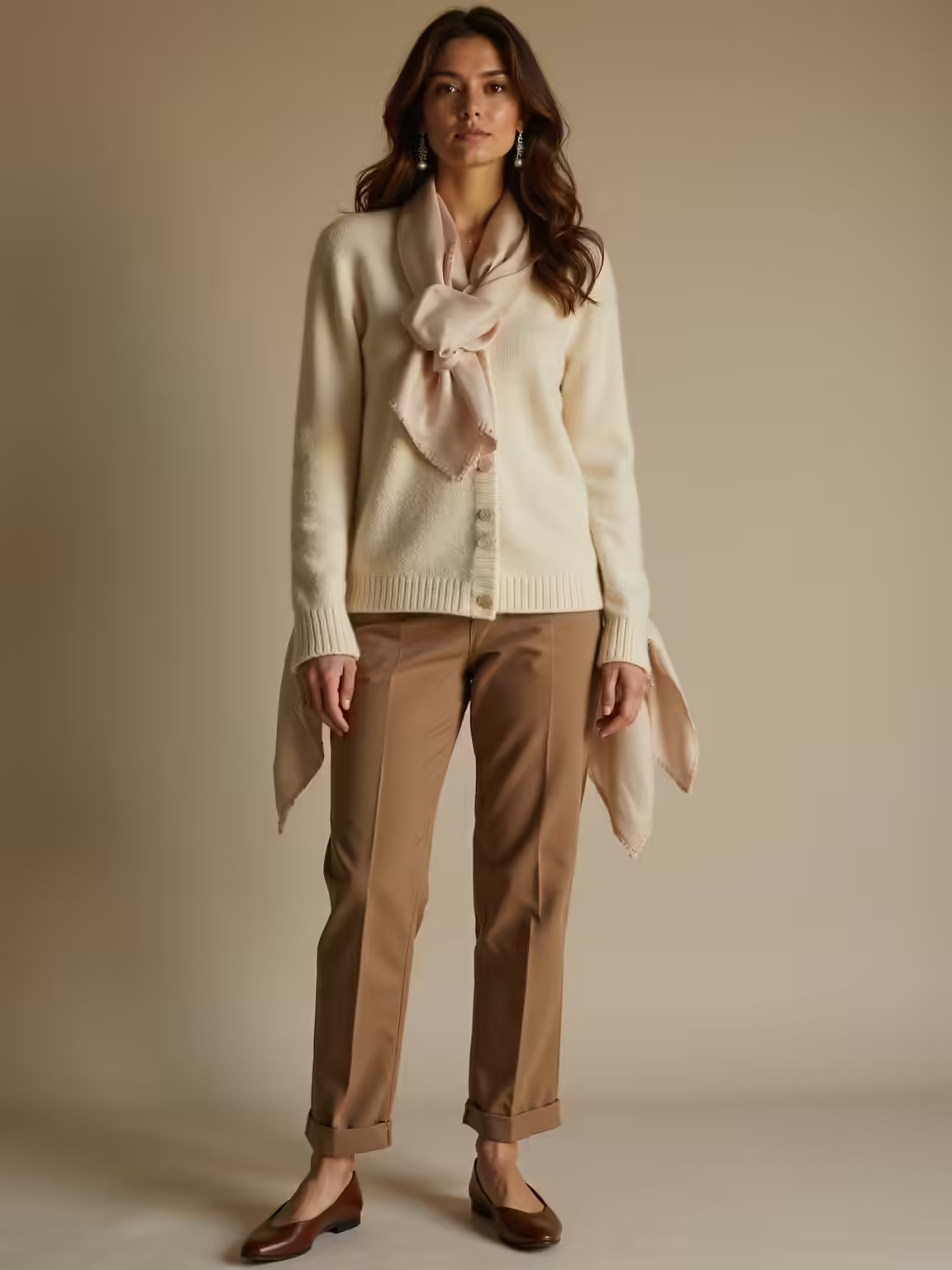
Then I’ll walk through polished layering tricks, like swapping a blazer for a structured cardigan or adding a silk scarf, to elevate those basics instantly.
You’ll be surprised how simple tweaks make outfits read effortlessly refined.
These are easy Old Money outfits anyone can pull off with zero effort.
Timeless Neutral Staples
I often reach for neutral staples first because they make “old‑money” dressing feel effortless rather than costume-y.
A crisp white shirt, camel coat, navy knit, tailored trousers and loafers form a quiet roster I rotate.
They read polished without shouting, hide small flaws, and mix endlessly.
Buy good fabric, fit, and you’ll look composed on any modest budget.
Old money style relies on classic, understated pieces that emphasize timeless simplicity and quality rather than trends.
Polished Layering Tricks
Although layering can sound fussy, I treat it like a simple recipe: start with clean proportions, add a textured midlayer, and finish with a tailored outer piece.
I pick lightweight knits, crisp shirts, and a structured blazer or trench. Mix subtle textures, keep colors muted, and mind sleeve and hem lengths.
It reads effortless because it’s deliberate—no frills, just refinement. Cardigan looks often convey quiet luxury through understated fabrics and classic cuts.
Cheap Basics That Read Old‑Money
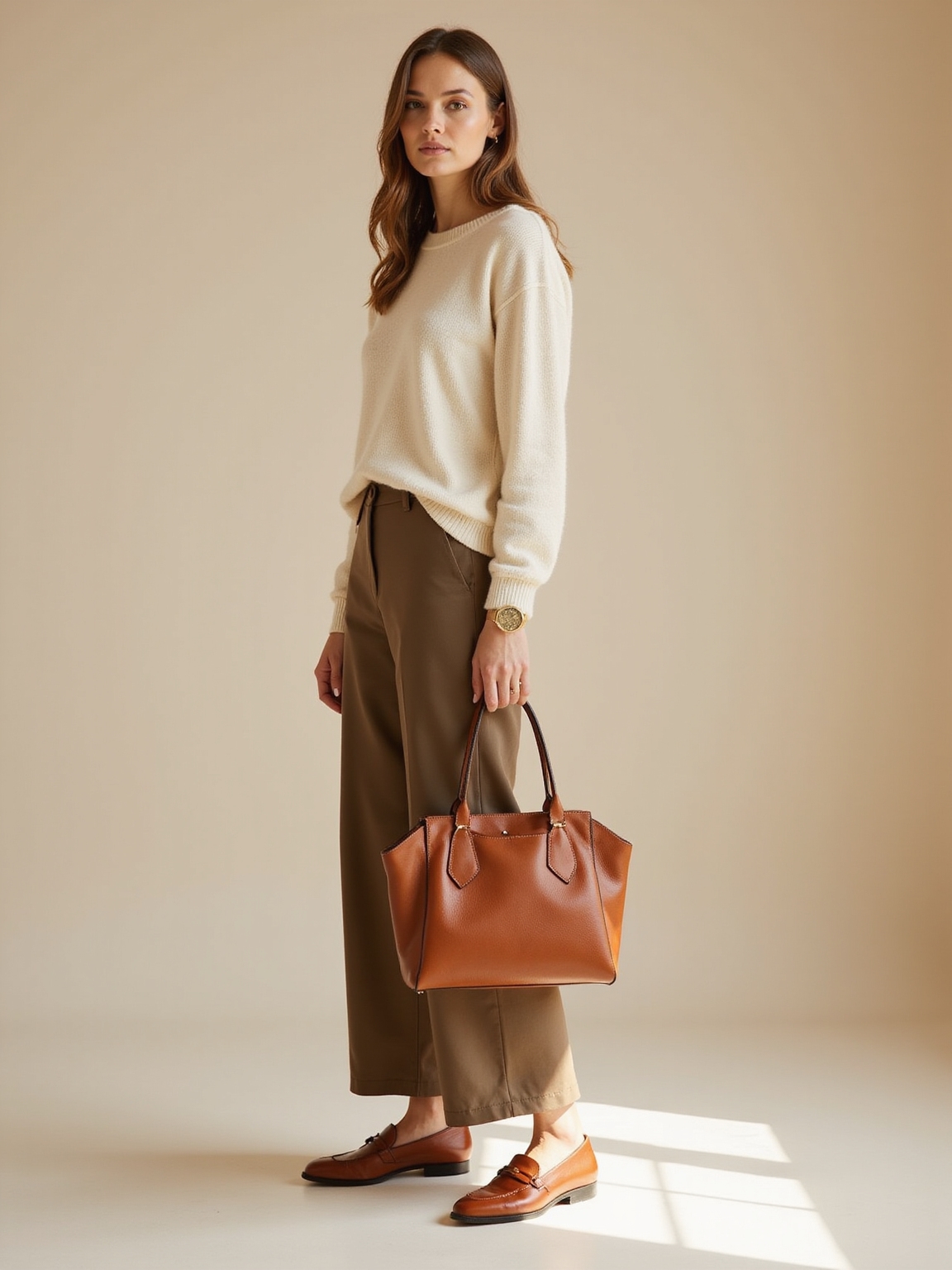
Think of old‑money style as a language I’ve learned to speak with very few words: clean lines, muted colors, and pieces that do their job without shouting.
I favor simple knit tees, crisp white shirts, and tailored chinos—affordable fabrics, neat proportions. Neutral shoes, minimal belts, and subtle accessories finish the look. Invest in fit and upkeep; small details sell the illusion.
The hallmarks of Timeless Old Money Style for Women include emphasis on clean lines and understated tailoring.
Thrifting Classics: What to Look For
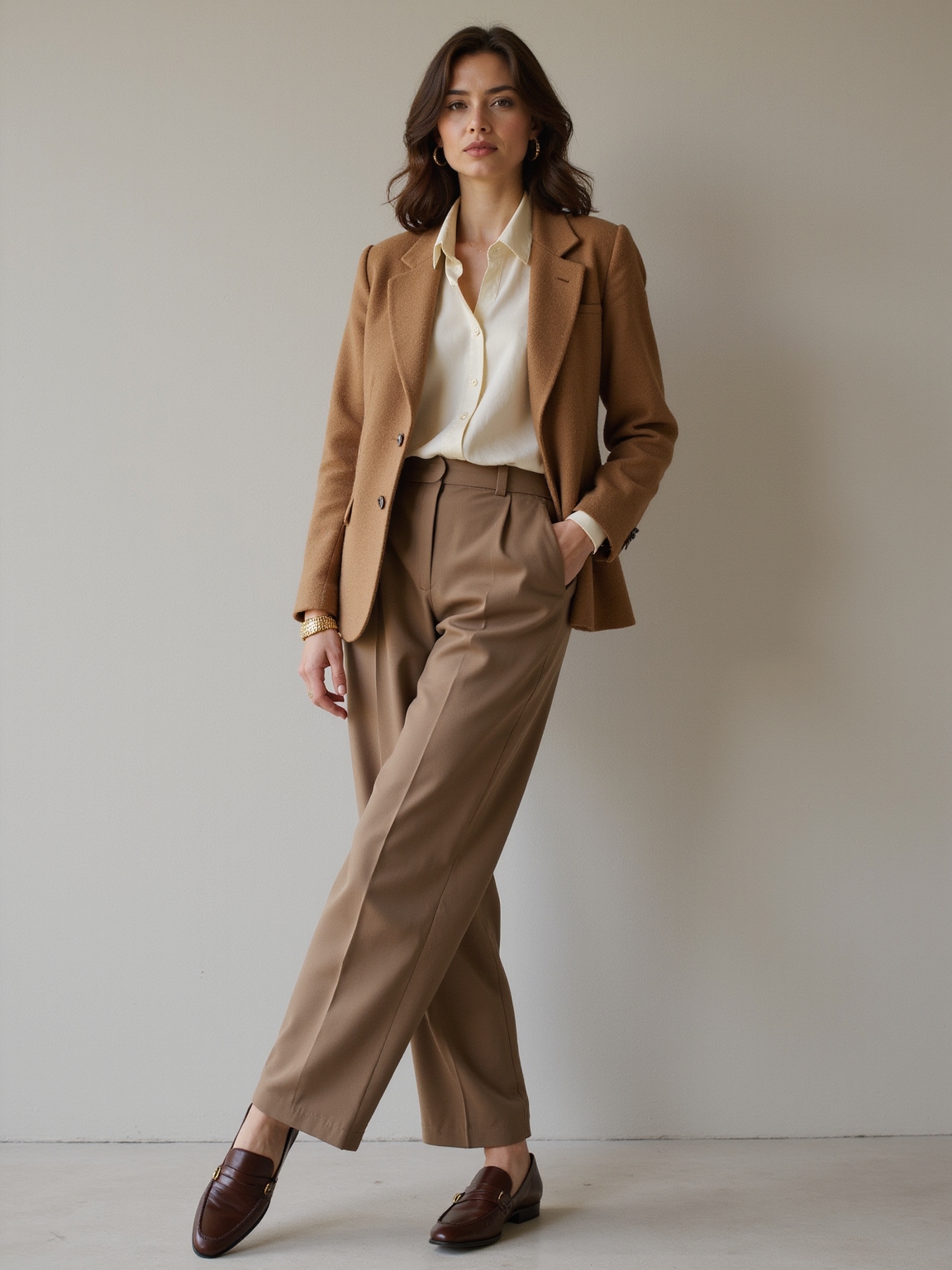
When I comb thrift racks, I’m hunting for specific silhouettes and details that instantly read timeless: clean lapels, natural fibers, and finishes that suggest age rather than wear.
I favor muted palettes, classic cuts, sturdy buttons, and intact linings — pieces that whisper quality.
Look for subtle patterns, sensible proportions, and solid construction; avoid trendy trims or obvious logos that date a find.
Seek pieces that convey effortless old money through understated tailoring and high-quality materials.
Tailoring Hacks That Upgrade Cheap Pieces
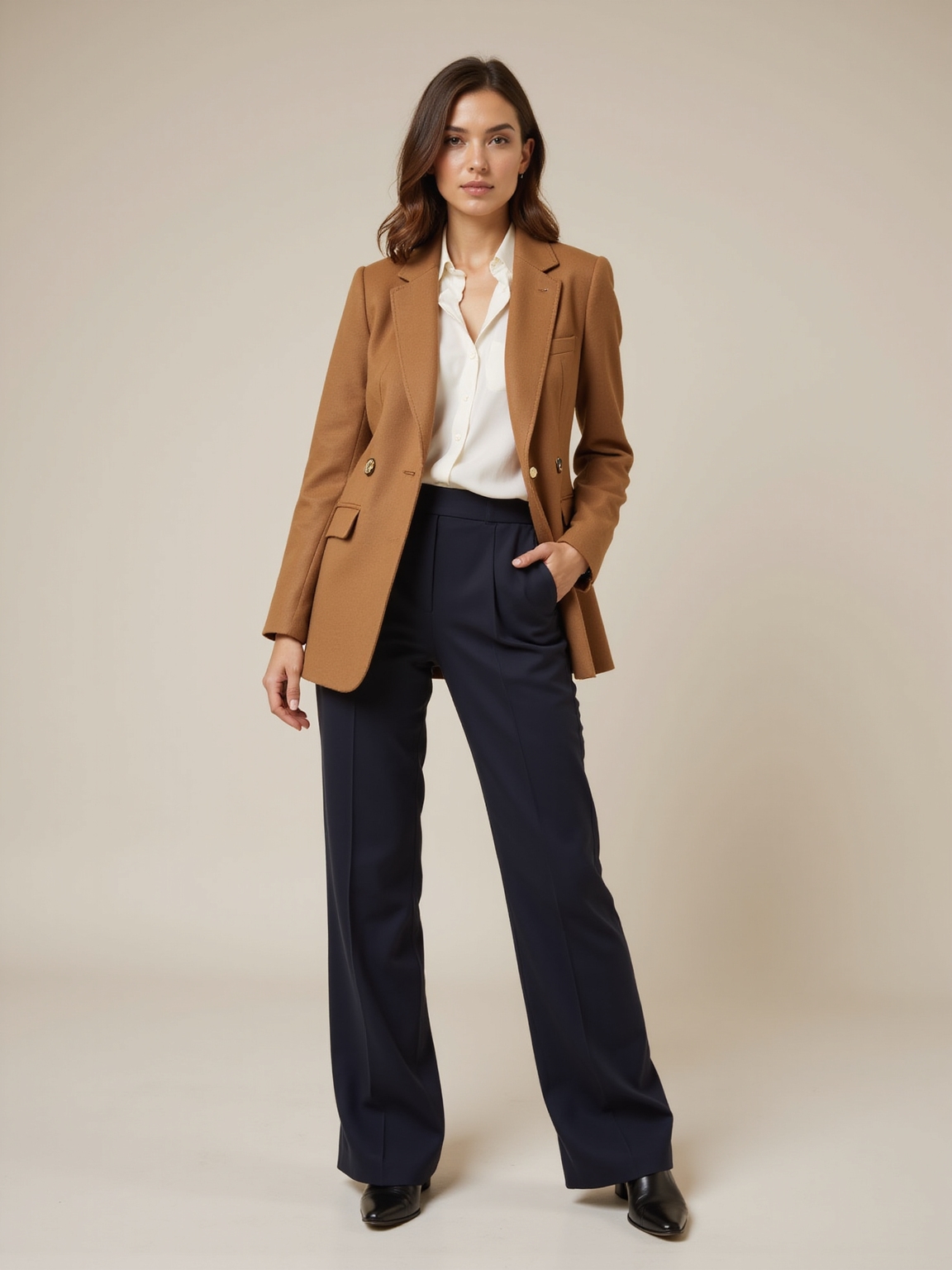
Finding the right thrifted piece is half the job; the other half is getting your hands—or a good tailor—on it to make it sing.
I favor small, precise fixes that transform cheap into polished:
- Hem or taper for cleaner lines.
- Swap buttons for instant refinement.
- Reinforce seams and press thoroughly.
These tiny edits cost little and elevate everything with quiet confidence. A lesson from Old Money Office Outfits is to focus on timeless silhouettes that convey understated authority.
Smart Color Palettes That Look Refined
I lean on neutrals with a little depth—think warm taupes, charcoal, and cream—because they read effortless and expensive without shouting.
Then I add a single accent color sparingly, like a muted forest green or a soft navy, to give the outfit personality without upstaging it.
Keep it simple: restraint is the secret ingredient to looking quietly refined.
Timeless pieces like a tailored blazer or cashmere sweater anchor an outfit and convey Old Money Fall Style without obvious logos.
Neutrals With Depth
Although true neutrals often get written off as boring, I’ve learned they’re the quiet workhorses of an “old money” wardrobe — provided you give them depth.
I mix tones, textures, and subtle contrasts so outfits read rich, not flat.
Try these simple approaches:
- Layer warm creams with cool grays for dimension
- Choose matte and gloss fabrics together
- Opt for slightly toned whites, not stark bright
Accent Colors Sparingly
Neutrals set the calm foundation, but you’ll want a few well-chosen accents to keep outfits from feeling too safe. I pick one muted jewel—sage, navy, or rust—and repeat it twice: a scarf and a shoe, or a bag and a belt.
Small, intentional pops read expensive. Don’t chase trends; let restraint and careful placement do the luxe work for you.
Affordable Fabrics That Look Luxe (Buy/Avoid)
When you’re after that quiet, expensive-looking vibe without emptying your wallet, I’ll steer you toward specific fabrics that mimic luxe textures and warn you about the cheap imitations to dodge. I favor neat blends and natural-feel synthetics; avoid shiny poly disaster.
Quick guide:
- Buy: matte wool blends — structure without fuss
- Buy: cupro or viscose — silk-like drape
- Avoid: glossy polyester sheen — screams fast fashion
Capsule Outfit Formulas for Everyday Polish
Now that you know which fabrics read expensive, let’s build outfits that make those materials sing — without overthinking.
I keep a capsule: tailored blazer, silk blouse, straight-leg trousers, knit sweater, trench, loafers, and a neutral tote.
Mix three pieces—blazer, blouse, trousers—for polished days; swap the blouse for a knit for casual elegance.
Minimal accessories, consistent palette, effortless coherence.
Weekend Old‑Money Looks Under $100
I’ll show you how to put together relaxed yet refined weekend outfits for under $100 by leaning on timeless neutral basics.
With smart casual layering—think a crisp knit over a button shirt—and a few affordable classic accessories, you’ll get that quietly polished look without breaking the bank.
Stick with well-cut neutrals, mix in one thoughtful layer, and let accessories like a leather belt or scarf do the elegant heavy lifting.
Timeless Neutral Basics
I usually reach for a few neutral staples on weekend mornings because they make looking effortlessly “old‑money” simple and inexpensive. I pick pieces that read calm and curated, not flashy.
- Beige cashmere‑touch sweater — soft, timeless
- White button‑down — crisp, forgiving
- Tailored chinos in taupe — relaxed structure
These three mix endlessly; you’ll look composed without trying.
Smart Casual Layering
When the weekend calls for style that’s effortless but intentional, I layer with pieces that read composed rather than contrived.
A lightweight sweater over a crisp tee, a softly structured jacket, and neat chinos create depth without shouting.
I stick to muted tones, mix textures—cotton, fine knit, brushed twill—and keep proportions tidy. The result feels polished, relaxed, and quietly expensive.
Affordable Classic Accessories
A few well-chosen accessories can make a weekend outfit feel intentionally lived-in rather than like you tried too hard, and I’m after pieces that whisper “classic” without the heavy price tag.
I pick restrained items that age well and elevate simple looks:
- Leather belt with subtle stitching
- Silk scarf in muted tones
- Minimal gold‑tone hoop earrings
They read timeless, not flashy.
Old‑Money Workwear Looks for Less
Since I care about looking polished without blowing the budget, I focus on a few reliable workwear classics—think clean blazers, tailored trousers, and sturdy loafers—that read old‑money without screaming designer.
I mix neutral palettes, prioritize fit, and hunt quality fabrics at thrift stores or sales. Small details—pressed collars, simple belts, minimal jewelry—finish the look with calm confidence.
Layering and Proportions That Elevate Outfits
I want to show you how a few smart choices in layering and proportion can make even inexpensive pieces read effortlessly refined.
Think balanced heights—short jacket over a longer sweater, or a cropped vest above high-waist trousers—plus a playful contrast of volume that keeps the look intentional, not messy.
With neat tailoring as your anchor, those proportions do the heavy lifting so the outfit looks curated rather than accidental.
Balanced Layering Heights
While I love layering for warmth and texture, I’m picky about heights — they make or break that polished, “old money” silhouette without costing a dime.
I aim for clear proportions: nothing fights, everything flatters. Try simple rules:
- Crop jacket over mid-length sweater for waist definition.
- Long coat over slim trousers for elongation.
- Tucked shirt with a slightly shorter vest to avoid bulk.
Small tweaks, big impact.
Playful Volume Contrast
Balanced heights set the stage, but you get the most personality when you play with volume—think a soft, oversized sweater paired with a tailored skirt or a roomy blazer over a slim-knit turtleneck.
I mix proportions to keep looks interesting: chunky knits with pencil skirts, wide-leg trousers with fitted tops. It reads intentional, not accidental, and makes affordable pieces feel effortlessly luxe.
Refined Tailored Silhouettes
Because tailoring frames everything, I lean on clean lines and careful layers to make simple pieces feel deliberate and expensive.
I mix fitted blazers with slightly looser trousers, tweak hem lengths, and favor neutral palettes that whisper, not shout.
Tricks I use:
- nip the waist with a belt for instant polish
- layer a crisp shirt under a soft knit
- keep proportions balanced for effortless refinement
Accessories That Quietly Read Expensive
I often find that the smallest pieces — a plain gold hoop, a leather-strap watch, a silk scarf tied just so — do the heavy lifting when you want to look quietly expensive.
I favor clean lines, quality materials, and restraint: a slim chain, understated cuff, or structured tote.
They lift an outfit without shouting, suggest taste, and survive trends — which is the real luxury.
Budget Shoes & Belts That Pass for High‑End
When it comes to shoes and belts, a few smart choices can make even modestly priced pieces read like they’ve been edited by a Savile Row tailor—I look for clean silhouettes, good proportion, and attention at the edges.
I favor minimal details and proper fit:
- Matte leather or suede, no flashy logos
- Slim, well‑stitched belt matched to shoes
- Classic shapes: loafers, derbies, simple oxfords
Caring for Cheap Garments So They Last
Preserving cheap garments takes a bit of intention, but I’ve found small, consistent habits make them look and feel far pricier than their tags imply.
I wash delicately, air‑dry flat, and mend tiny snags before they grow. I rotate pieces, use inexpensive fabric shavers, and store knits folded. These tiny rituals extend life and polish the overall ensemble without breaking the bank.
Shopping Hacks: Brands, Resale, and Timing
Keeping garments in good nick only gets you so far; you still need smart shopping to build that old‑money look without the price tag. I scout classics, wait for sales, and favour pieces that age well.
Tips I use:
- Target understated heritage brands for basics.
- Hunt resale for real leather and wool steals.
- Time purchases around season switches and major sales.
So you can look quietly wealthy without selling a kidney—who knew restraint was so glamorous? Stick to neutral, well‑tailored basics, hunt smart at thrift and sale racks, and fuss over small details like hems and leather care.
It’s less about price and more about choices: fit, fabric, and a calm confidence. Try these tips, and people will assume you’ve always owned that blazer—whether you did or not is our little secret.