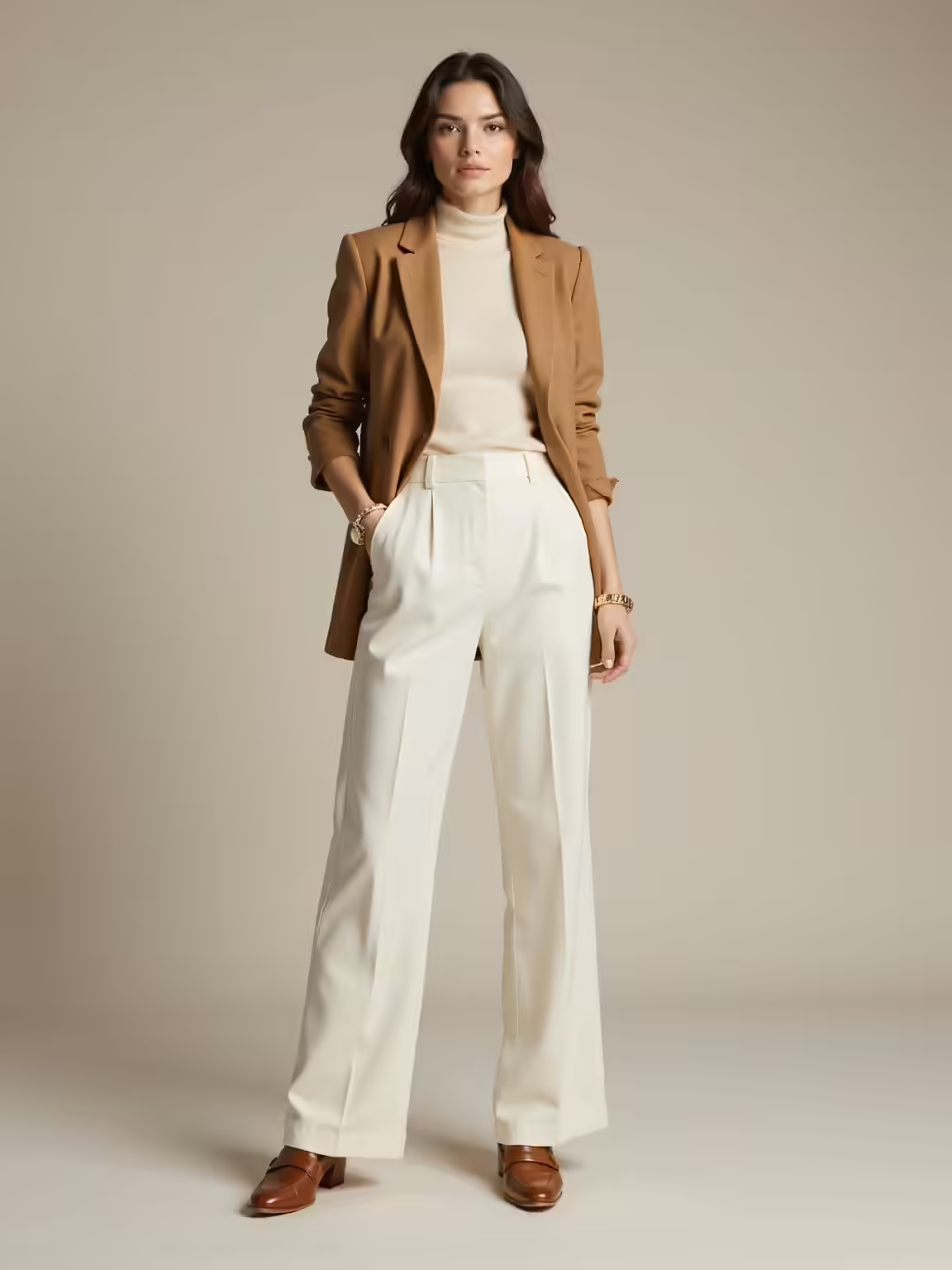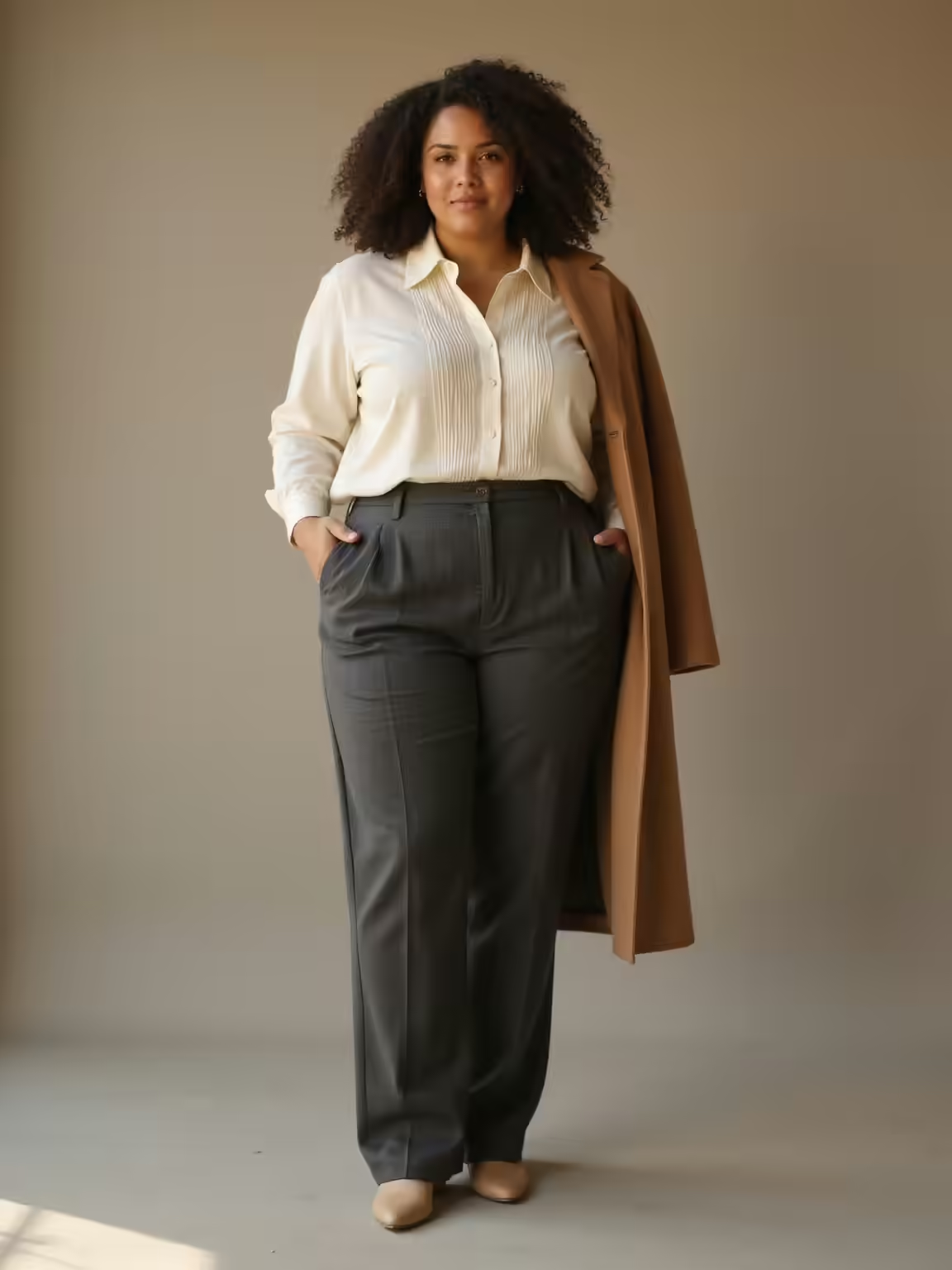

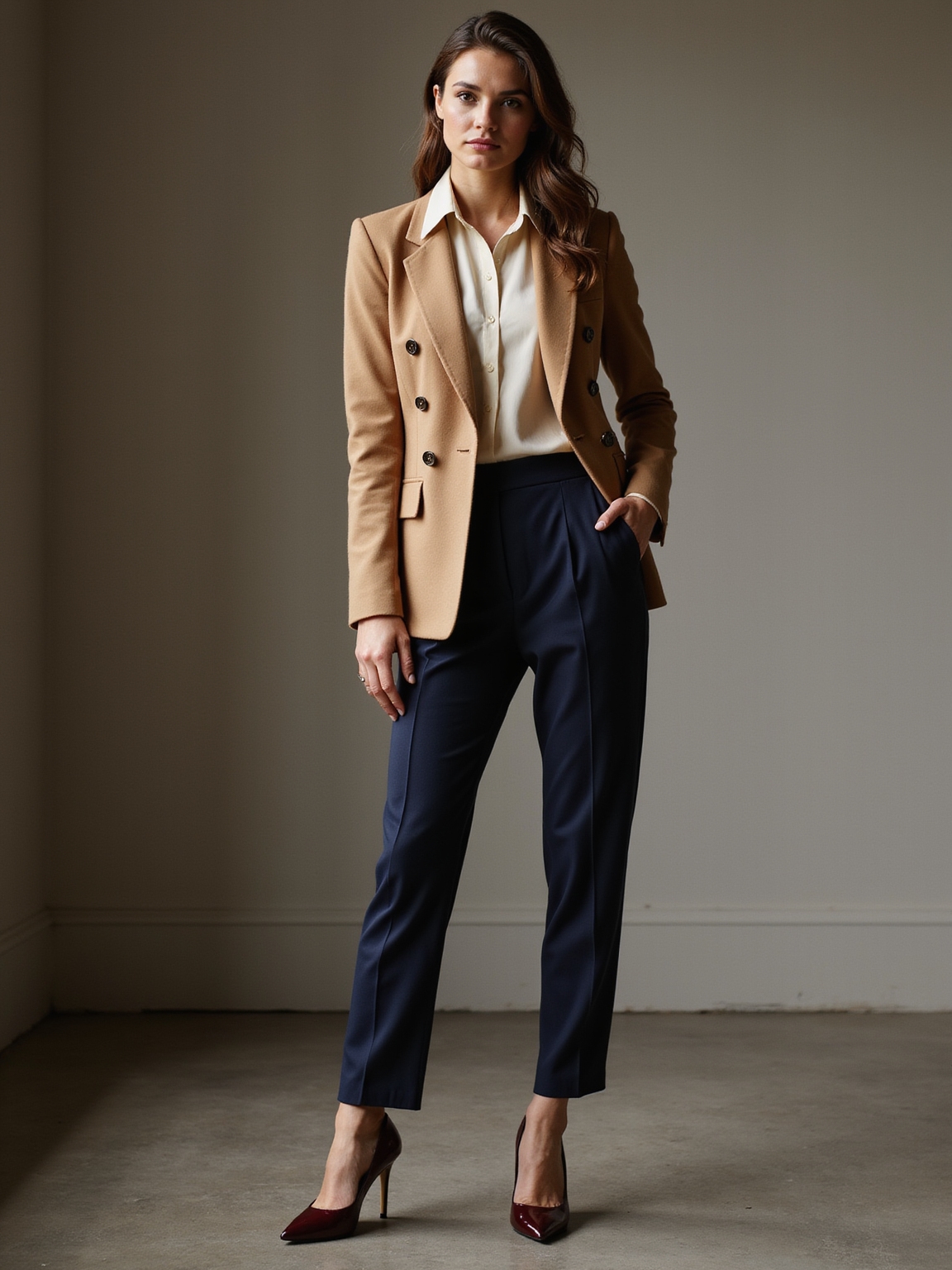
I favor quiet authority: well-cut blazers, wool trousers, silk blouses and polished loafers that suggest competence without shouting. I pick muted navy, camel and charcoal, tiny patterns and impeccable seams; I mind sleeve length, trouser break and shoe shine.
I buy pieces that repair and age into authority, rotate them to maintain shape, and keep accessories minimal. Try these small rules and you’ll see how restraint becomes unmistakable — and I’ve got outfit formulas and care tips to prove it.
Core Principles of Old-Money Work Style
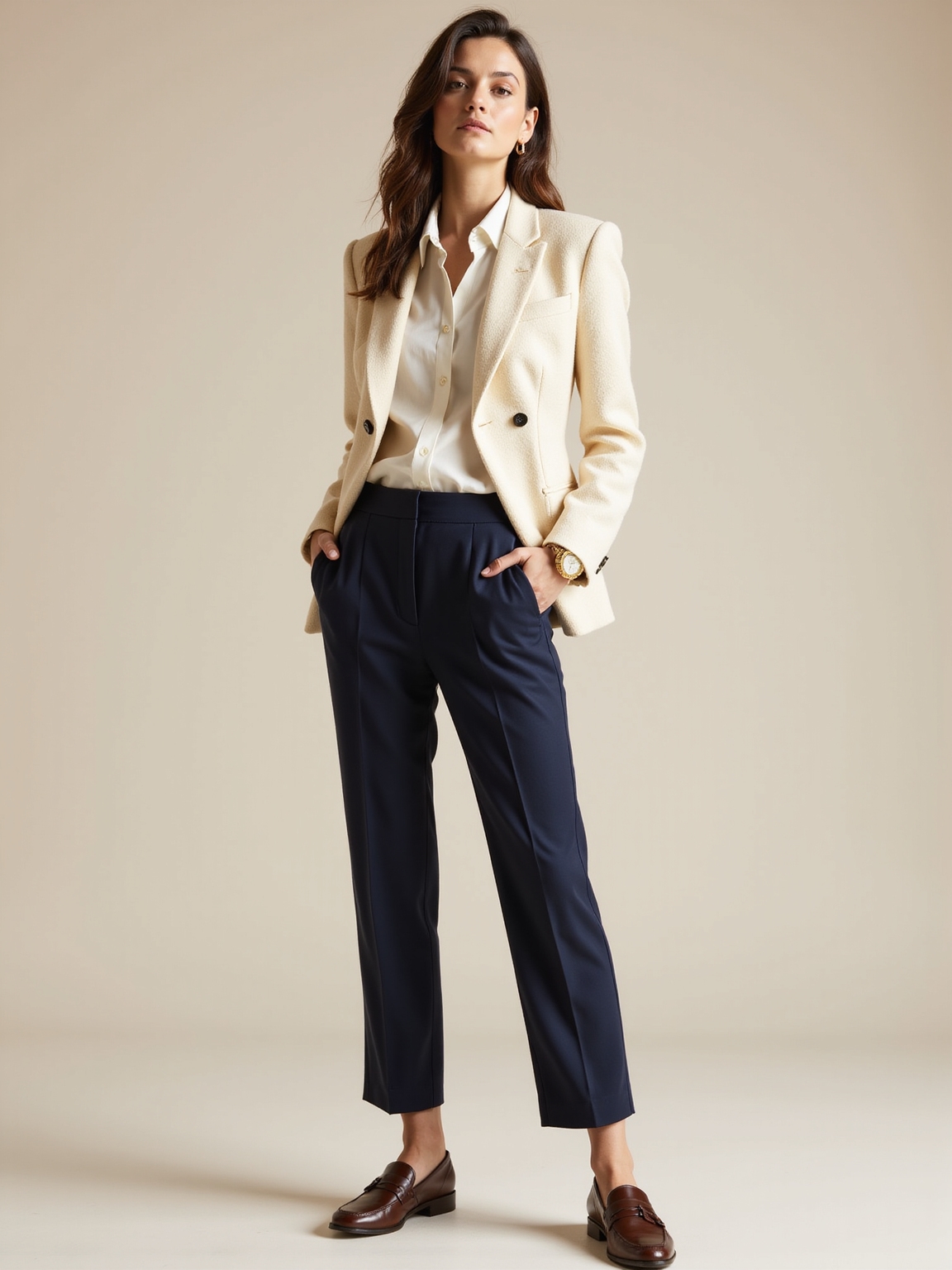
When I think about old‑money work style, I start with restraint: you don’t shout your status, you imply it through fit, fabric, and habit.
I favor muted palettes, immaculate seams, and quiet accessories—a silk pocket square, a leather briefcase softened by years.
Careful tailoring, subtle patterns, and stoic grooming signal confidence; economy of gesture finishes the look, insisting competence without trying too hard.
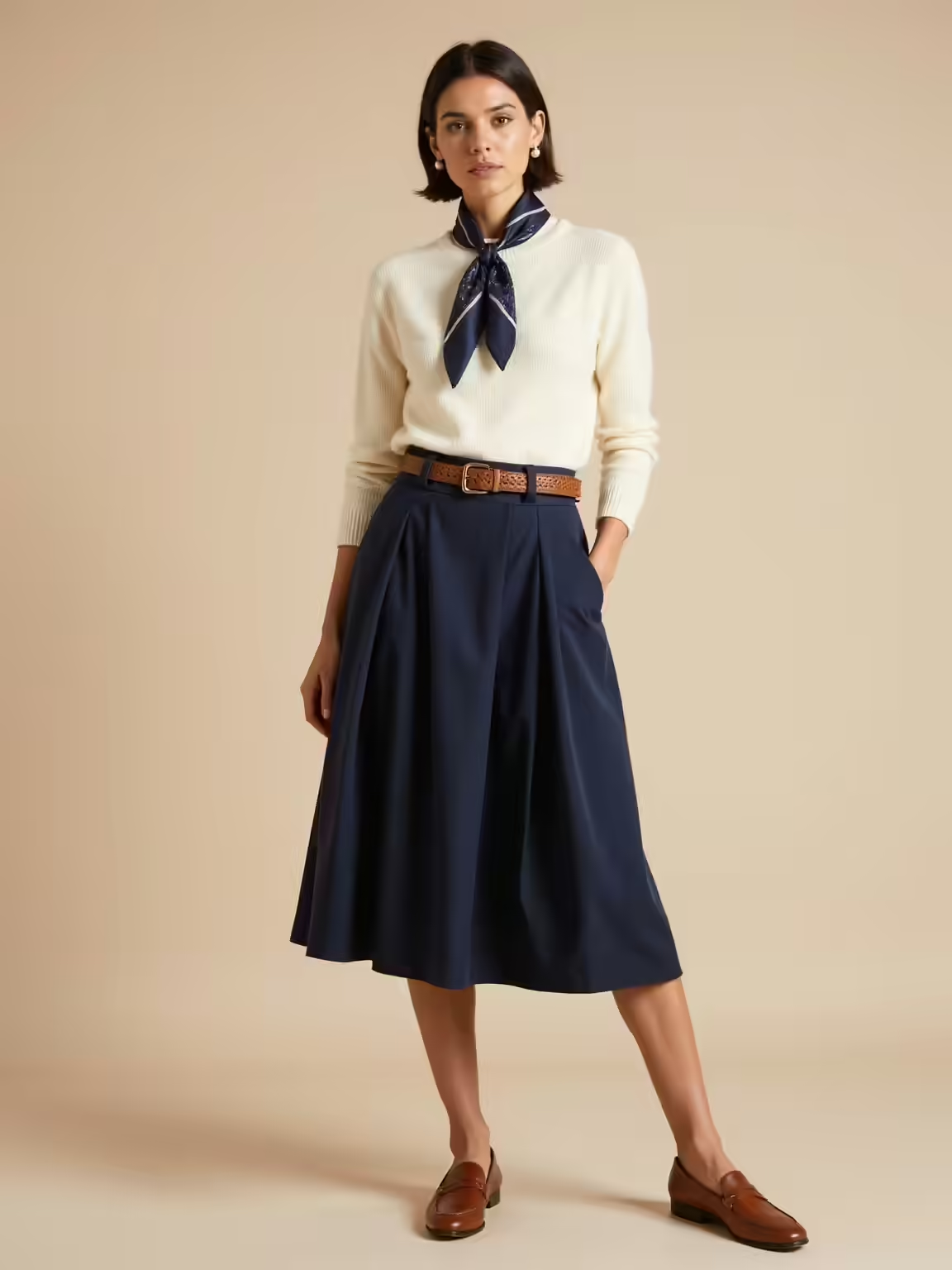
Many timeless wardrobes revolve around classic skirt and blazer combinations like the Timeless Old Money Skirt looks to try.
Quick-Start: 3 Old-Money Outfits to Try This Week
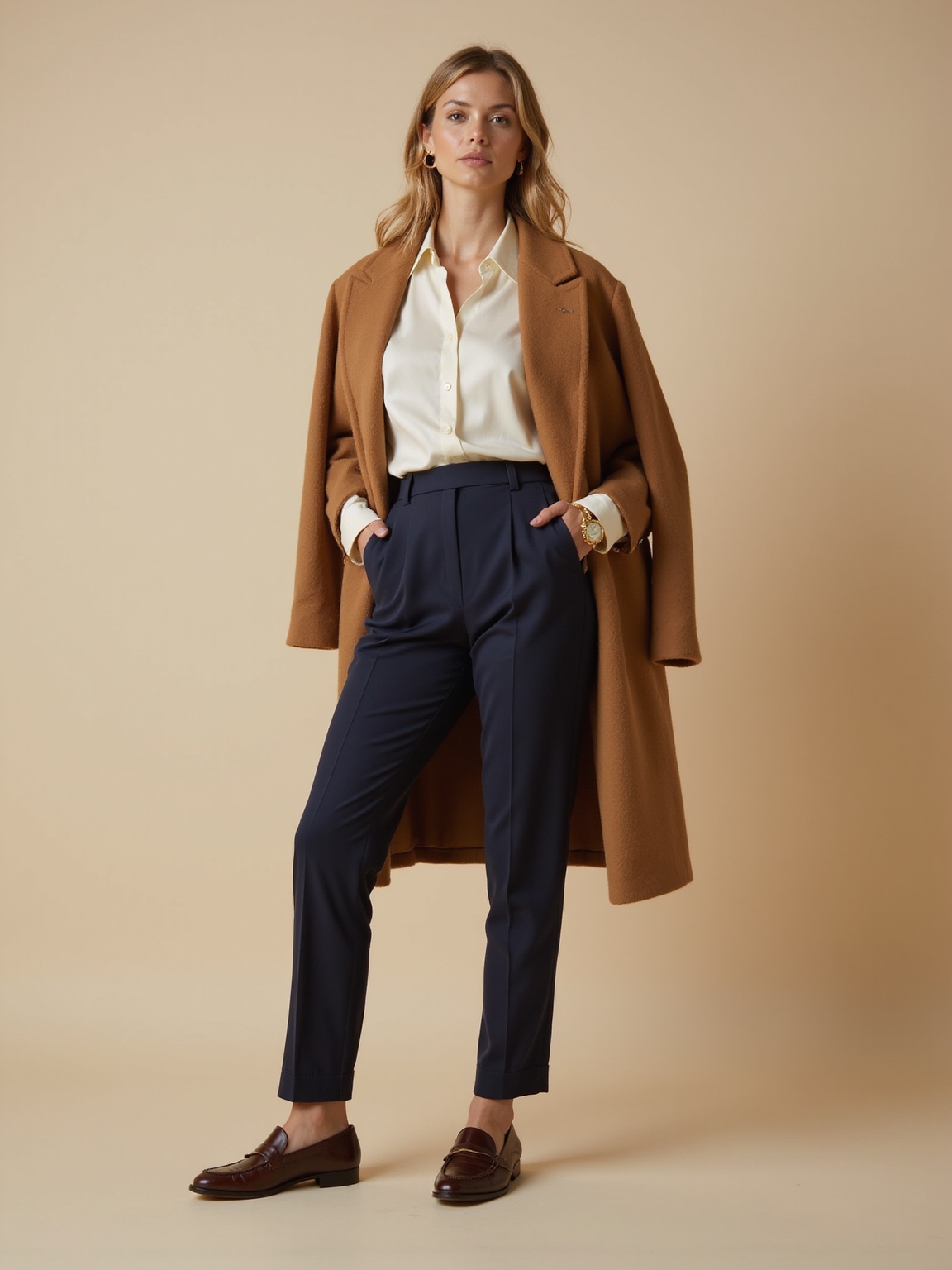
If you want an easy entry point, I’ll keep it to three looks you can actually wear this week—no weekend-only theatrics, just outfits that read quietly affluent and work reliably.
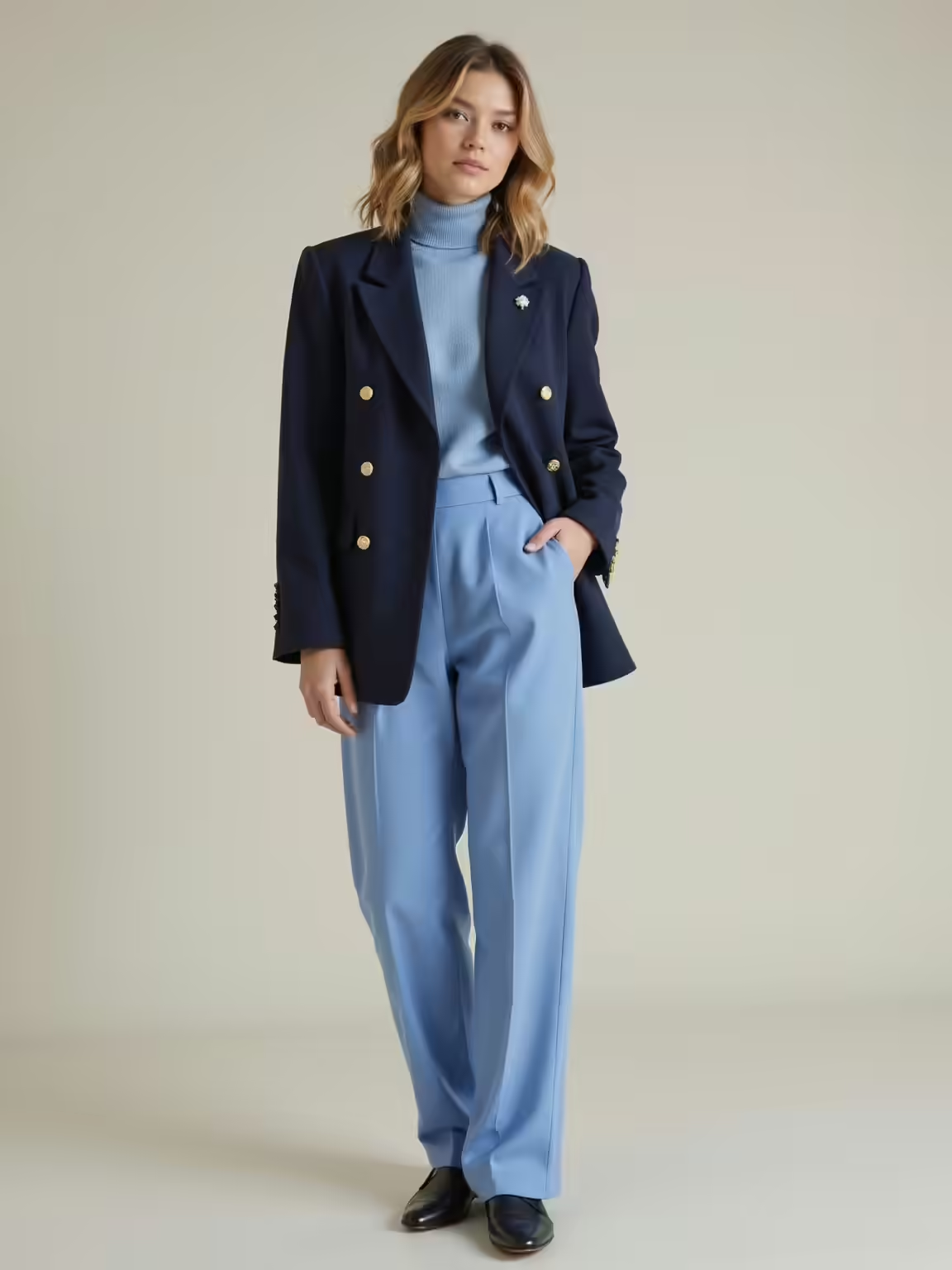
First: navy blazer, silk blouse, tailored trousers—polished, unfussy.
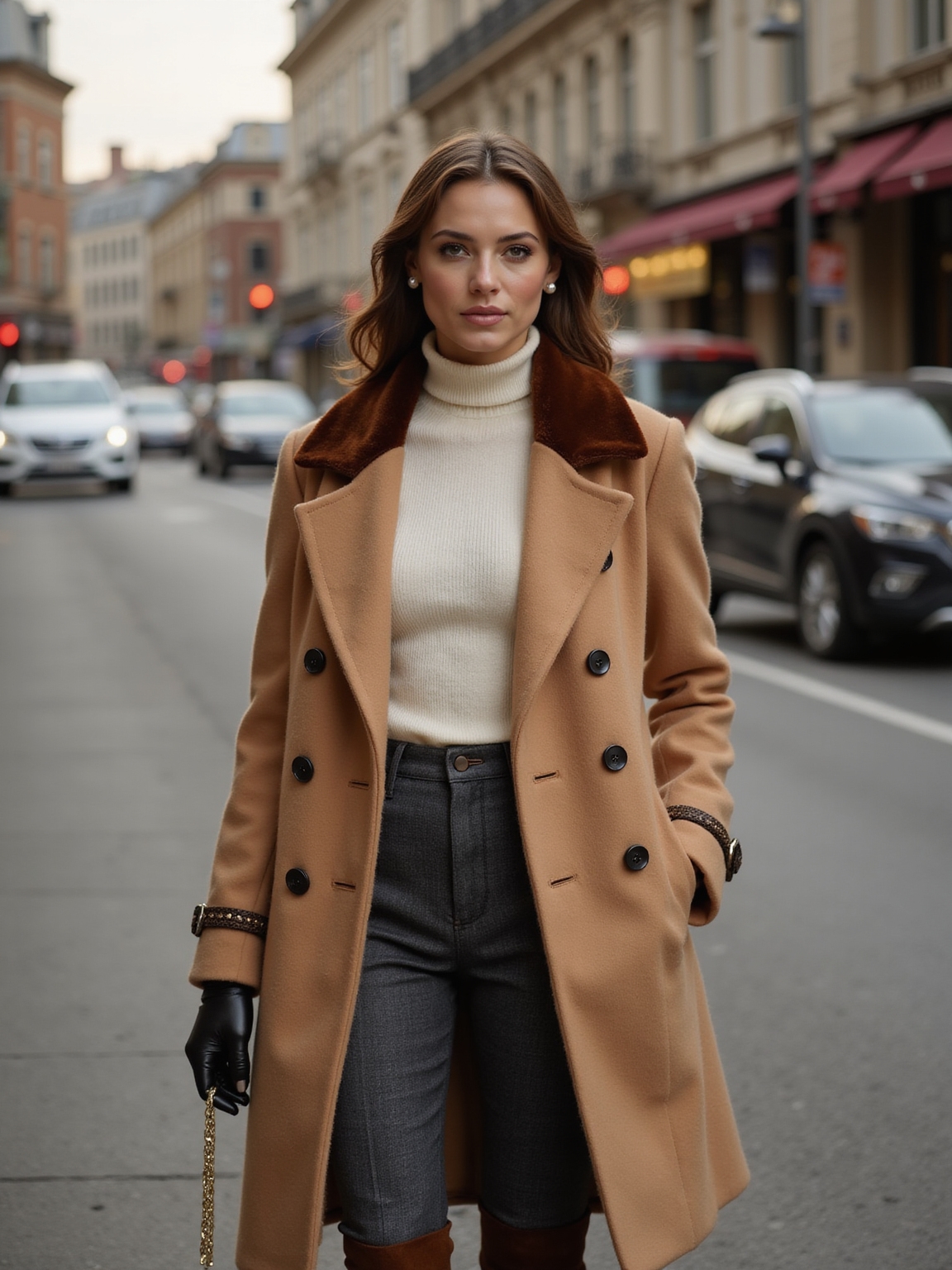
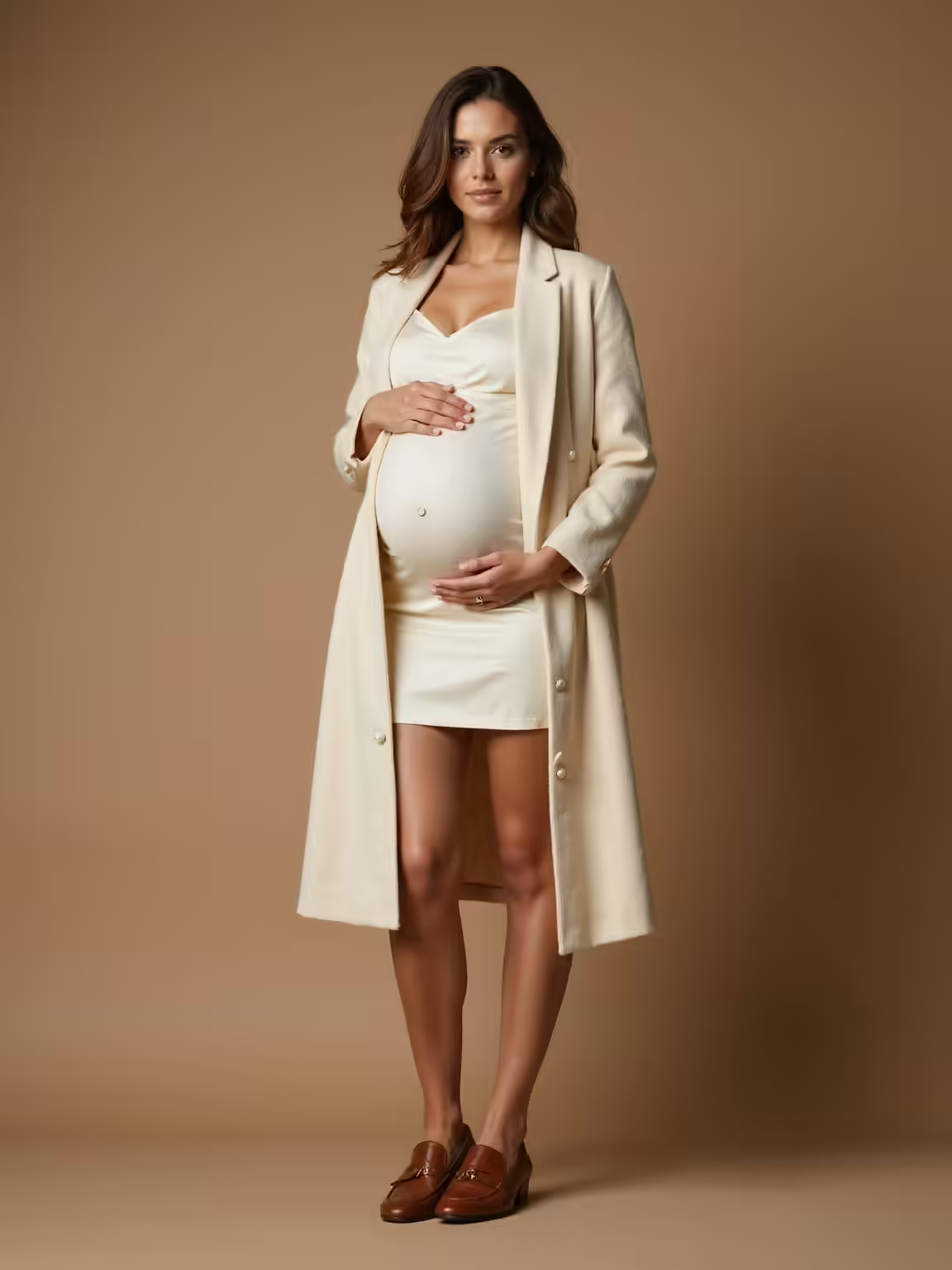
Second: camel coat, knit dress, leather loafers—softly authoritative.
Third: charcoal suit, cotton shirt, simple pearl studs—clean lines, discreet confidence you can feel.
These looks draw on the principles of Old Money Workwear to upgrade your professional image.
How to Build an Old-Money Capsule Wardrobe for the Office
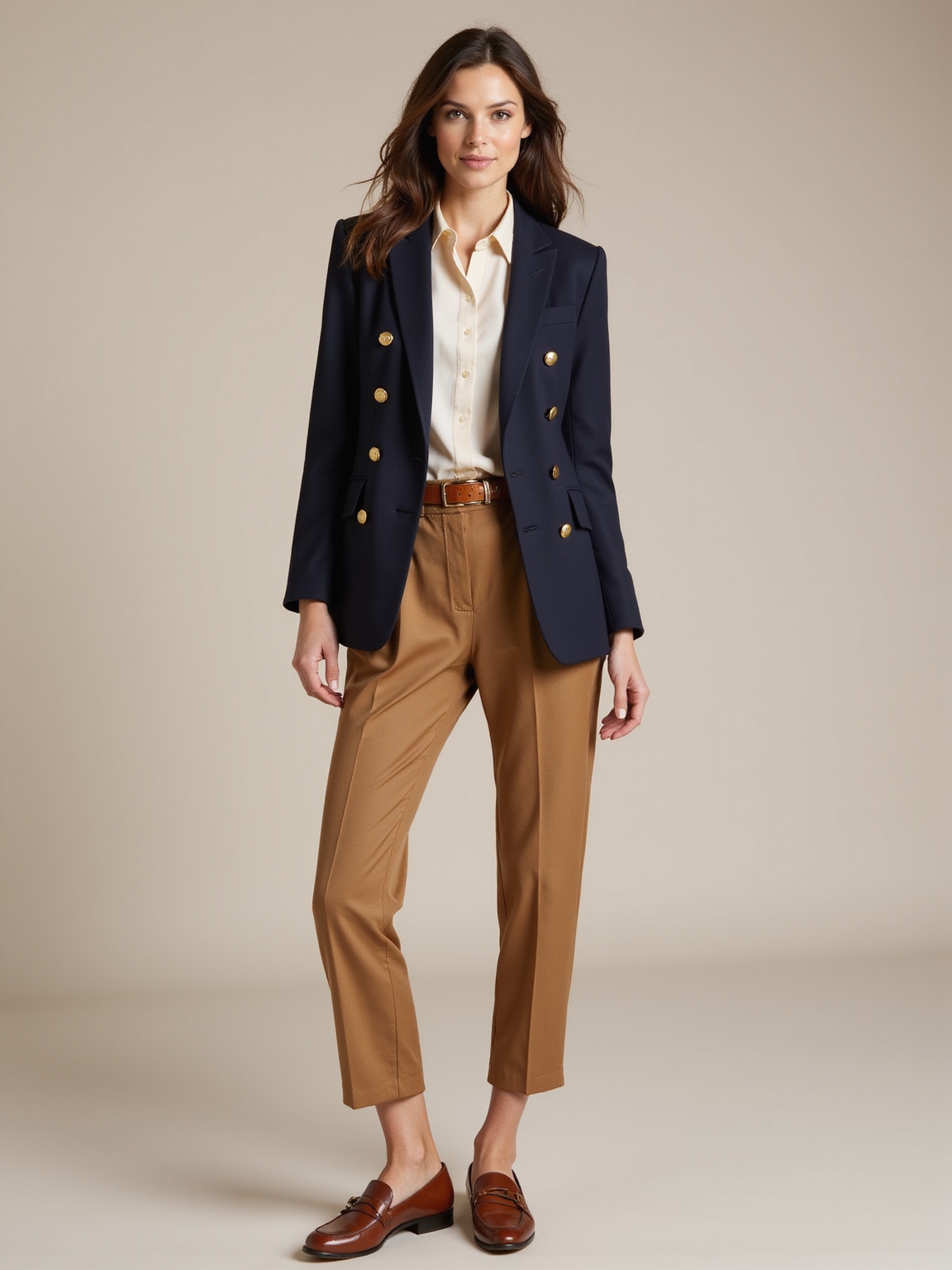
I start by treating a capsule not as a checklist but as a small, well-tuned machine: each piece should earn its keep, whispering quality rather than shouting brand names.
I curate neutrals, a silk blouse, cashmere sweater, pencil skirt, sturdy leather loafers and a classic coat.
I favor proportion, fabric, and repairability—tiny investments that age into authority and make dressing feel inevitable, not invented.
Many women building an old money workwear wardrobe for the corner office prioritize timeless silhouettes and impeccable tailoring to project quiet confidence.
Blazer-and-Trouser Formulas That Command Respect
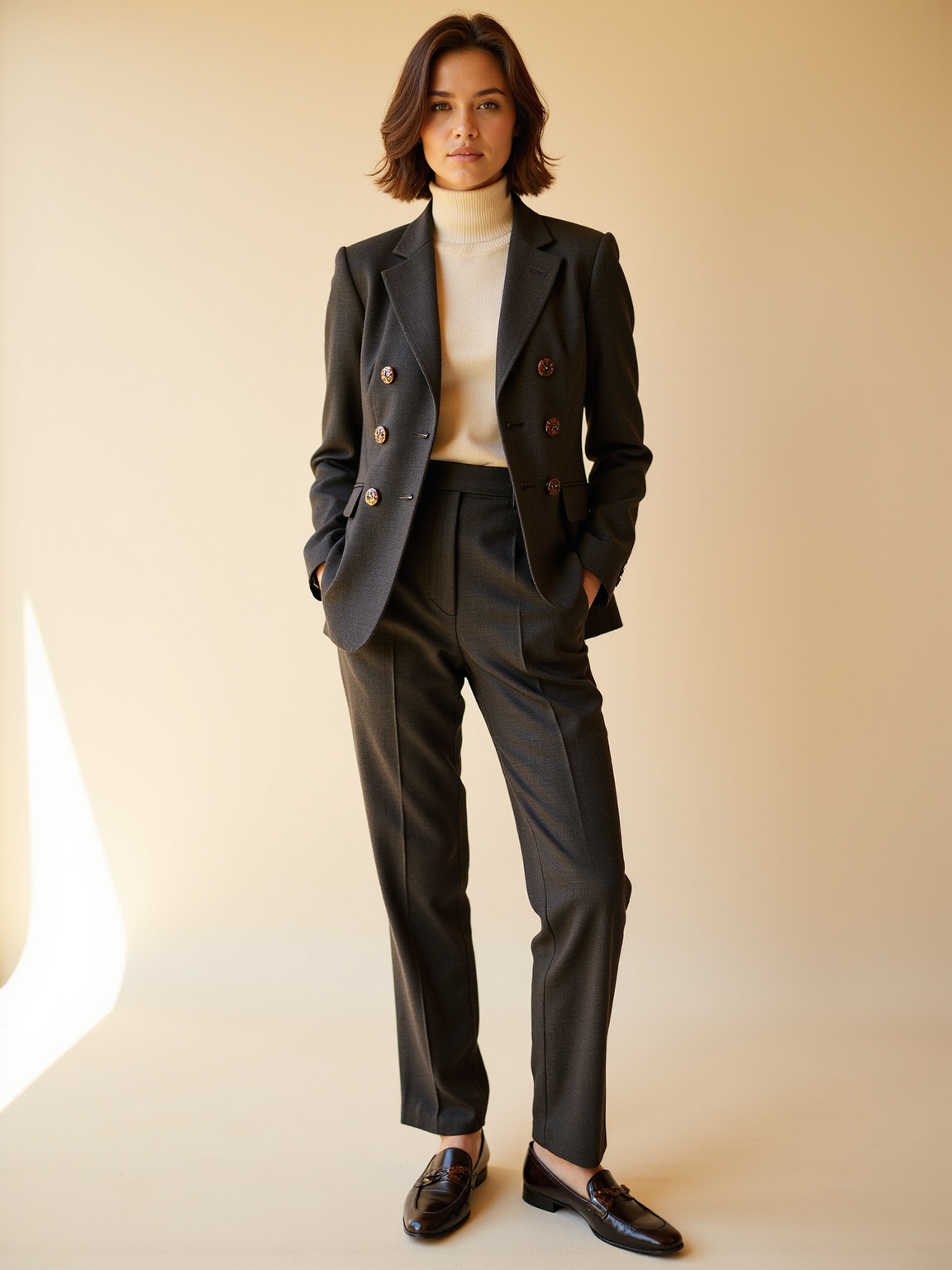
Start by thinking of the blazer-and-trouser pairing as choreography: I pick pieces that move well together, flatter without trying too hard and announce competence before I speak.
- navy blazer, charcoal trousers, simple leather loafers
- camel blazer, cream trousers, subtle gold cuff
- muted plaid, tapered wool trousers, soft knit
- slate blazer, cropped cigarette trousers, polished brogues
I tune proportions and fabrics; the effect is calm authority. Old money blazers convey a sense of timeless power that complements understated tailoring.
Choosing Single vs. Double-Breasted Blazers for Your Body
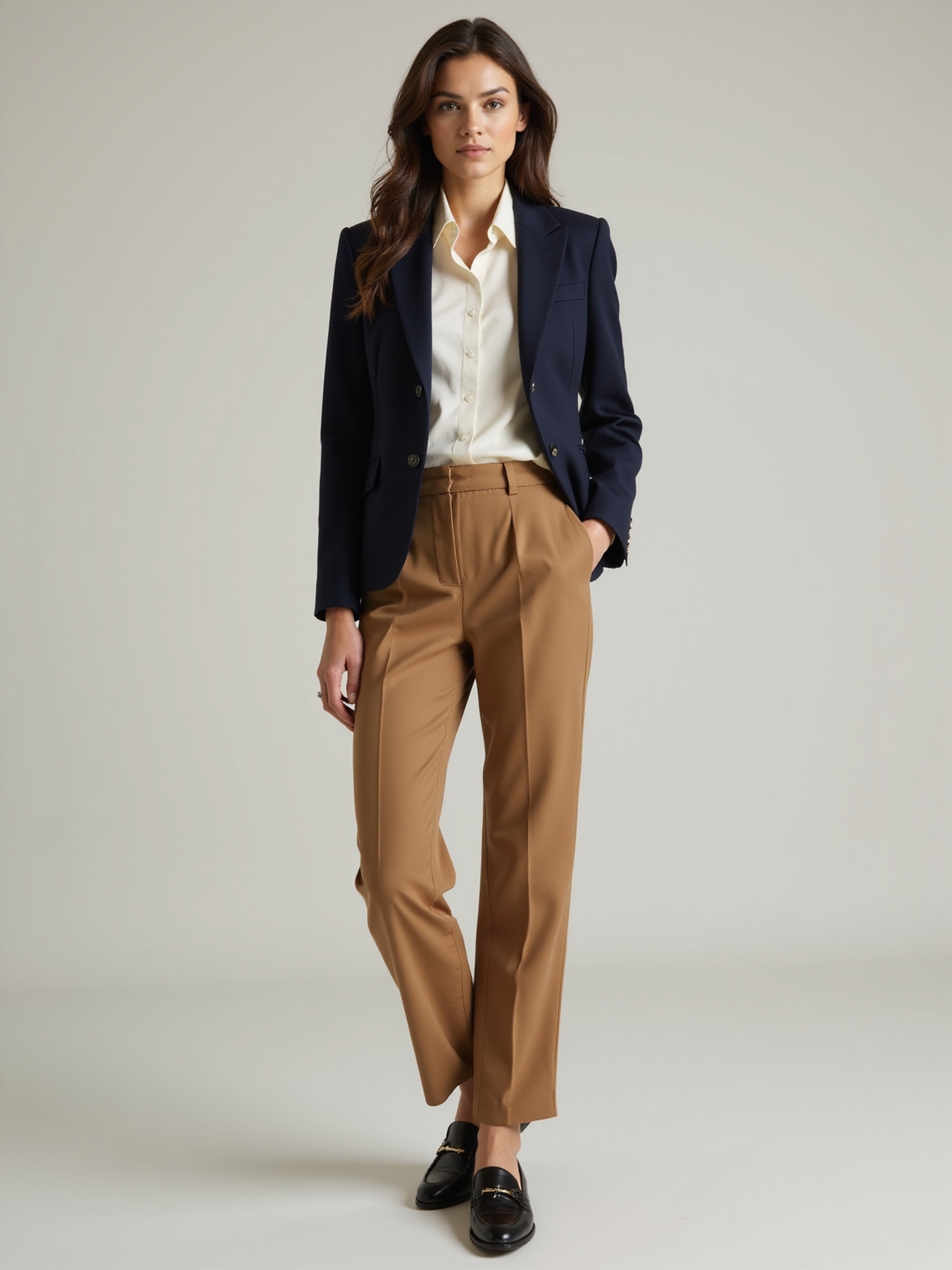
Consider the blazer a handwritten resume: I’ll choose single or double-breasted not for trend but to flatter the shape I’m in and the story I want to tell.
I favor single-breasted for clean vertical lines and ease across shoulders; double-breasted lends authority, nips the waist.
I watch lapel width, button placement and balance — small details that quietly alter posture and presence.
Classic tailoring often means investing in structured pieces that endure and elevate a wardrobe, like timeless blazers that read as quietly authoritative.
Shirts and Blouses: Fit, Fabric, and Collar Choices
I always start with fit — a shirt should skim your frame without pulling at the buttons or billowing at the waist.
I prefer natural fabrics like cotton, silk, or fine linen because they breathe, hold shape, and age with character.
And don’t underestimate the collar: a crisp point, a soft spread, or a modest band can quietly change the whole outfit’s tone.
Cardigans add a layer of timeless, quiet luxury and versatility to work outfits when chosen in refined fabrics and muted tones with subtle detailing.
Perfect Fit Essentials
When I choose a shirt for the office, I look for a fit that feels composed rather than constricting—shoulders that sit exactly at the seam, sleeves that skim the wrist bone, and a torso that allows a clean tuck without billowing.
I favor subtle details that read refined.
- Collar sits neatly under a lapel
- No gaping at buttons
- Smooth back with no excess fabric
- Sleeves that break just so
A well-considered outer layer can complete the look, especially in colder months when timeless winter outfits elevate an outfit without sacrificing polish.
Fabric Choices Explained
Reach for fabrics that breathe and hold their shape — they make a shirt look like it was tailored by habit rather than effort.
I favor cotton-poplin for crispness, silk-cotton for softness, and a wool blend when seasons demand structure. Seek subtle weave texture, modest drape, and fibers that resist clinging. The right fabric reads calm competence before you say a word.
Old Money wardrobes emphasize timeless, understated pieces with a focus on quality and restraint; consider adding classic separates to achieve that effect.
Collar Styles Matter
Leaning into collars, I pick them like punctuation — they set the sentence of your look. I favor structure and subtlety, choosing collars that frame rather than shout.
- Crisp point collars for quiet authority
- Soft spread collars for approachable polish
- Rounded Peter Pan for gentle charm
- Band collars for modern restraint
Fit, fabric, and proportion whisper pedigree; a good collar finishes the thought.
Classic Knitwear and Layering for a Polished Office Look
I slip a fine-gauge cashmere cardigan over a crisp blouse and suddenly the whole outfit feels intentional rather than thrown together;
I like how a soft knit can read both scholarly and effortless, giving the room that old-money calm without shouting.
I favor muted tones, slim layering, and tactile contrasts—silk necklines, structured blazers on top—so each piece quietly asserts competence.
Shoes That Convey Authority : Styles and Care
A polished shoe finishes an outfit the way a well-chosen word finishes a sentence; after a soft cashmere layer, your footwear should speak with the same calm confidence.
I choose quietly commanding styles and care rituals that last:
- Black cap-toe oxfords, pared and precise
- Brown brogues, warm patina over time
- Loafers for silent authority
- Regular polishing, conditioners, cedar trees for shape
Belts, Watches, and Jewelry for a Quietly Wealthy Look
Choose pieces that whisper rather than announce: I favor belts, watches, and jewelry that read as lived-in statements of taste, not logos shouted from across the room.
I choose supple leather belts, modest gold or steel watches with patina, and small, thoughtful rings or studs.
They age gracefully, hint at stories, and finish an outfit with quiet confidence rather than theatricality.
Color and Pattern Rules That Stay Restrained
Belts and watches set the mood; color and pattern decide the language you speak. I favor muted palettes and tiny motifs that whisper, not shout, and I coach you to choose restraint.
- Navy, camel, charcoal anchors
- Soft windowpanes, faint herringbone
- One accent color only
- No novelty prints
These choices read as confident, effortless, and quietly intentional.
Tailoring Checklist: Alterations That Elevate Any Outfit
Because an outfit only truly speaks when it fits, I insist on tailoring as the quiet signature that lifts everything from off‑the‑rack to bespoke;
I’ve seen a hem taken an inch, a sleeve nipped, or a waist eased and watched the whole look come alive.
I recommend clean shoulder lines, precise trouser breaks, sleeve length to the wrist bone, slight waist suppression, and discreet pocket reinforcement.
Fabric Guide: Wool, Cashmere, Cotton, Silk – What to Buy When
When I decide what fabric will do the most work in my wardrobe, I think about season, texture and the life each piece will lead: wool for structure and winter meetings, cashmere where you want an indulgent whisper against the skin, cotton for breath and everyday polish, and silk when ceremony or a sleek underlayer is required.
- Wool: holds shape, dignified armor.
- Cashmere: soft confidence.
- Cotton: crisp reliability.
- Silk: quiet glamour.
Seasonal Tweaks: Summer and Winter Old-Money Office Outfits
I always start summer by trading heavy weaves for lightweight natural fabrics—linen shirts that breathe and cotton-silk blends that look crisp without clinging.
In winter I layer classic outerwear: a camel coat over a merino sweater, the neat edge of a tailored blazer peeking out for structure. Small seasonal swaps like these keep the same quiet, old-money silhouette feeling effortless year-round.
Lightweight Natural Fabrics
Choosing lightweight natural fabrics makes seasonal tailoring feel intentional instead of improvised; I reach for linens, light wools, and cotton-silk blends that breathe in summer and layer with purpose in winter.
I favor tactile subtleties: weight, drape, faint weave. I choose pieces that age gracefully, whispering competence.
- Linen shirts with neat collars
- Draped wool trousers
- Cotton-silk blouses
- Fine-knit merino sweaters
Layered Classic Outerwear
Because seasons are just invitations to refine a silhouette, I treat outerwear as the deliberate punctuation of an outfit rather than an afterthought.
In summer I layer a lightweight linen blazer over silk camis for meetings; in winter I favor a camel coat over a cashmere cardigan, gloves tucked into briefcase.
Each piece frames posture, suggests intent, and quietly signals steady taste.
Dressing for Different Offices: Conservative, Business-Casual, Creative
Though office dress codes all whisper slightly different rules, I like to think of them as tones on the same old-money radio—each station requires a subtle retune.
- Conservative: tailored navy, quiet silk, polished loafers.
- Business-casual: structured knit, crisp trouser, refined belt.
- Creative: thoughtful pattern, artisanal texture, deliberate restraint.
- Universal: fit, quality, muted palette, confident calm.
Where to Buy: Investment Pieces, Affordable Alternatives, and Care Tips
I’ll point you toward a few true investment staples—think a structured navy blazer, goat-hair coat, and leather loafers—that repay careful spending with years of polish.
Then I’ll show where to find smart, budget-friendly alternatives that copy the look without the guilt, from thrifted gems to well-cut high-street pieces.
Finally, I’ll share straightforward care tips—mending, proper storage, and gentle cleaning—that keep everything looking quietly expensive.
Investment Wardrobe Staples
When I build an “old money” wardrobe I start by picking a handful of true investment pieces — a navy blazer, a cashmere crewneck, a perfectly cut trench — then fill around them with smarter buys; knowing where to buy each piece matters as much as the piece itself.
I favor quality, fit, and longevity:
- Tailored blazer: wool, minimal details
- Cashmere: midweight, neutral
- Trench: bonded cotton
- Leather loafer: Goodyear-welted
Budget-Friendly Alternatives
Because splurging on every classic would bankrupt your closet, I pick one or two true investment pieces and then seek smart, wallet-friendly partners that still read polished—think a thrifted wool blazer tailored at the sleeve, a midrange cashmere blend that layers like a dream, or a bonded-cotton trench from a reputable high-street label.
I scout sample sales, curated vintage, and reliable mid-tier brands, mixing textures for that quietly curated look.
Care And Maintenance
Although I love a perfectly cut blazer more than most, keeping those pieces looking composed takes more care than shrugging them on and hoping for the best.
I shop investment classics, scout smart dupes, and tend garments like small heirlooms.
- Dry clean sparingly, steam more
- Reinforce buttons, patch discreetly
- Rotate to rest fibers
- Store on shaped hangers
So go forth, quietly commanding respect in cashmere and sensible tailoring—like a benevolent monarch who irons his own shirts.
You’ll favor timeless cuts over trends, invest where it matters, and learn the gentle art of looking expensive without yelling about it.
Practice restraint, polish your shoes, and whisper silk scarves into meetings. If anyone asks, just smile and say you woke up like this—because old money style is mostly very good manners with excellent fabric.