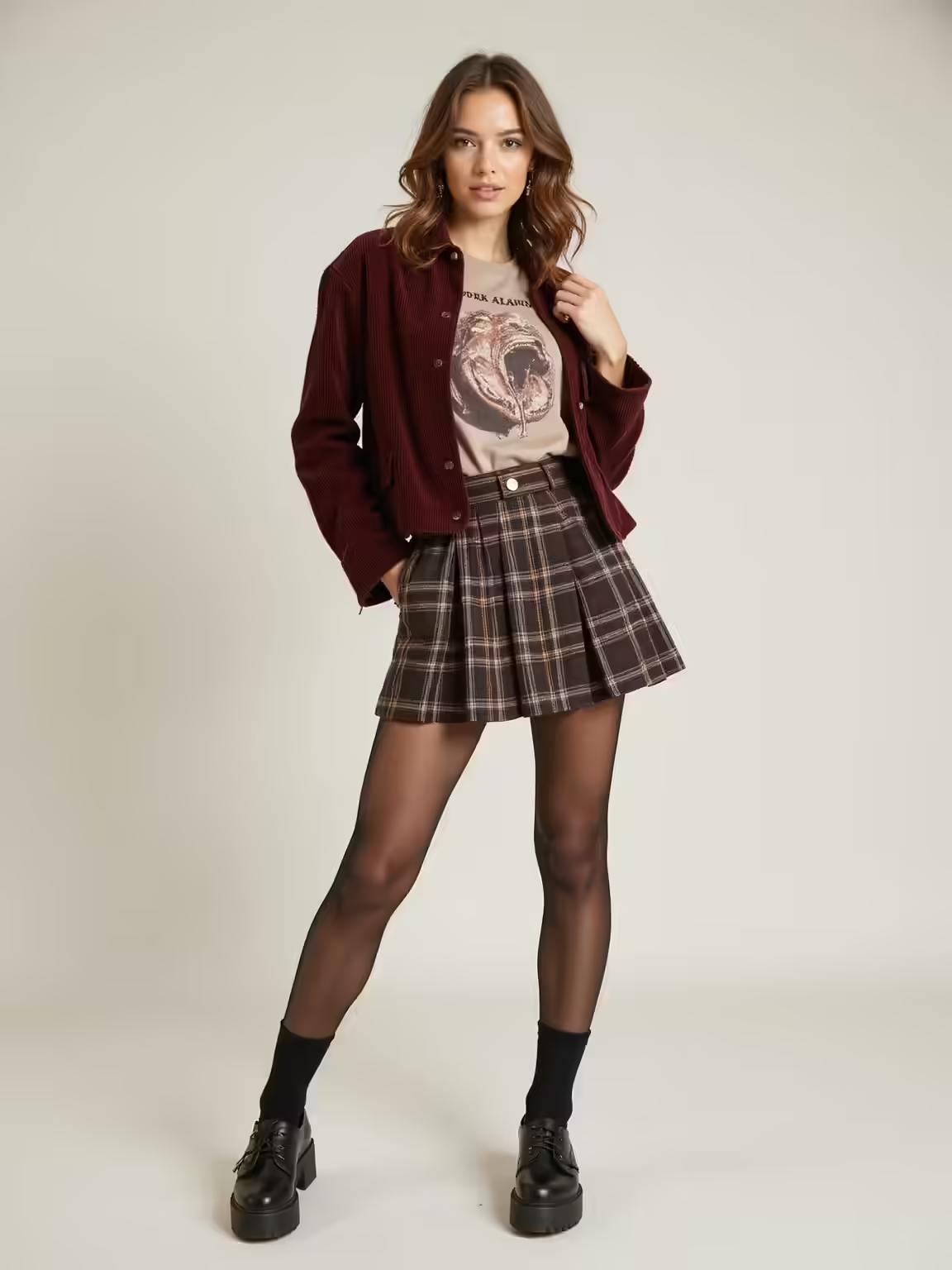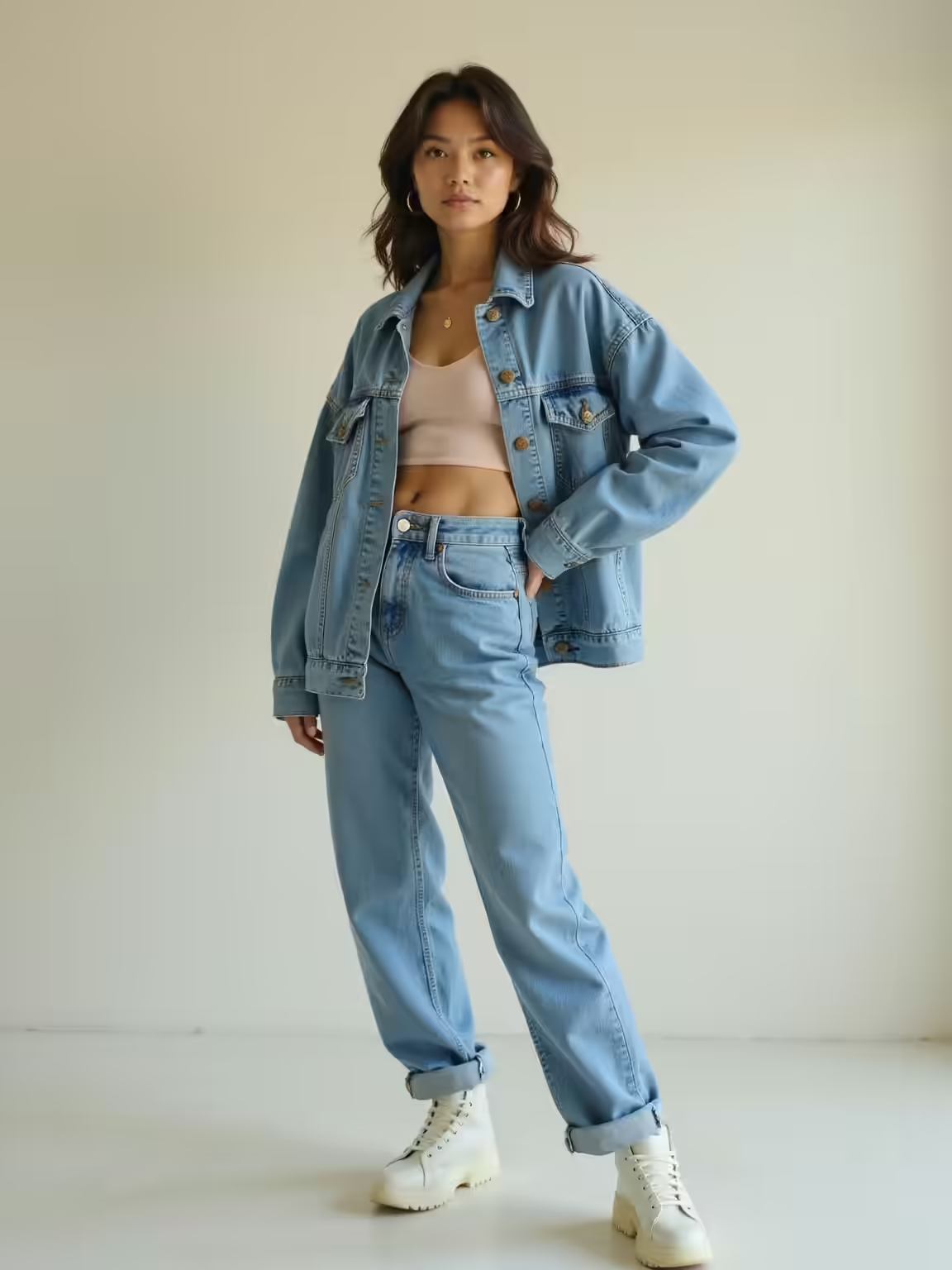

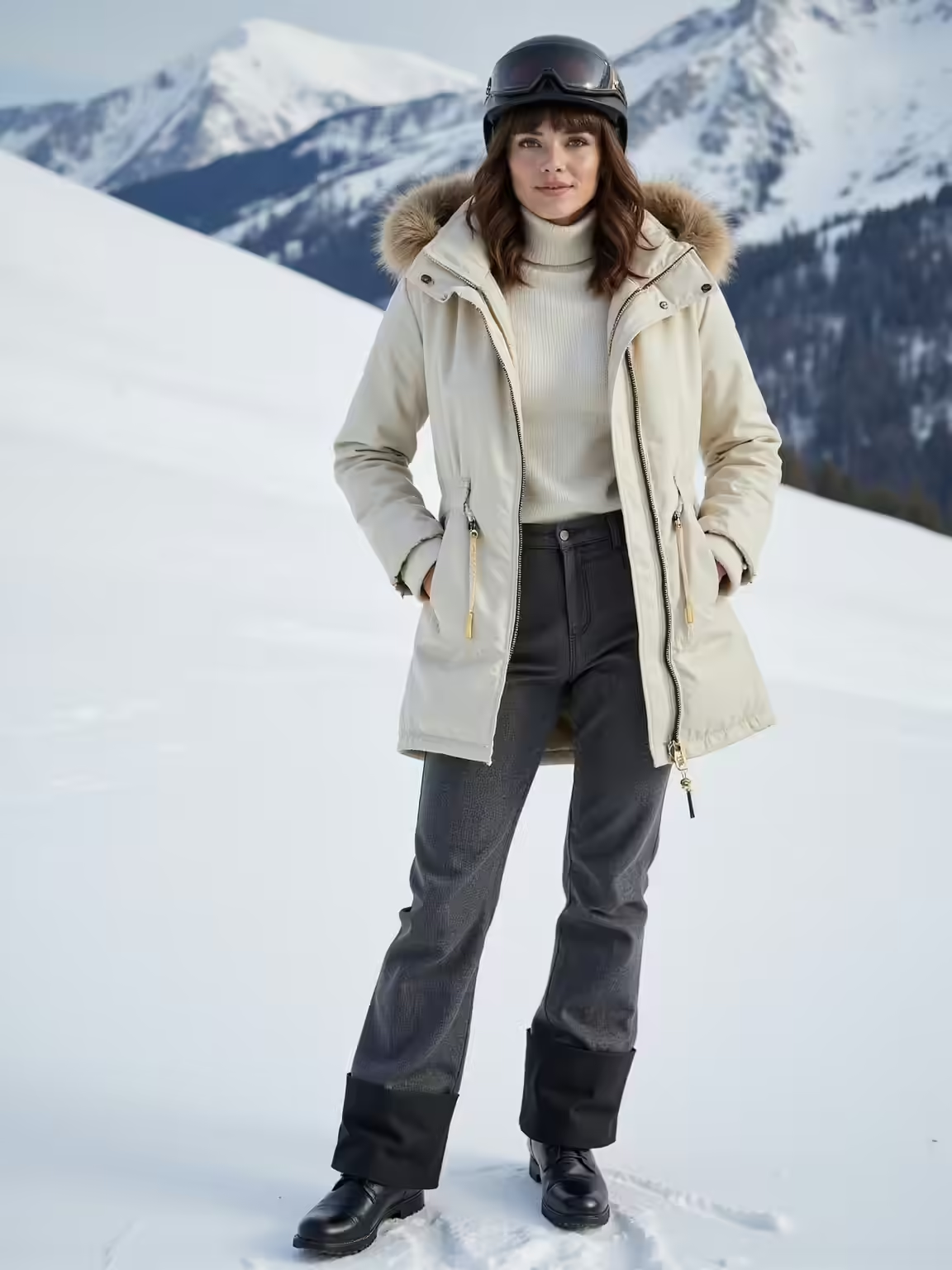
I build ski outfits that actually work and look cinematic: merino next-to-skin, slim insulating midlayers, and matte, breathable shells with vents for on-the-move comfort. I keep seams flat, silhouettes streamlined, and add bold color pops—vermilion or sunflower—to lift photos and faces.
I pair vintage parkas or quilted vests with tailored bibs, leather-trim accessories, and merino socks for warmth and character. Stick with fit-first shopping, and I’ll show how to balance function, style, and budget.
How to Build a Ski Outfit in 3 Steps
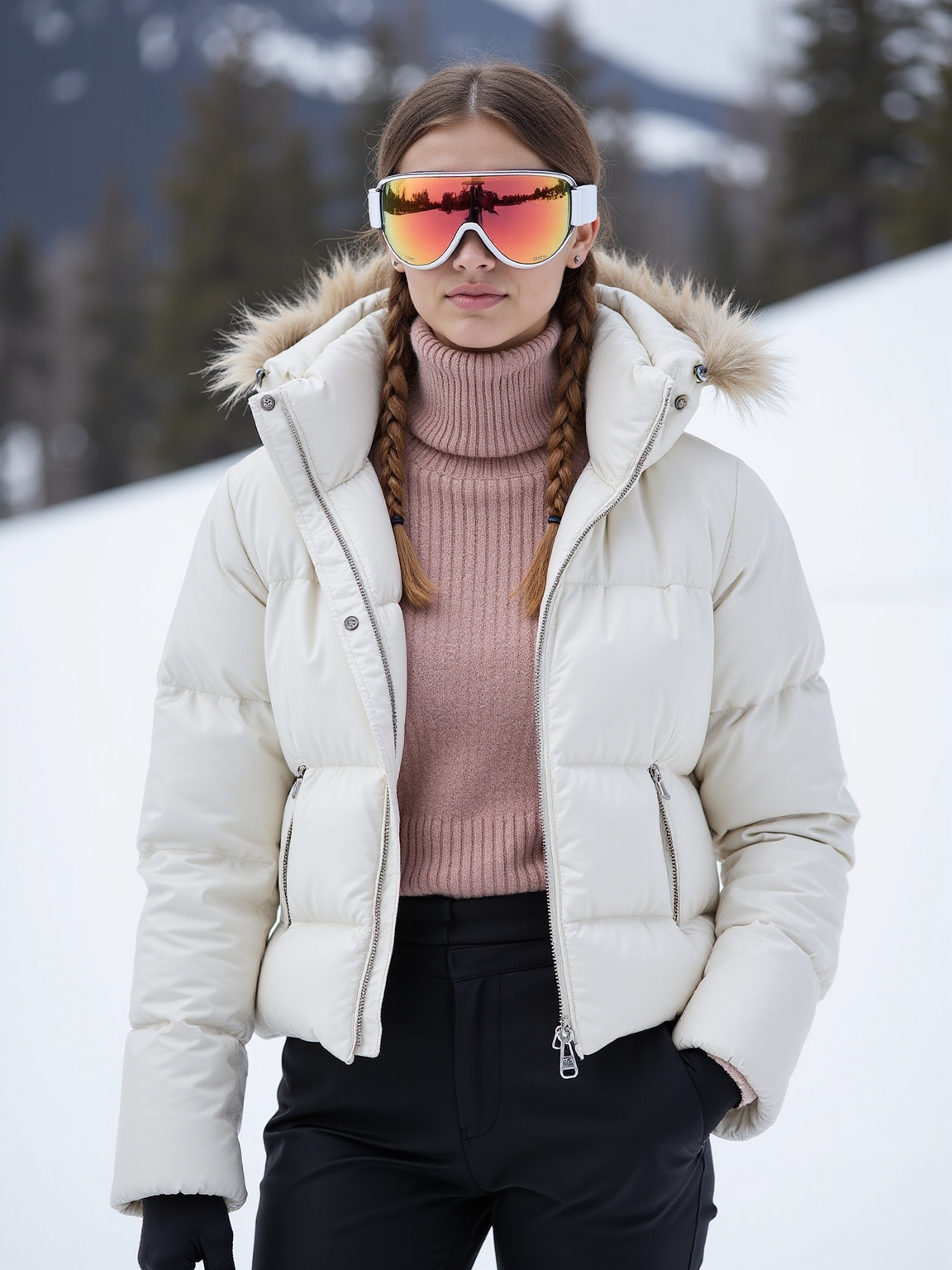
When I’m building a ski outfit, I start with function, then add style—because you won’t enjoy the mountain if you’re cold, wet, or restricted.
I pick a protective shell, layer insulating pieces, and finish with accessories that seal warmth and personality.
I favor clean lines, tactile knits, and a pop of color at the neck or glove to catch sunlight on powder mornings.
Those same principles apply to creating simple winter outfits for everyday style, focusing on clean lines and cozy layers that work off the slopes.
Balancing Warmth, Breathability, and Style
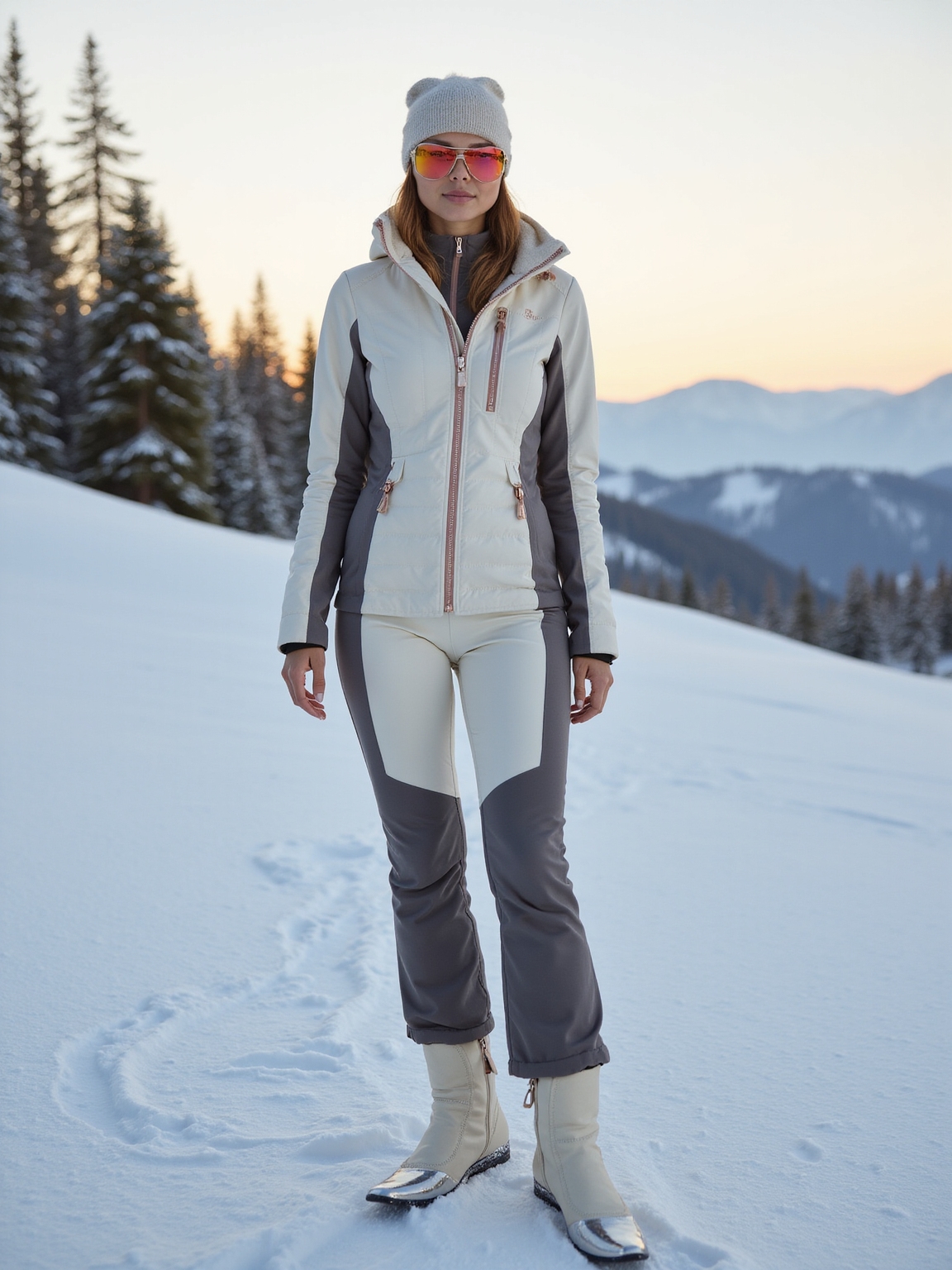
I always start with function fabrics—merino or synthetic base layers and a breathable insulated mid that traps heat without feeling bulky.
On top I choose shells with zippered vents so I can release steam on a sunny run without dumping warmth when the wind picks up. It keeps my outfit looking sharp and working hard, so I’m comfortable and stylish from lift line to last chair.
I also take cues from photograph-friendly layering used in chic ice skating outfits to ensure movement reads well in photos.
Layering With Function Fabrics
Think of layering as a conversation between fabrics — I pick each piece to keep me warm without making me sweat, breathable where I need ventilation, and still looking sharp on the lift.
I favor merino next to skin, a light insulating midlayer, and a weatherproof shell with clean lines.
Each layer earns its place: functional, flattering, and ready for crisp mountain light.
Ice skating dresses can inspire elegant cold-weather designs that translate well to the slopes.
Ventilation Without Sacrificing Warmth
Usually I lean into pieces that let me fine-tune heat on the move — zippers, vents, and fabrics that breathe where I need them to — because staying warm doesn’t mean overheating.
I choose layers that vent at exertion points, keeping silhouette and warmth intact while shedding steam.
- Zip vents under arms
- Mesh-lined pockets
- High-collar breathability
- Insulated skirts with vents
- Windproof, perforated shells
I often favor classic, understated pieces that reflect an old money aesthetic while remaining fully functional on cold days.
Choose Your Skiing Aesthetic (Retro, Minimalist, Techwear, Playful)
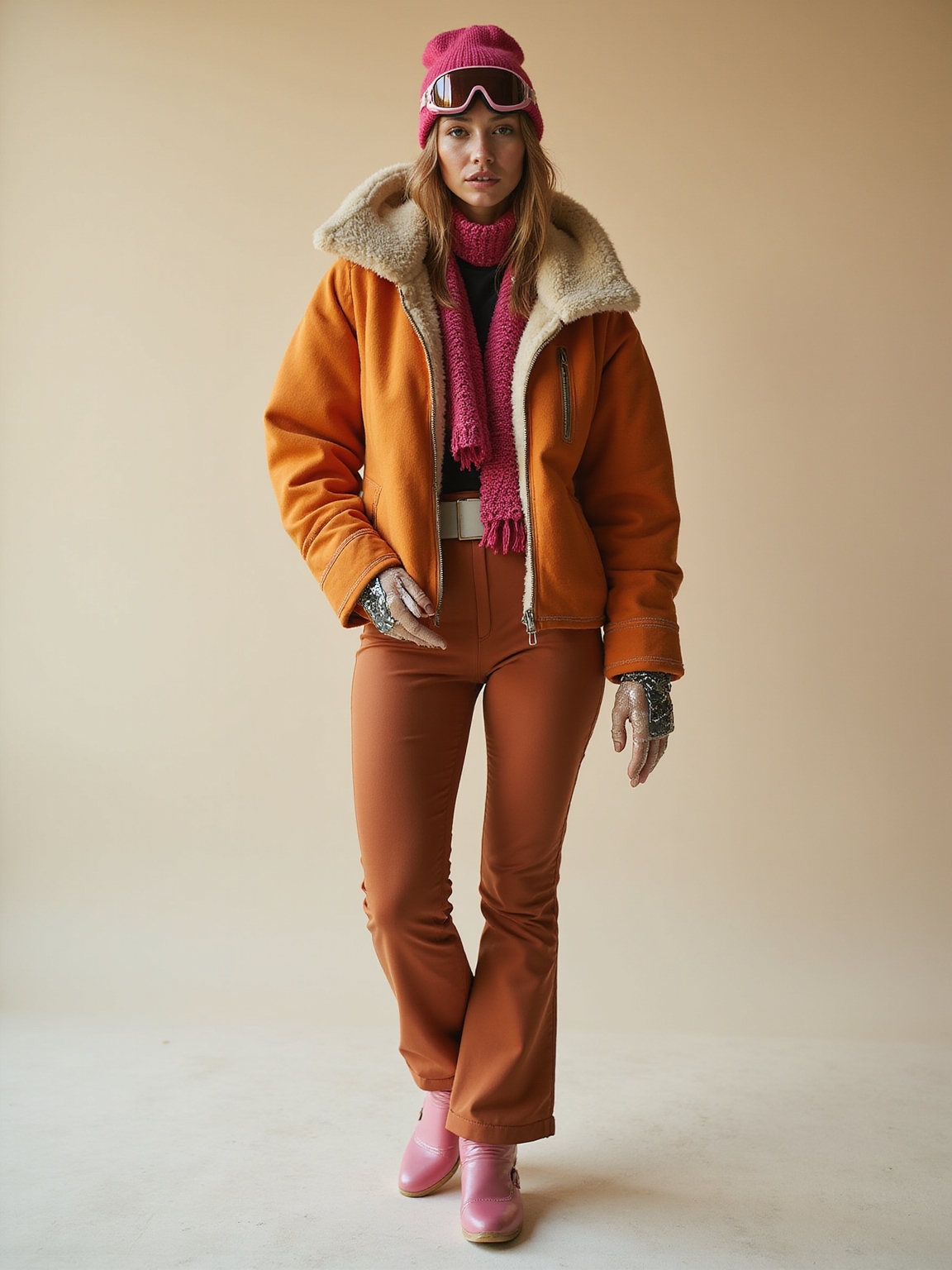
When I’m picking a skiing aesthetic, I start by imagining how I want to feel on the slope—nostalgic and bold, sleek and quiet, gear-forward and technical, or bright and playful—and let that feeling guide every choice.
I lean retro for color and texture, minimalist for clean lines, techwear for function-forward details, or playful for unexpected patterns, matching accessories to mood and mountain light.
Classic ski style often blends performance and fashion, drawing on Chic Ski Looks to inspire polished, slope-ready ensembles.
Ski Outfit Base Layers: Fit and Temperature Control
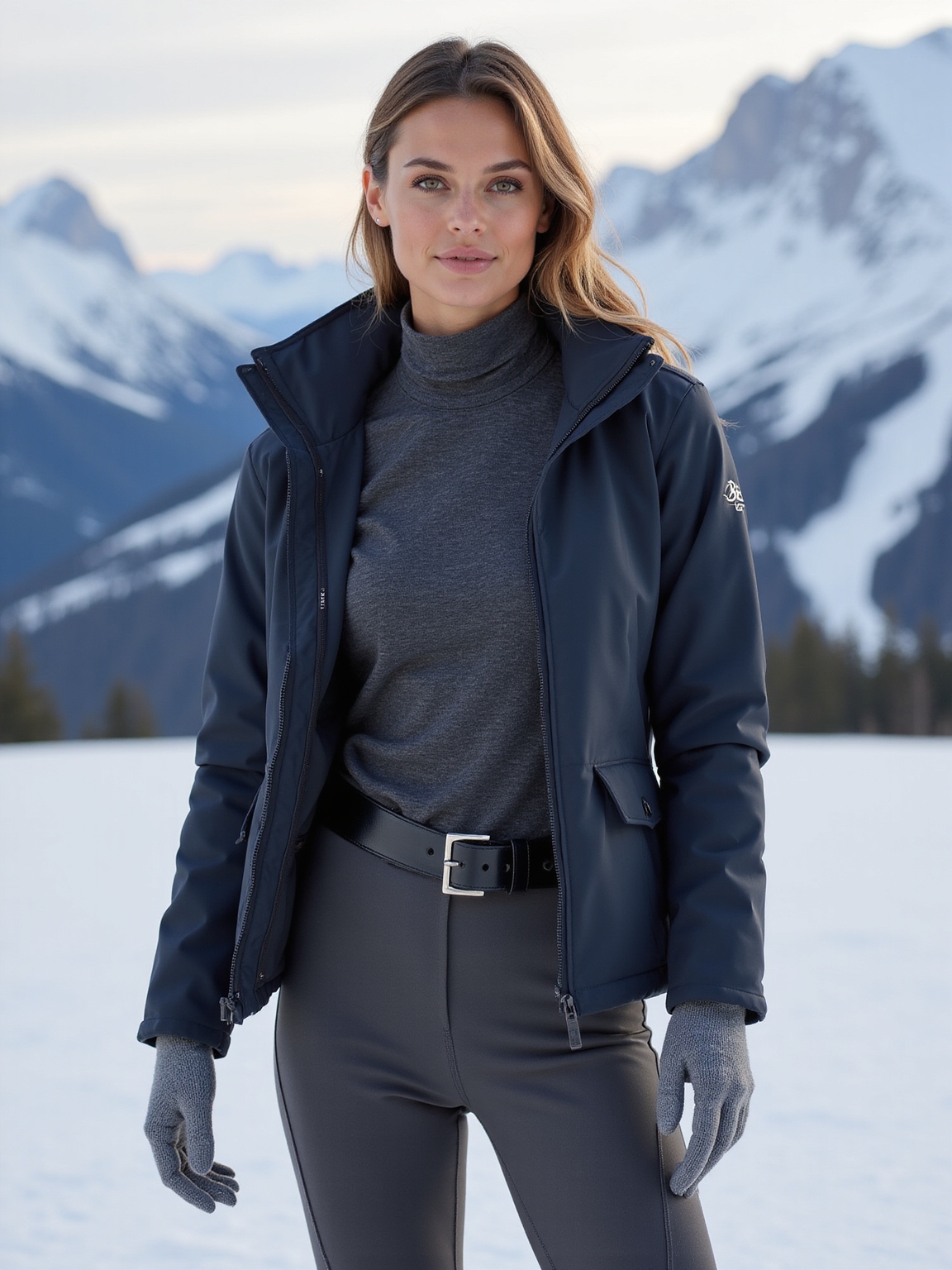
Although I love bold jackets and statement goggles, I always start my ski outfit with the base layer, because fit and temperature control dictate everything that follows on the mountain.
I pick snug, breathable pieces that move with me and manage sweat, so I stay warm without overheating.
- Merino next-to-skin warmth
- Sleek synthetic wicking
- Smooth flat seams
- Contoured fit at hips and wrists
- Thin, stretchy neck guard
I also consider how the base layer coordinates with cozy and stylish outer layers to balance warmth and style.
Layering Midpieces and Insulating Jackets for Mobility
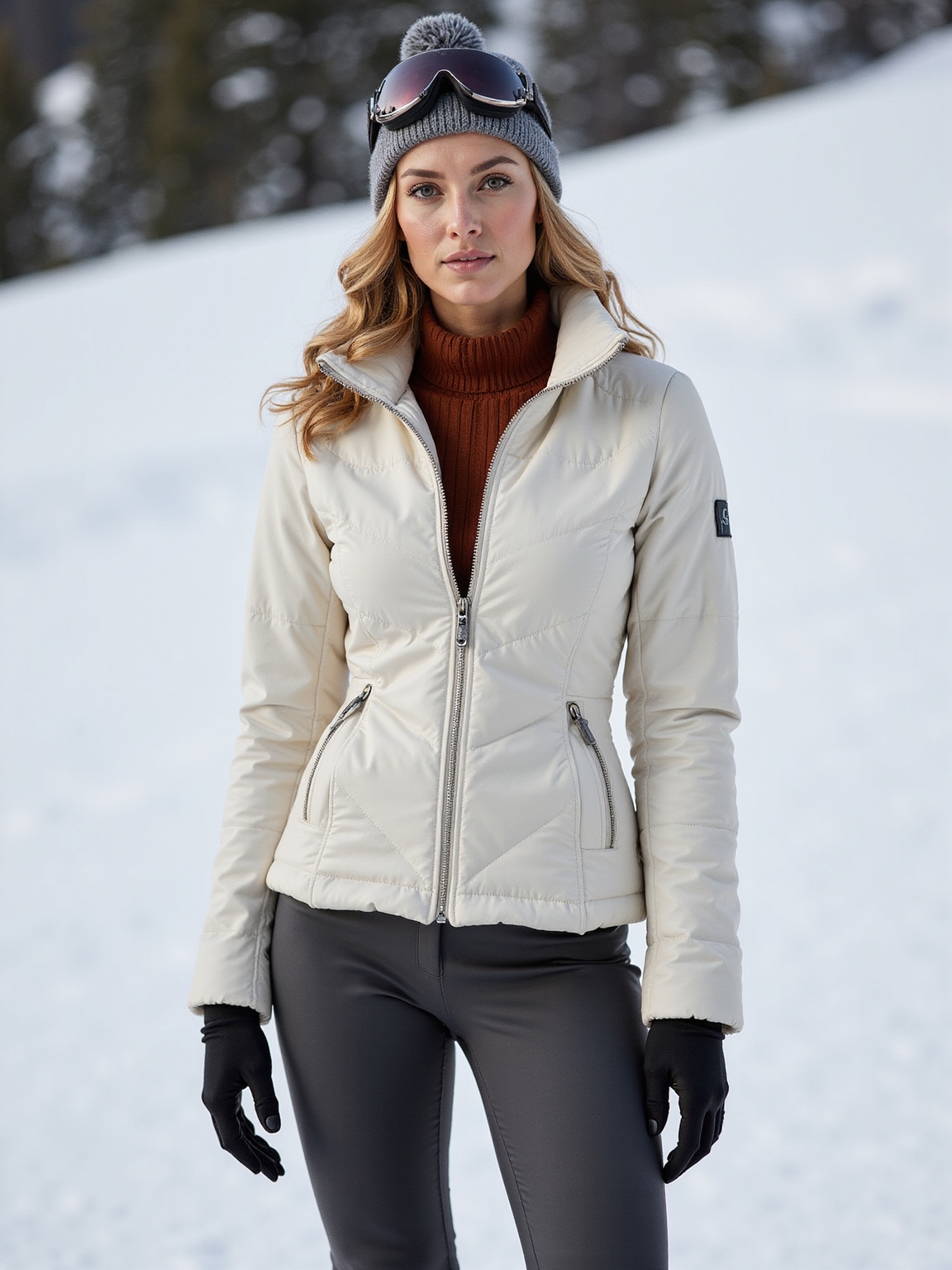
I like to layer a lightweight insulating midlayer under a slim, mobility-focused outer so I stay warm without feeling bulky on the lift.
You’ll notice breathable fabrics and articulated cuts let you reach, rotate, and tuck without catching at seams.
Let’s look at smart midpieces and jackets that move with you while keeping the aesthetic crisp.
Lightweight Insulating Midlayers
A few well-chosen midlayers can make or break a day on the mountain, and I always reach for pieces that balance warmth with movement.
I favor slim insulated fleeces and packable down sweaters that slip under shells without bulk, keeping me nimble and cozy while the light shifts.
- Quilted synthetic vest
- Thin down sweater
- Polartec fleece zip
- Sleeve-stitched pullover
- Lightweight PrimaLoft jacket
Warmth is best achieved by combining breathable fabrics with insulating layers to preserve heat without sacrificing mobility.
Mobility-Focused Outerwear
After layering slim midlayers, I reach for outer pieces that move with me — jackets and midpieces that shrug off bulk so I can twist, carve, and shoulder a pack without feeling boxed in.
I favor articulated sleeves, gusseted hems, and stretchy insulated panels that trap warmth where I need it while letting limbs flow.
Functional tailoring keeps my silhouette clean and my turns effortless.
How to Choose a Ski Shell (Waterproof Rating & Style)
When I’m picking a ski shell, I treat waterproof rating and style as partners—not competing priorities—because both keep me comfortable and looking good on the hill.
I favor breathable membranes with clean lines, taped seams, and a flattering cut that moves with me. Practical details meet polish.
- crisp powder spray
- quiet zip pulls
- matte fabric sheen
- adjustable hood silhouette
- confident movement
City-Chic Ice Skating Looks for Winter Energy inspires how urban layering can translate to the slopes with a focus on streamlined silhouettes and functional details.
Ski Outfit Color Palettes That Pop on Snow
I often pick colors that read bold against the white—think punchy vermilion, deep teal, or sunflower yellow—because they make movement and mood instantly legible on the mountain.
I favor contrasts that warm the face and lift photos: a frosty blue base with a molten accent, or cocoa neutrals brightened by a crisp alpine lime. They read joyful, clear, and unfussy.
Pattern Mixing and Prints That Read at a Distance
Patterns are like signals on the snow, and I choose them to read clearly from the chairlift and in photos: bold geometrics, oversized florals, and high-contrast plaids carry energy across distance without muddling.
I mix scales and limit palette to keep looks crisp. I also lean into texture and tempo so prints sing together.
- Oversized chevrons
- Distant floral silhouettes
- High-contrast tartans
- Wide stripes
- Graphic ikat panels
Ski Pants & Bibs: Cut, Insulation, and Silhouettes
Those bold prints are striking up top, but your lower half has to work just as hard—cut, insulation, and silhouette shape how you move, feel, and photograph on the mountain.
I favor tapered pants for crisp lines and roomy bibs for layered warmth; lightweight synthetic fill for mobility, down for cold days. Tailor the rise and cuff to your boots for sleek, practical polish.
Accessories That Add Warmth, Storage, and Style
Usually I reach for accessories that do three things at once—deliver warmth, stash the essentials, and finish the look—because a hat, gloves, and a smart pack can make or break a day on the mountain.
I choose pieces that feel cozy and practical, then let small details lift the outfit.
- Fuzzy beanie in dusk blue
- Leather-trimmed mittens
- Quilted hip pack
- Wool neck gaiter
- Cable-knit sock liners
Goggles, Helmets, and Eyewear : Matching Function to Vibe
I always choose goggles and helmets that do more than look good — they need to protect me and perform in changing light.
I’ll pair lens tints to the day’s weather and coordinate frame colors or matte finishes with my jacket for a cohesive vibe.
Let’s talk about how to balance safety features with stylish details so you don’t sacrifice either.
Protective Yet Stylish
When I gear up for a day on the mountain, I want protection that reads as intentional style, not just safety gear shoved on as an afterthought.
I choose streamlined helmets, low-profile goggles, and smart straps that whisper polish.
They feel crisp in cold air and confident on steep runs, blending function with a quietly curated vibe.
- Matte black shell catching sunrise
- Plush liner warmth
- Spherical lens silhouette
- Leather-trim strap detail
- Whisper-quiet vents
Color And Lens Matching
How do you balance mood and math on the mountain? I pick lenses by light and emotion—rose for soft mornings, mirrored for bright glare—then match helmet tones to elevate the vibe.
I favor contrast: a matte charcoal shell with a warm amber lens or a retro cream helmet with cool blue glass. It’s functional harmony: clear sight, confident style, seasonal ease.
Footwear and Socks: Comfort Plus Coordinated Style
I’ll start by saying that choosing the right boots and socks can make or break a day on the slopes — comfort matters as much as looks.
I pick insulated liners, snug shells, and cushioned merino socks that match my jacket hue while keeping toes warm. Small details elevate mood and performance.
- steamed leather polish
- ribbed wool warmth
- buckle clicks
- powdered snow dust
- sunset-reflective trim
Vintage Ski Gear and Upcycling Tips
My boots and socks tell a story of slopes past, so it makes sense I hunt for vintage pieces that carry the same lived-in charm. I salvage faded parkas, patch frayed mitts, and swap mismatched buttons to revive textures and color.
A careful wash, a tailored hem, and tasteful enamel pins keep warmth and character, making old gear sing anew on crisp winter days.
Mixing Performance Brands With Fashion Pieces
I like to lean into the practicality of performance brands while dressing them up with thoughtful fashion pieces, so my ski kit looks as intentional off-piste as it performs on it.
I mix technical shells with cashmere scarves and sculptural sunglasses, balancing utility and polish for crisp mornings and glowing aprés.
- Quilted shell
- Cashmere neck wrap
- Retro goggles
- Tailored midlayer
- Leather-sole boots
How to Shop Smart: Fit Checks, Fabrics, and Budgets
When I’m shopping for ski looks I always check the fit first—nothing ruins a day on the slopes like restrictive sleeves or a too-tight waist.
After that I think in layers, so I can mix insulation and breathability as the weather shifts.
And I prioritize fabric function over pure fashion, choosing materials that breathe, shed moisture, and last so my budget stretches across seasons.
Fit First, Layer Second
Because fit makes the difference between trudging and carving, I always start there before I worry about trendy colors or fancy layers.
I check mobility, sleeve length, and waist comfort, then plan thin insulating pieces below a roomy shell. Always balance movement with warmth; style follows sensible proportions.
- snug sleeve under a forgiving jacket cuff
- tapered pant over ski boot
- flexible shoulder reach
- breathable collar gap
- clean hemline above gaiter
Fabric Function Over Fashion
While I still love a pop of color, I shop for fabric first and fashion second, since the right materials decide whether your day ends in warmth or regret.
I favor breathable merino baselayers, waterproof breathable shells, and insulated pieces that compress into my pack.
I check seams, zippers, and breathability ratings, balancing performance with price so style never sacrifices comfort on crisp mountain days.
I always treat dressing for the slopes like packing a picnic: once, I stuck a thermos of hot cocoa into a canvas tote and everything else felt cozier for it.
That little comfort taught me to balance function and flair—warm base layers, a breathable mid, a statement jacket—so I ski warm, move freely, and look like I belong in the mountain light. Try it: a small cozy choice changes the whole day.