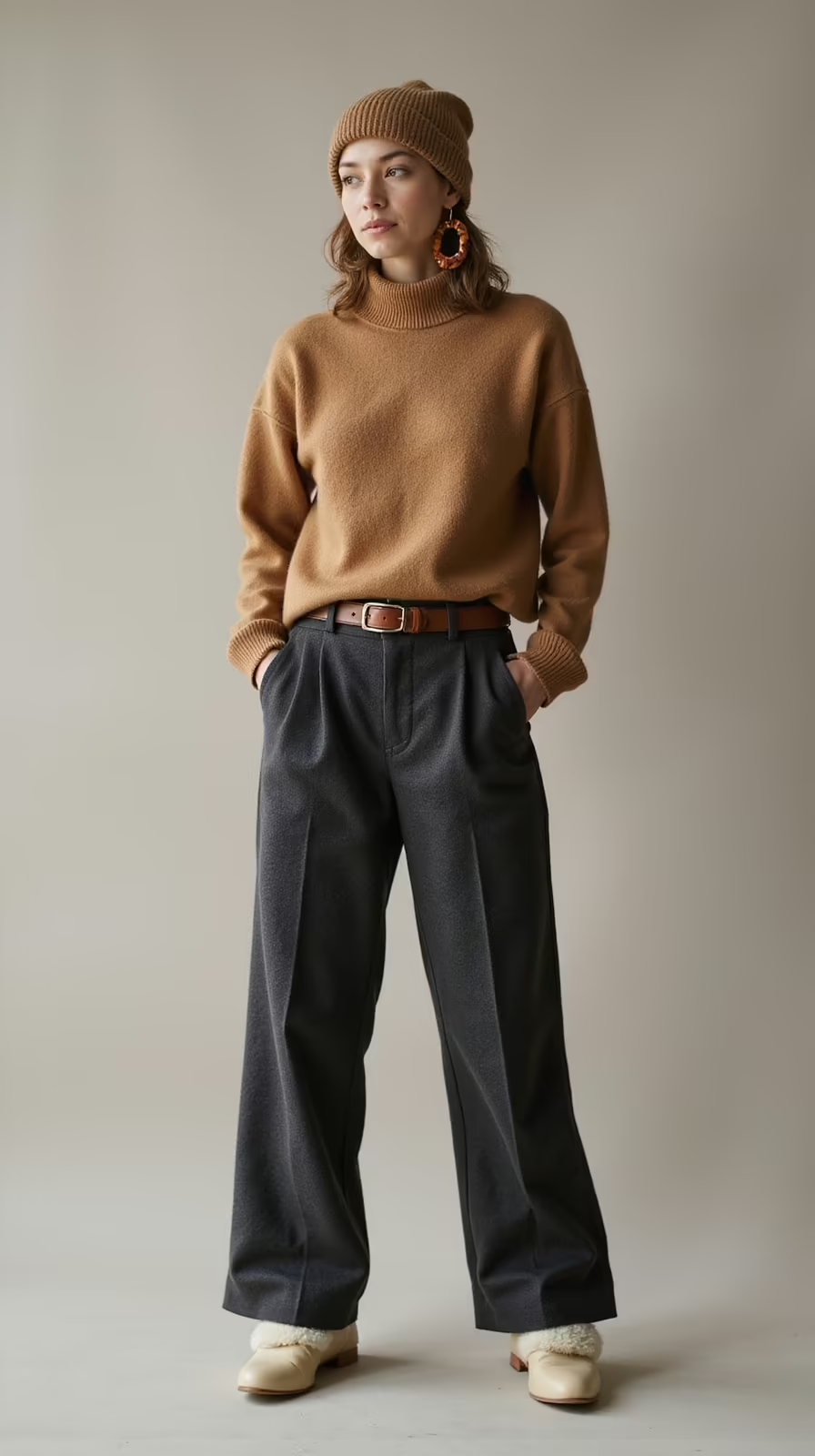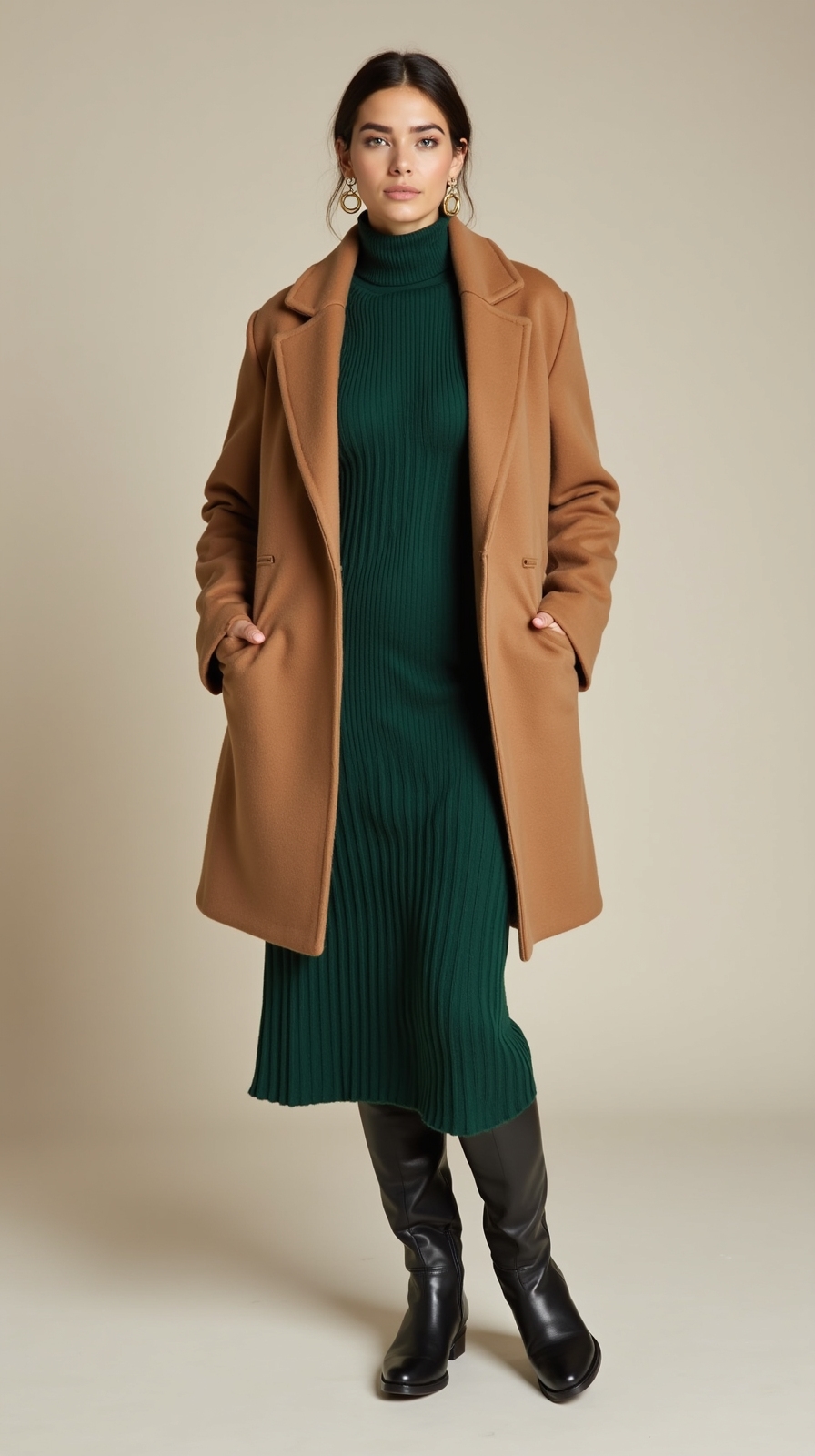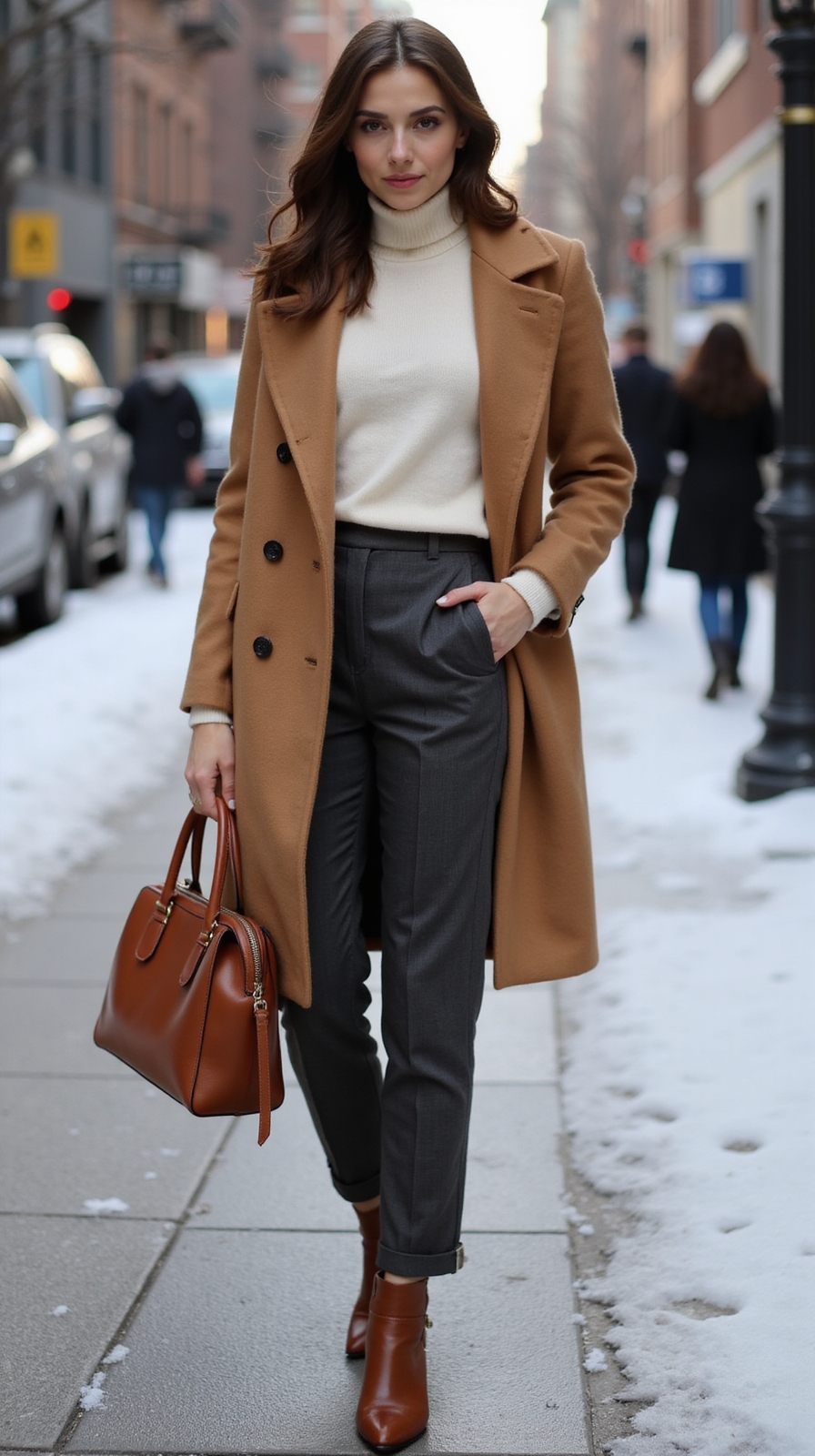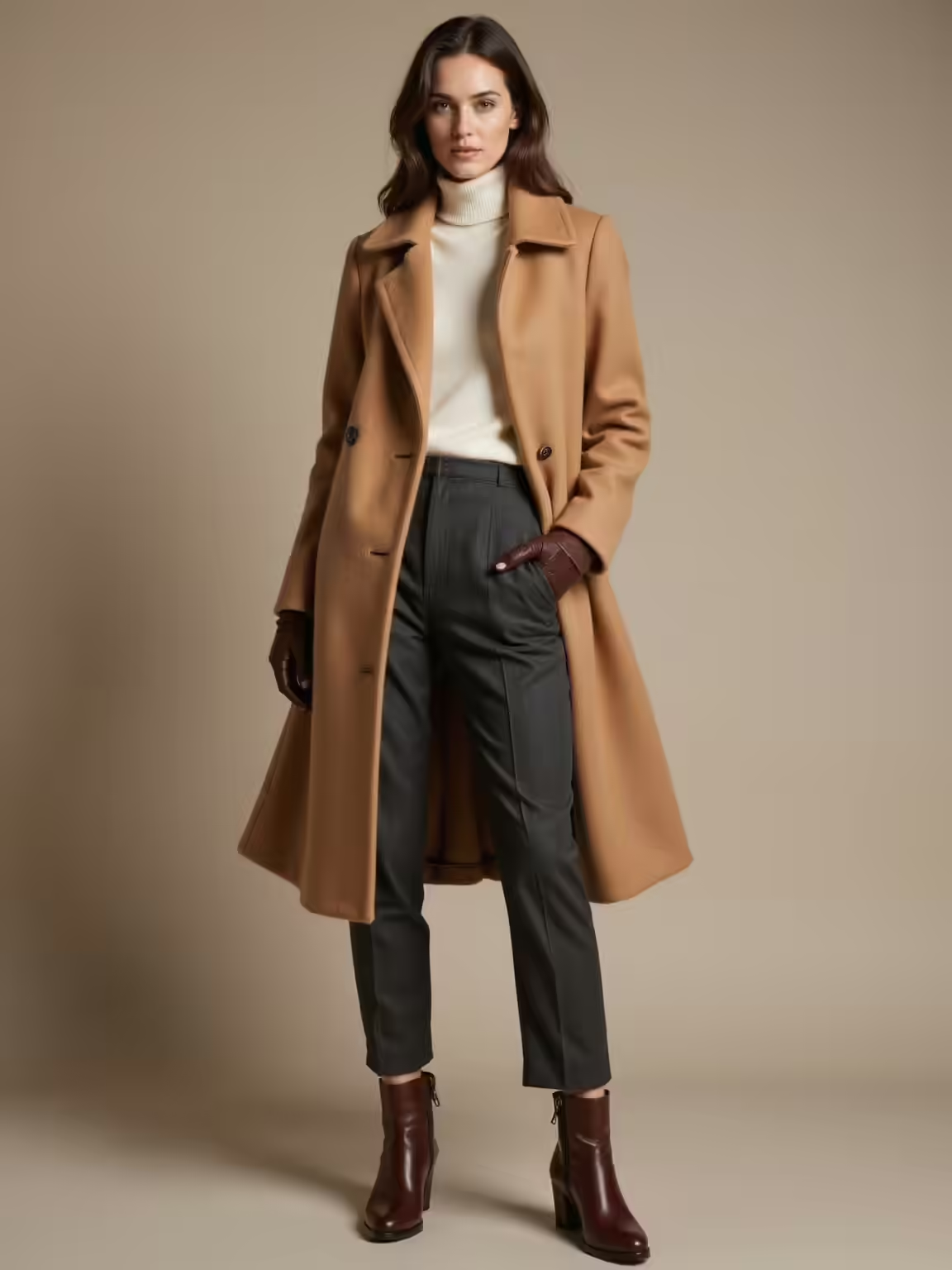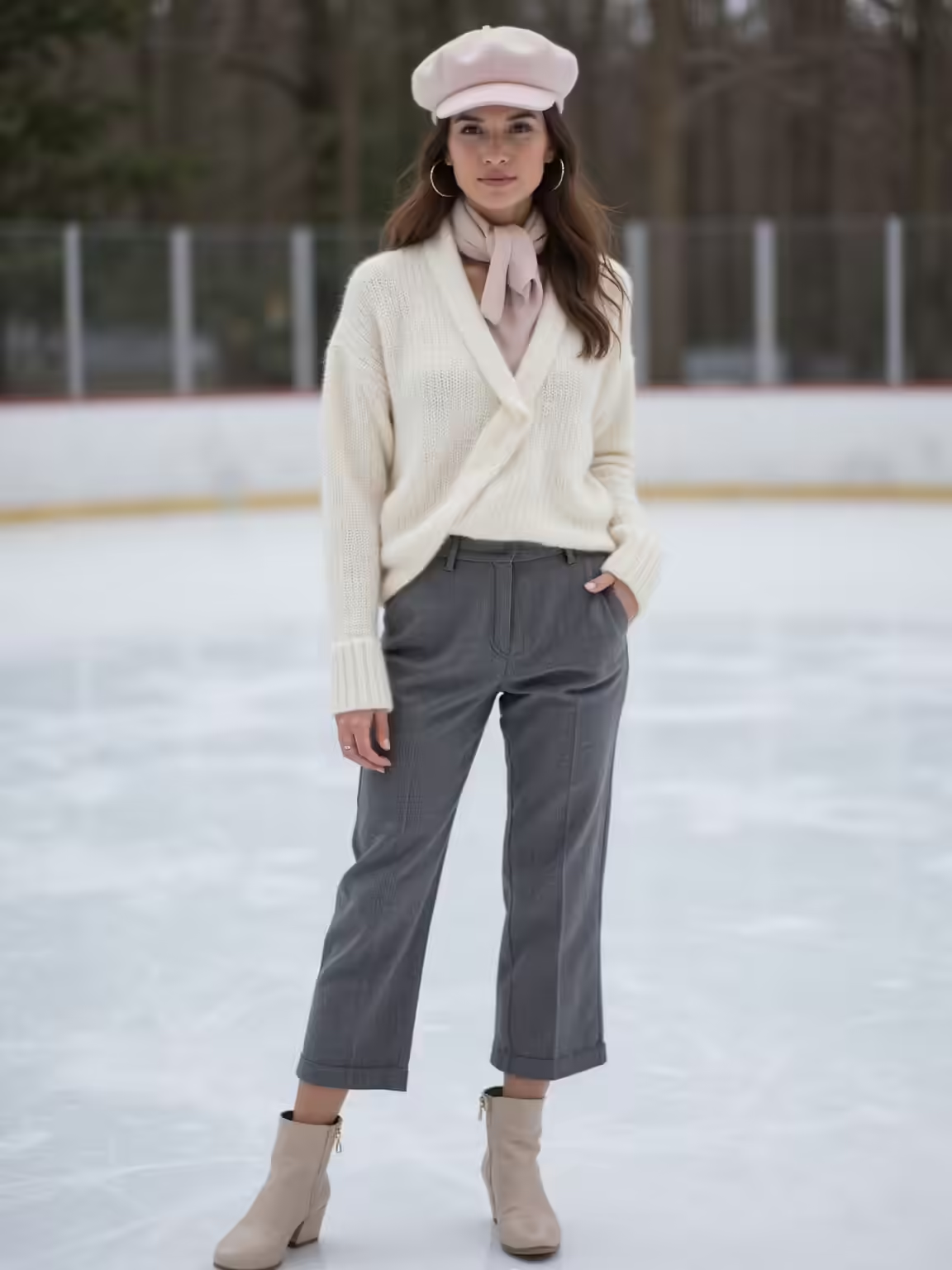

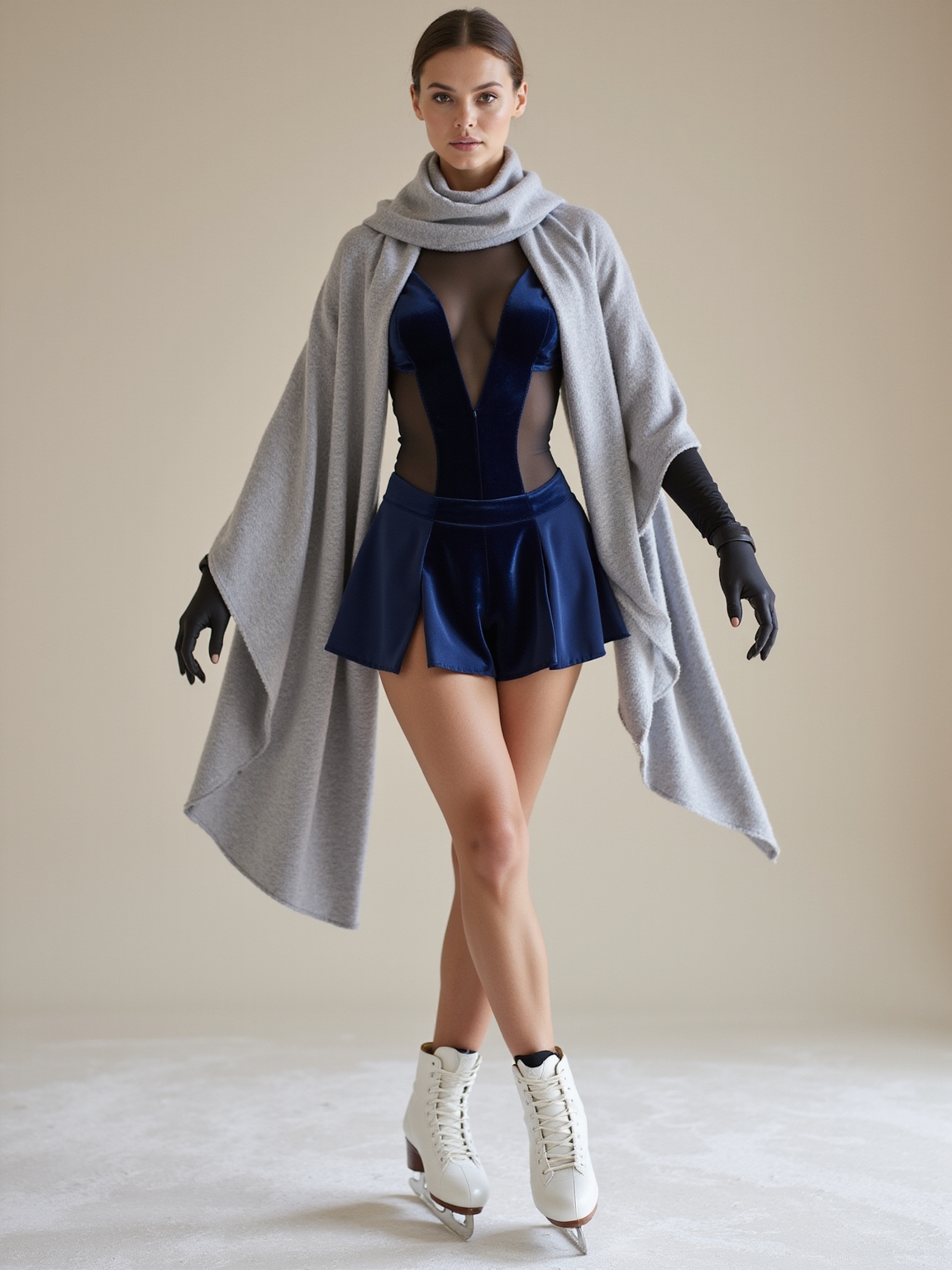
I’ve learned to dress for the ice so I stay warm, sleek, and camera-ready after the first lap: thin merino or moisture-wicking base layers, a slim insulating midlayer, and a wind-resistant shell keep lines clean and movement easy.
High-waist, flat-seam leggings or matte tights preserve silhouette; slim socks, a neck gaiter, and touchscreen gloves add warmth without bulk. I favor streamlined parkas or packable vests for photos and mobility—scroll on for outfit ideas, fabric picks, and quick rink fixes.
Quick Picks: What to Wear for Different Ice Rinks
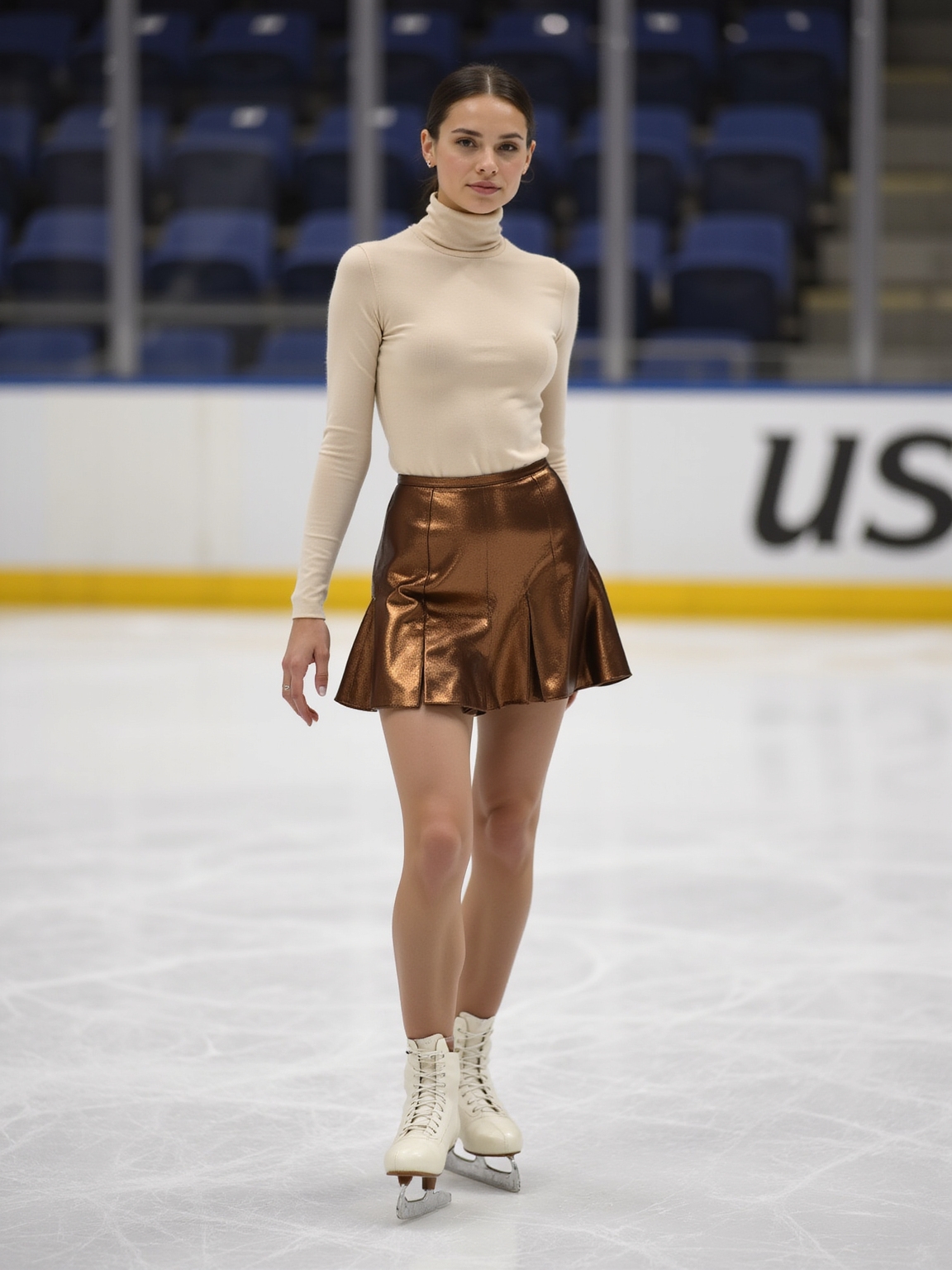
If you’re heading to an outdoor pond or a chilled Olympic oval, I’ll help you choose layers that keep you warm without weighing you down.
I favor breathable base layers for daytime ponds, a slim insulated jacket for twilight sessions, and a sleek thermal turtleneck beneath a windproof shell for windy rinks.
Gloves, thin wool socks, and a compact scarf finish the look—practical, tidy, seasonal.
Casual ice skating outfits can be styled to feel effortless and comfortable for relaxed winter days, often described as cozy casual looks that balance warmth and movement.
Must-Have Pieces for Warm Skating Outfits
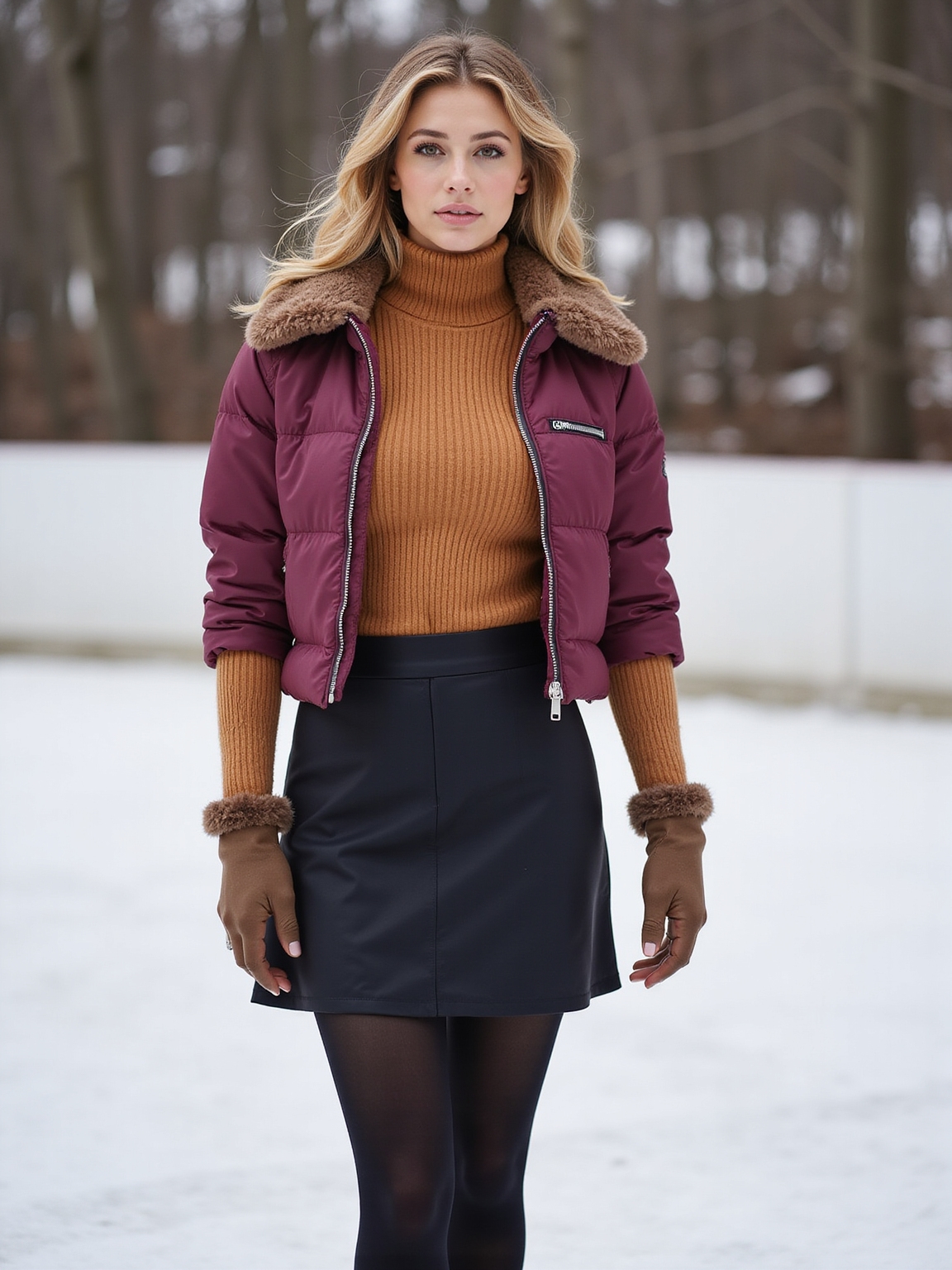
When I dress for the rink I start with smart layers—base pieces that wick, a midlayer for warmth, and a sleek outer shell that moves with me.
I always pick an insulated coat or parka that deflects wind without bulk. A snug hat, touchscreen gloves, and wool socks finish the look and keep the cold from stealing the fun. I also make sure to include insulated outerwear as a key piece to maintain warmth without sacrificing mobility.
Layering Basics
Because cold on the ice is always cunning, I build my outfits around a few reliable layers that trap warmth without bulk: a moisture-wicking base, an insulating midlayer, and a wind-resistant outer.
I favor slim thermal tops, lightweight fleece or down vests, and snug leggings that move with me.
Thin wool socks, a neck gaiter, and convertible gloves finish the kit—practical, chic, and quietly cozy.
A polished look often comes from keeping silhouettes streamlined and choosing quality fabrics that drape well, like those recommended for effortlessly polished skating wardrobes.
Insulated Outerwear
Layering keeps the core right, but an insulated jacket or parka is what really lets me enjoy long sessions on the ice without feeling every draft.
I pick pieces that move with me, shed snow, and read like winter poetry.
- Slim down jacket
- Mid-thigh parka
- Down-filled bomber
- Water-resistant shell
I also choose silhouettes and fabrics that photograph well in motion, like those featured in Chic Ice Skating Outfits That Shine on the Rink.
Warm Accessories
I always reach for a handful of warm accessories before I lace up, because the right hat, gloves, and neckpiece turn a good skate into a comfortable, lingering one.
A snug beanie, touchscreen-friendly gloves, and a thin cashmere neckwarmer keep warmth close without bulk. I prefer neutral tones with a single pop—practical, elegant, and whispering of hot cocoa breaks between laps.
Indoor rinks are typically climate-controlled, so choosing breathable layers that trap heat without overheating is key, especially when you want to skate comfortably for longer indoor settings.
Fabrics to Choose: Stretchy, Wicking, Insulating
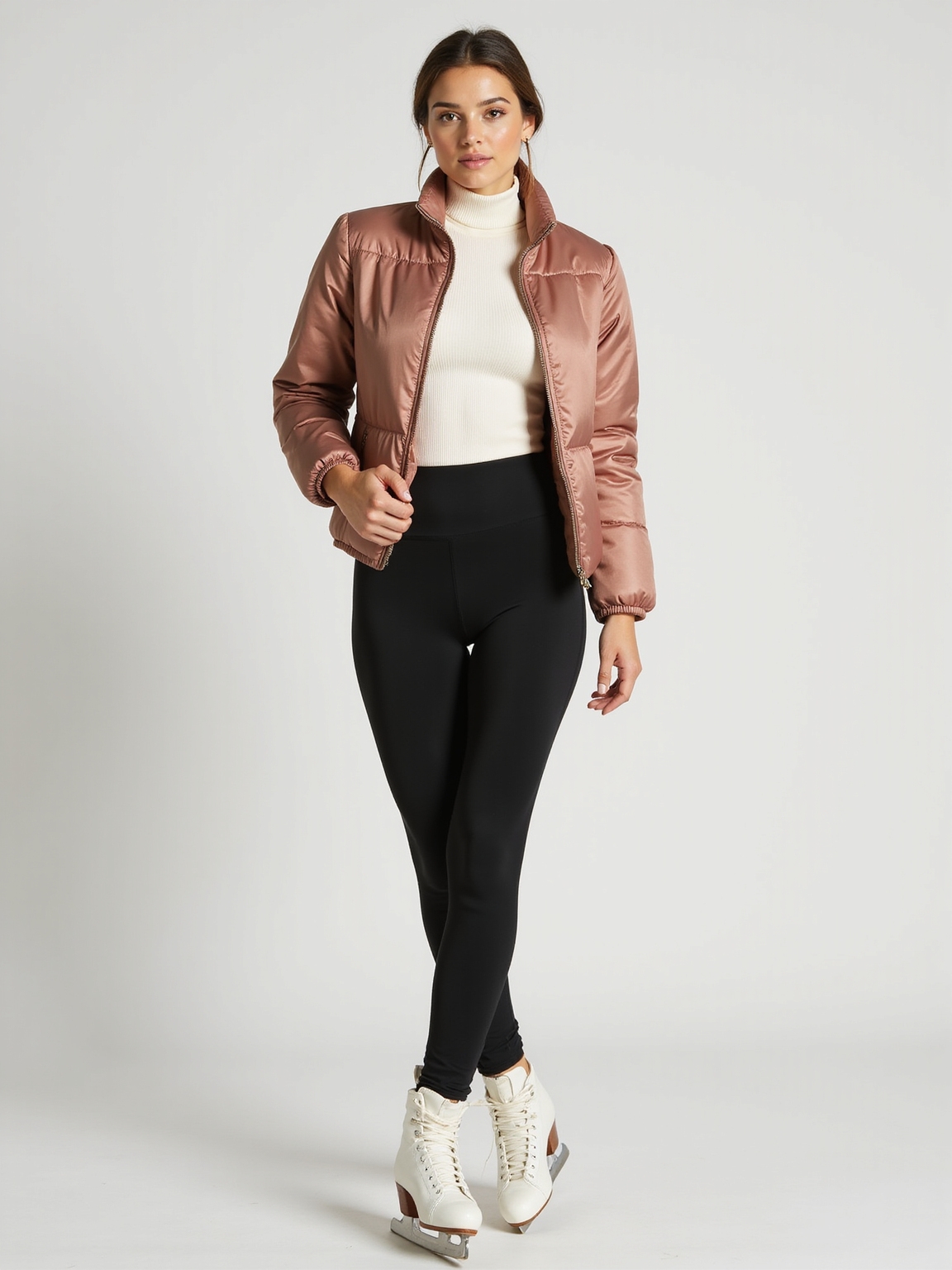
When I pick fabrics for the ice, I favor stretchy performance materials that move with my body and don’t pull at the edges of a spin.
I layer moisture-wicking pieces close to the skin to whisk away sweat, then add thermal insulators that trap warmth without bulk.
Together they make an outfit that’s aerodynamic, comfortable, and quietly protective on crisp winter air.
I also focus on effortless, casual silhouettes that recreate the effortless casual vibe from everyday streetwear to the rink.
Stretchy Performance Fabrics
Pick fabrics that move with you: I favor materials that stretch without sagging, pull moisture away from skin, and trap warmth where it matters.
- Lightweight ponte for structure and glide.
- Four-way stretch blends for confident reaches.
- Brushed interiors to hold gentle heat.
- Smooth shells that resist wind and keep silhouette sleek.
They feel like a quiet promise on cold evenings. A smart winter wardrobe also pairs these choices with insulating layers to maintain shape and warmth without bulk.
Moisture-Wicking Layers
Moving from structure to skin feel, I look for base and mid-layers that bend with my body, pull sweat away, and keep a thin pocket of warmth where it counts.
I choose smooth, stretchy blends—modal or polyester with spandex—that dry fast, resist cling, and breathe.
They sit sleek under skirts or tights, letting motion and a crisp, cool breeze meet only what I intend.
For a Pinterest-ready look, I often layer a fitted turtleneck under a cropped fleece for streamlined warmth and style, emphasizing moisture-wicking fabrics.
Thermal Insulating Materials
I favor fabrics that feel like they were made to move with the body and hold just enough warmth without weighing you down: think stretch merino blends, brushed polyester-spandex knits, and technical fleeces that trap micro-layers of air while wicking sweat away.
- Merino blends — breathable, odor-resistant.
- Brushed knits — soft, flexible.
- Technical fleece — lofty warmth.
- Wind-resistant shell — seals heat without bulk.
Base Layers That Stay Smooth
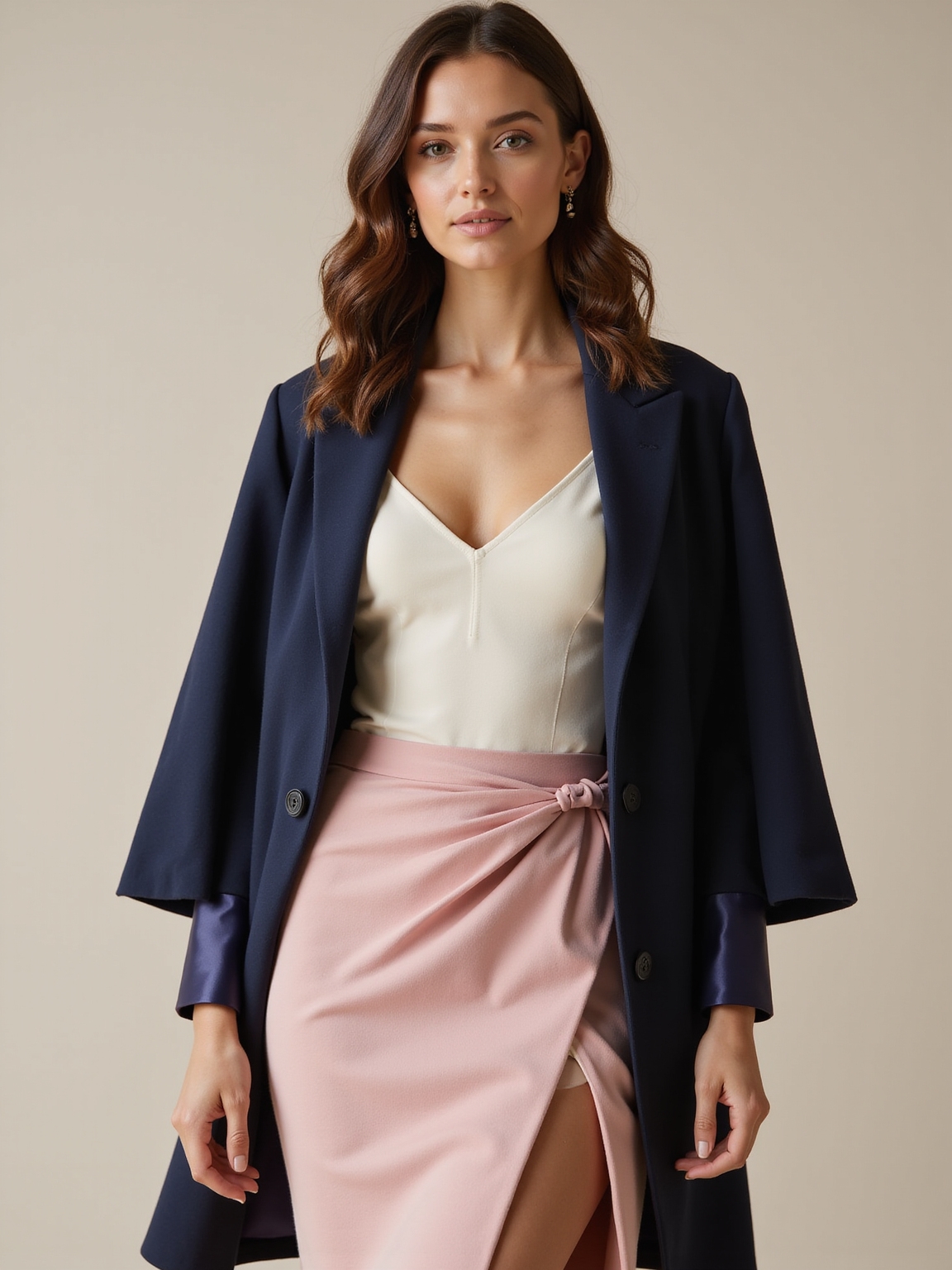
When I’m layering for a cold-rink session, I choose base pieces that stay sleek against my skin so seams and bunching never interrupt a clean line; they should feel like a quiet promise under every costume. I favor smooth modal or fine merino blends that glide, wick, and whisper warmth.
They disappear under skirts and tights, steadying movement and keeping silhouette and focus crisp.
Shaping Midlayers Without Bulk
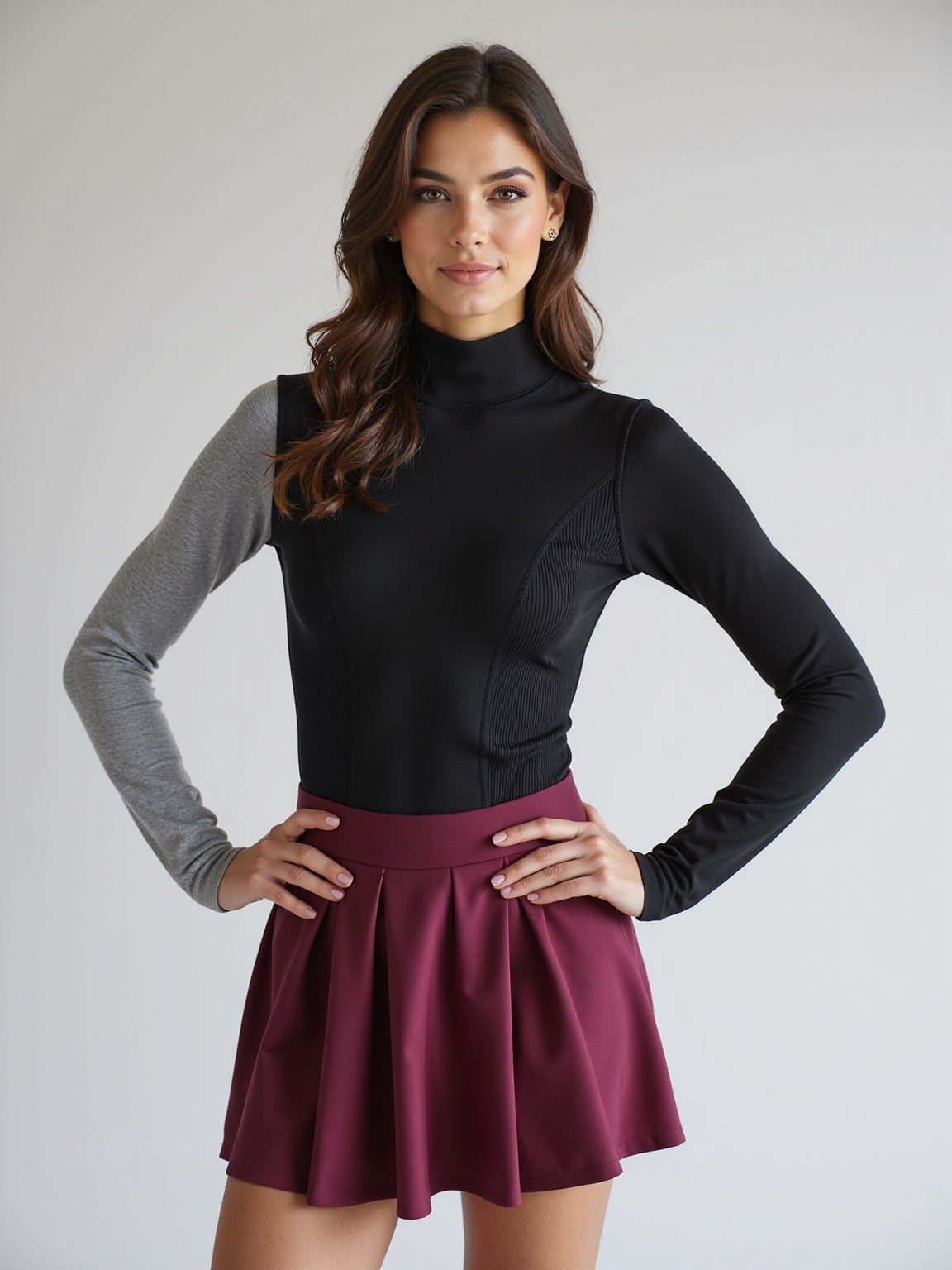
I like to build a streamlined silhouette with layered slimming techniques that never feel restrictive on the ice.
I reach for smooth, stretchy fabrics that hug and flex where I need shaping, then add a lightweight midlayer for warmth without bulk. You’ll notice movement stays elegant and clean when each piece does its subtle, sculpting job.
Layered Slimming Techniques
Slip into a slim midlayer and watch the whole silhouette sharpen; I’ve learned how subtle cuts and fabrics can sculpt warmth without adding bulk.
I pair pieces thoughtfully:
- Fitted merino base for sleek warmth.
- Waist‑tapered fleece for gentle shaping.
- Short quilted vest to lift the line.
- Light belt or seam detail to define the waist.
These tricks keep motion graceful and looks crisp.
Smooth, Stretchy Fabrics
Often I reach for smooth, stretchy midlayers because they sculpt without shouting — fabrics like brushed merino blends, microfleece with Lycra, or bonded jersey hug curves and move with you, keeping lines clean under a shell or dress.
I choose slim, breathable pieces that warm without bulk, letting graceful motion and crisp silhouettes carry the season’s quiet elegance on the ice.
Outer Layers That Block Wind and Move With You
When the wind bites at the rink’s edges, I reach for outer layers that shelter without stiffening my stride.
I tell you what I pick, simply and lovingly:
- Lightweight insulated shell that breathes.
- Soft-shell hoodie with stretch panels.
- Packable down vest for core warmth.
- Water-resistant wrap with articulated sleeves.
They move with me, block gusts, and keep the look effortless.
Skirts, Dresses, or Pants That Let You Skate
On cold mornings at the rink, I pick skirts, dresses, or pants that let me move without thinking about them; they should curl with my stride, clear my blades, and keep the line of the body visible.
I favor mid-length skirts that flutter, streamlined dresses with subtle stretch, or tapered pants with clean seams—pieces that honor motion, catch the winter light, and never tangle with a turn.
Tights and Legwear That Hide Sweat
I’ll usually reach for moisture-wicking leggings when the rink’s warmth makes my legs sweat, because they pull dampness away and keep my lines clean.
Layering thin tights under a skirt or over leggings adds insulation and a finished look without trapping moisture, so you stay comfortable through practice and performances.
In crisp evening light, these simple choices feel as practical as they’re quietly elegant.
Moisture-Wicking Leggings
I often reach for moisture-wicking leggings first because they keep practice feeling clean and composed even when I’m pushing hard. I love how a dry sheen follows the rhythm of laps, like late-autumn light.
Consider these practical comforts:
- Lightweight fabric that breathes.
- Flat seams for glide.
- Matte finish to hide dampness.
- High waist for confidence.
Strategic Layering With Tights
After leaning on moisture-wicking leggings for their quiet efficiency, I layer thoughtfully with tights that hide sweat without sacrificing movement.
I pick matte, compressive styles in deep neutrals to mask dampness, adding a sheer patterned pair for polish when chill fades.
These layers breathe, slip smoothly under skirts, and keep lines clean—practical, quietly elegant, and tuned to the season’s shifting cold.
Skating Socks, Boots, and Lace Tips
How do you pick socks and sharpen boots so they feel like an extension of your stride on the ice? I favor thin merino, snug padding, crisp edges and tidy laces.
I tell you what works:
- Thin merino for warmth without bulk
- Heel-fit socks to prevent slip
- Freshly sharpened blades for confident edges
- Trimmed lace tips to avoid snags
Accessories That Stay Put and Look Cute
I’ve learned to pick accessories that actually stay put—headbands that grip without giving me a headache, mittens whose cuffs won’t slip over my wrist guards, and hairpins that brave gusts from the rink doors—because nothing kills a run like constant fidgeting.
I favor slim neck gaiters, snug pom-pom hats, and low-profile ear warmers that marry function with a quiet, wintry charm for effortless laps.
Ice Skating Outfit Ideas for Recreational Sessions
Now that my accessories stay put, I focus on outfits that keep me comfortable and stylish for relaxed sessions on the rink.
I pick layers that move with me and colors that echo winter light:
- Fitted turtleneck and fleece-lined leggings
- Lightweight puffer vest
- Wool-blend headband
- Cozy ankle socks and polished skates
They feel effortless, warm, and quietly festive.
Ice Skating Outfit Ideas for Lessons and Practice
I usually choose outfits that help me work and learn without fuss, so for lessons and practice I focus on pieces that move, breathe, and layer easily.
I pick fitted tights, a lightweight mock‑neck, and a cropped fleece to warm between drills.
Neutral tones, a soft scarf tucked away, and reliable gloves keep things tidy; practicality feels quietly elegant as progress unfolds.
Ice Skating Outfit Ideas for Outdoor Cold Rinks
Even when a cold wind nips at my cheeks, I dress to stay warm without losing the clean lines and freedom that make skating feel effortless.
- Layer: thin merino base, fitted fleece mid.
- Shell: windproof, slightly tailored.
- Accessories: snug beanie, touchscreen gloves.
- Tights: insulated, sleek over boots.
I glide confident, cozy, and composed, savoring sharp edges and aromatic winter air.
Ice Skating Outfit Ideas for Dates and Photos
After dressing for bracing winds and clean lines, I aim for outfits that feel a touch more romantic when I’m skating with someone special or posing for photos.
I favor a softly fitted wool coat, a cashmere scarf that flutters, and leather gloves that photograph well. Neutral tones, a pop of berry, and neat hair keep the look effortless, warm, and unmistakably picture-ready.
Rink Quick-Fixes and Packing Checklist
When the temperature dips and the ice calls, I keep a small kit tucked in my bag so I’m never caught off-guard: a travel-size sewing kit, a couple of clear safety pins, a compact stain pen, and a tiny tube of sports balm for chapped lips.
I also pack cozy extras and calm confidence:
- Blister pads
- Thin hand warmers
- Spare laces
- Microfiber cloth
I still believe a good outfit can feel like a small, private ritual — proof that function and flirtation can coexist on the ice. I checked the notion that tighter layers mean freedom; it’s true only when they breathe and move with you, not compress.
So pick wicking base layers, a shaping midlayer that isn’t bulky, and a forgiving outer. Do that, and after the first lap you’ll look composed, warm, and utterly yourself.