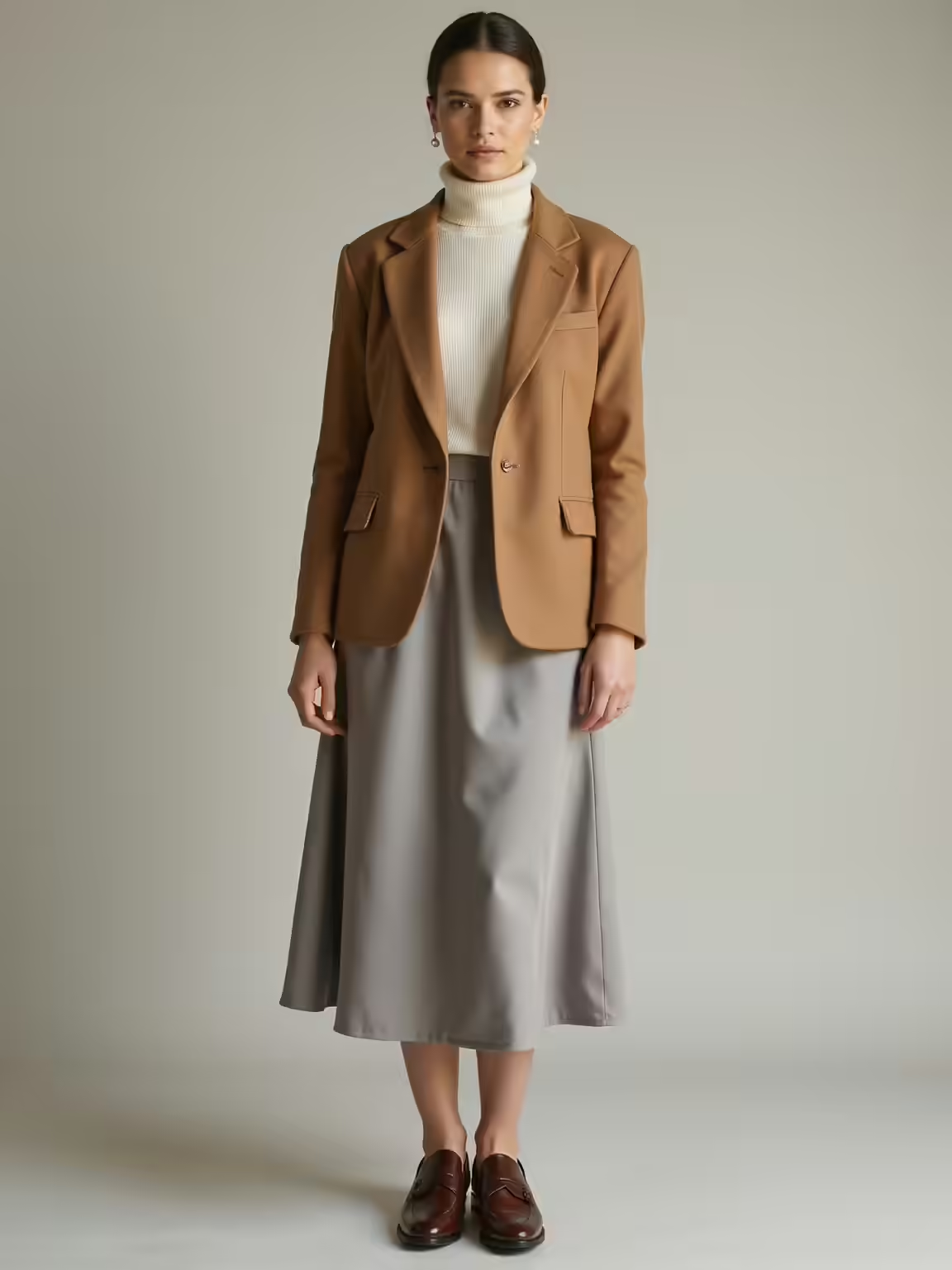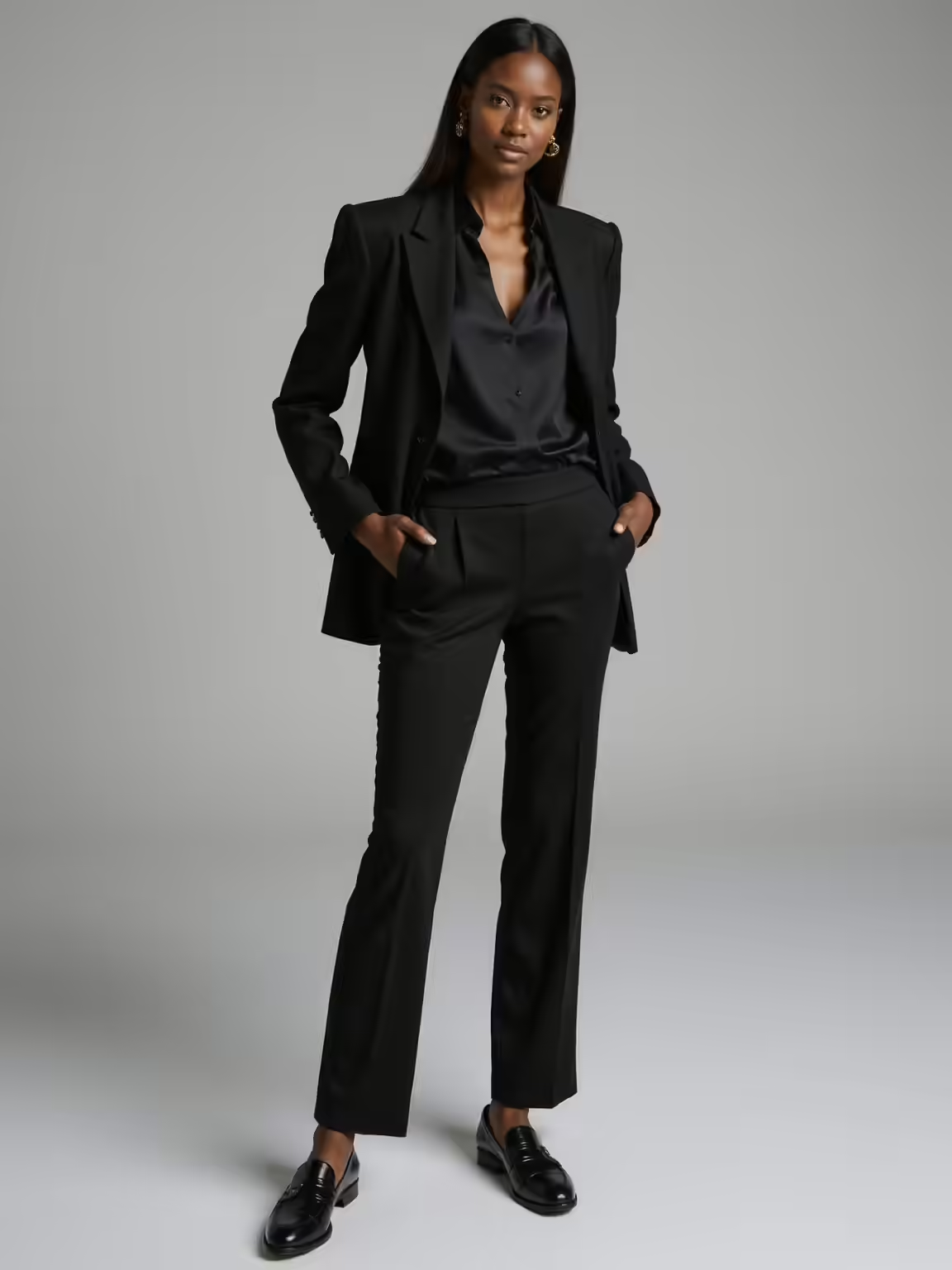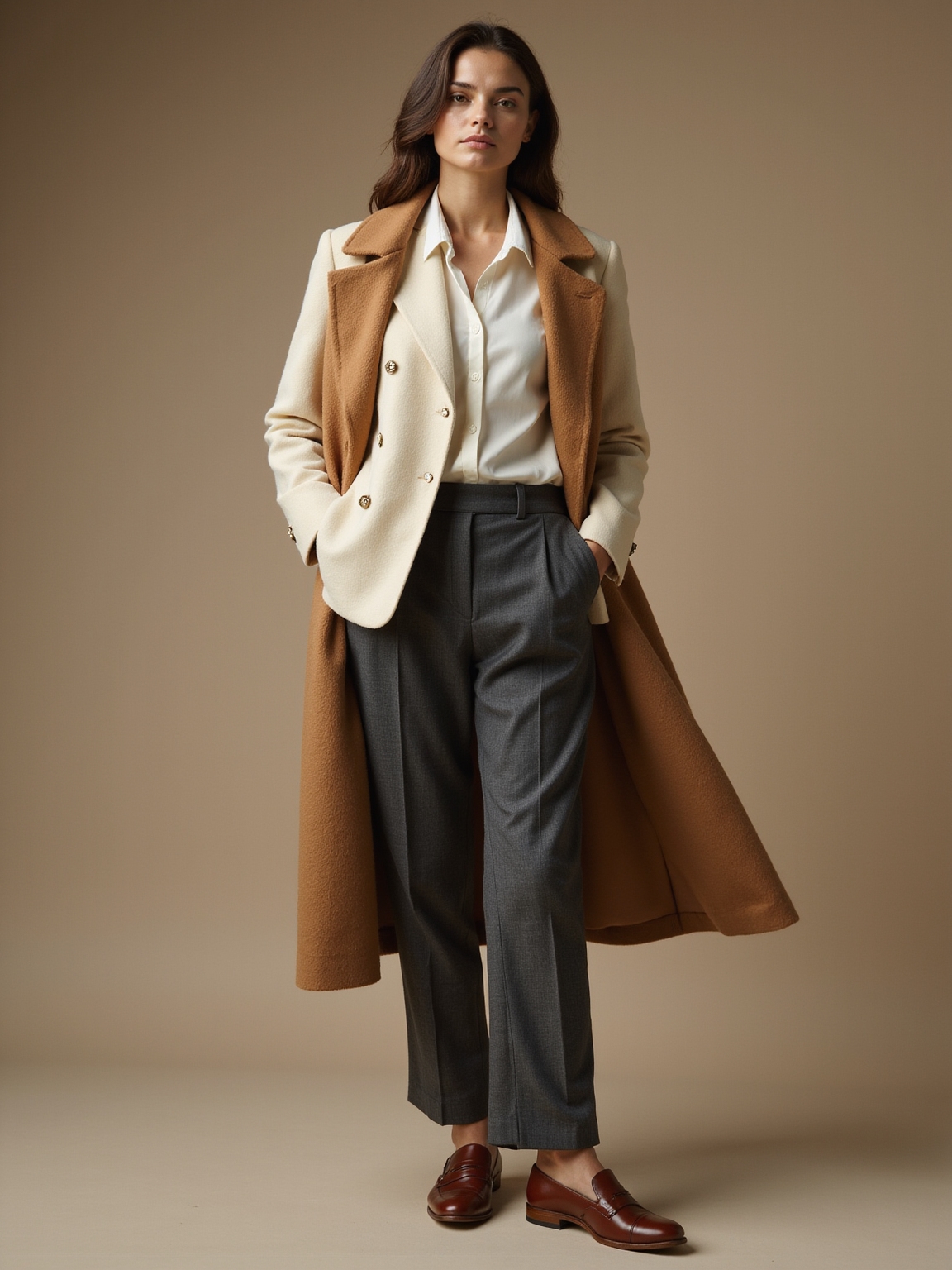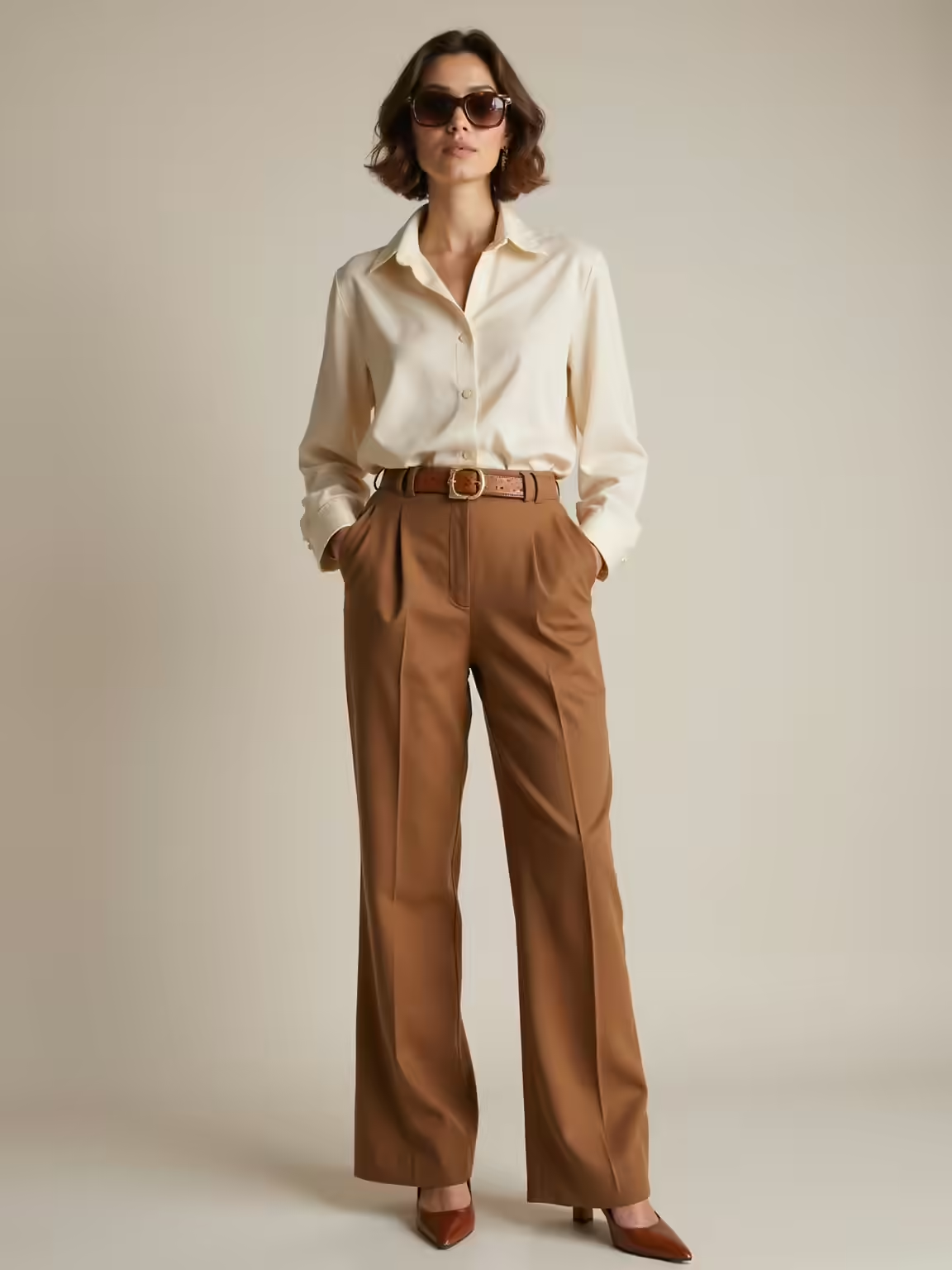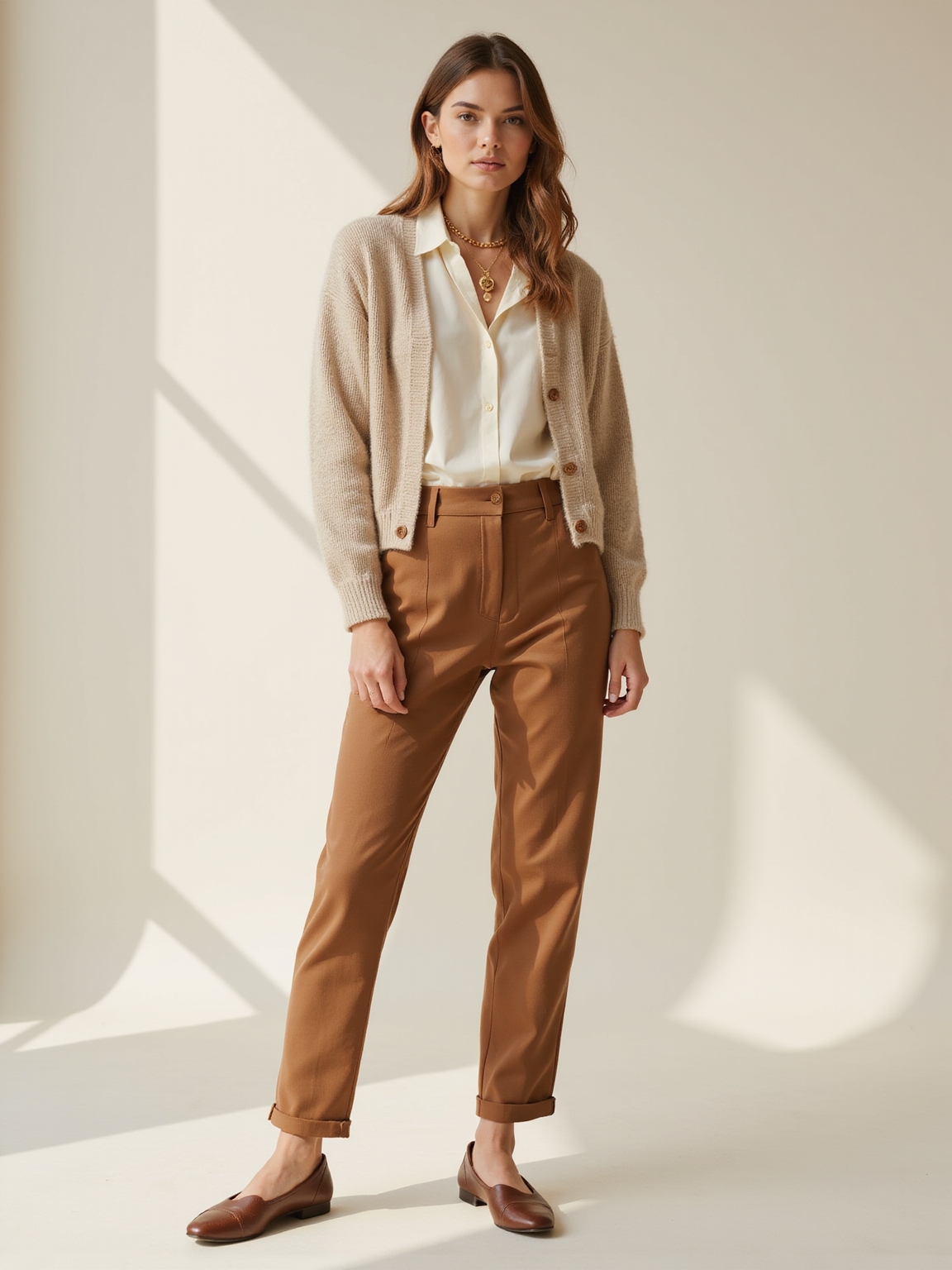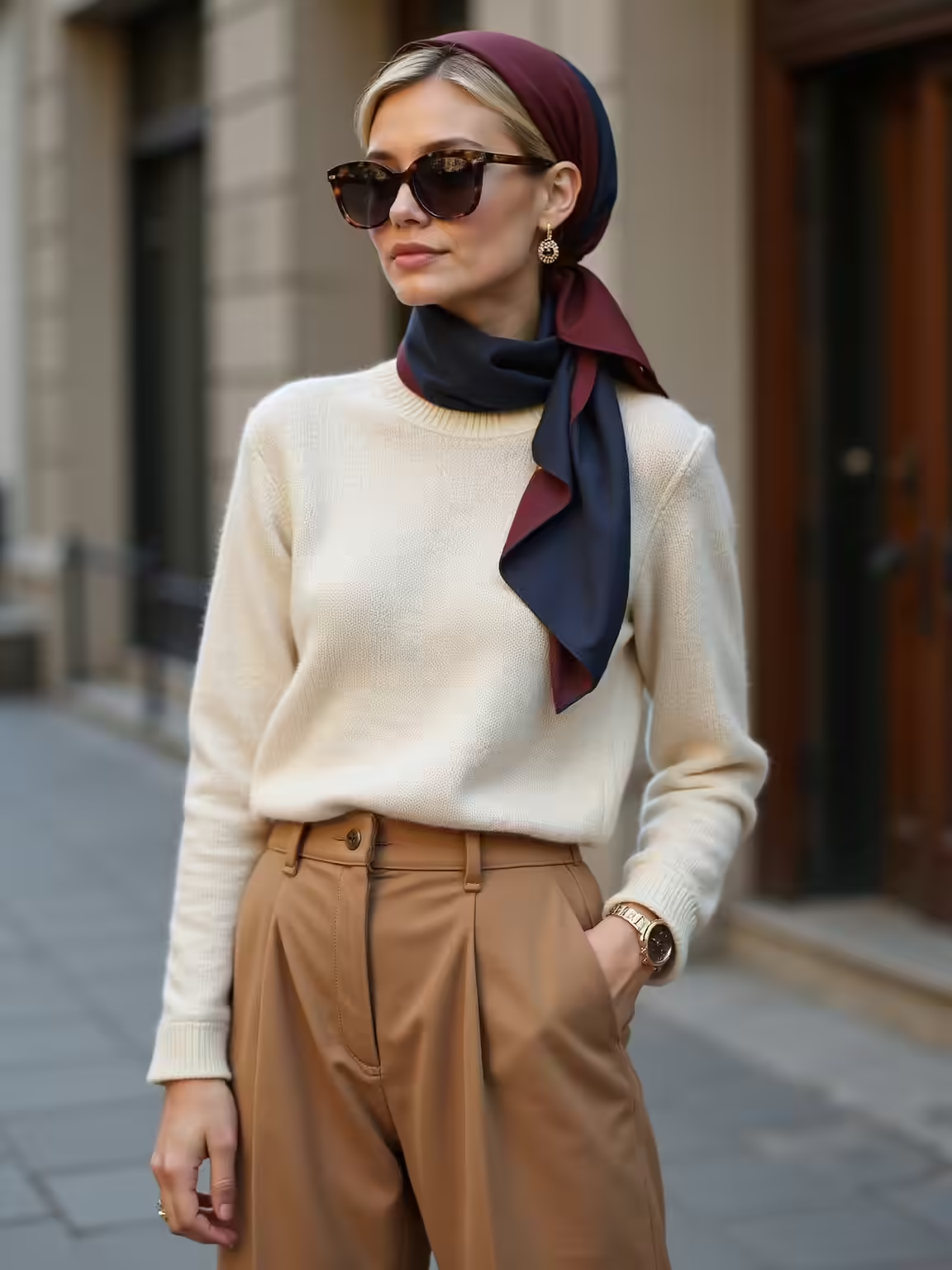

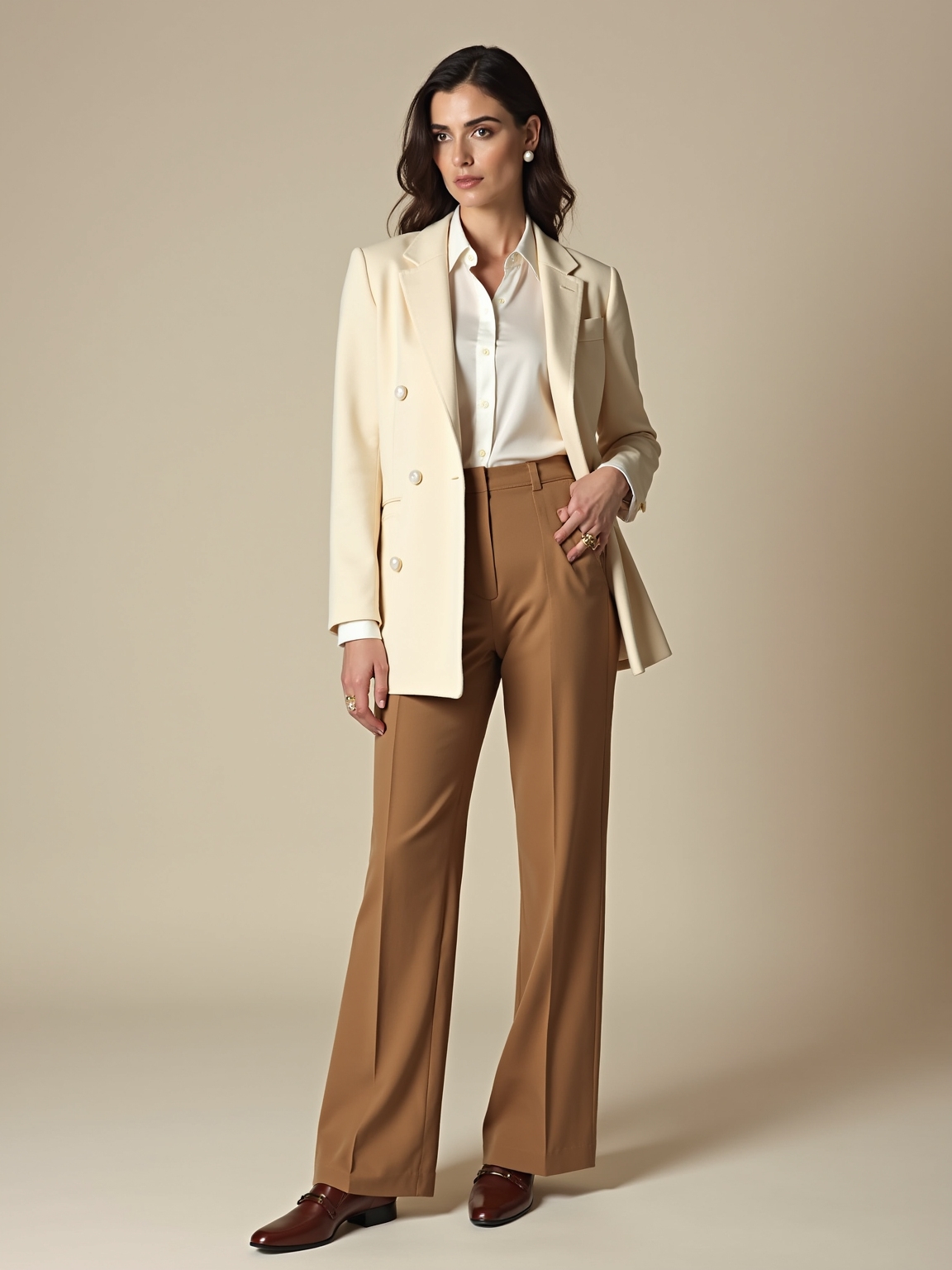
I keep my wardrobe quietly expensive: cashmere sweaters, a tailored navy blazer, a camel coat and neat trousers in muted tones so fit and fabric do the talking. I edit ruthlessly, choose small details like horn buttons and silk scarves, and favor proportion over flash.
I wear loafers or simple boots, limit logos, and rotate a 12‑piece capsule that works for work, weekends and travel. Stick with that approach and you’ll see how the rest follows.
Quick Guide: Achieve the Old‑Money Look in 3 Steps
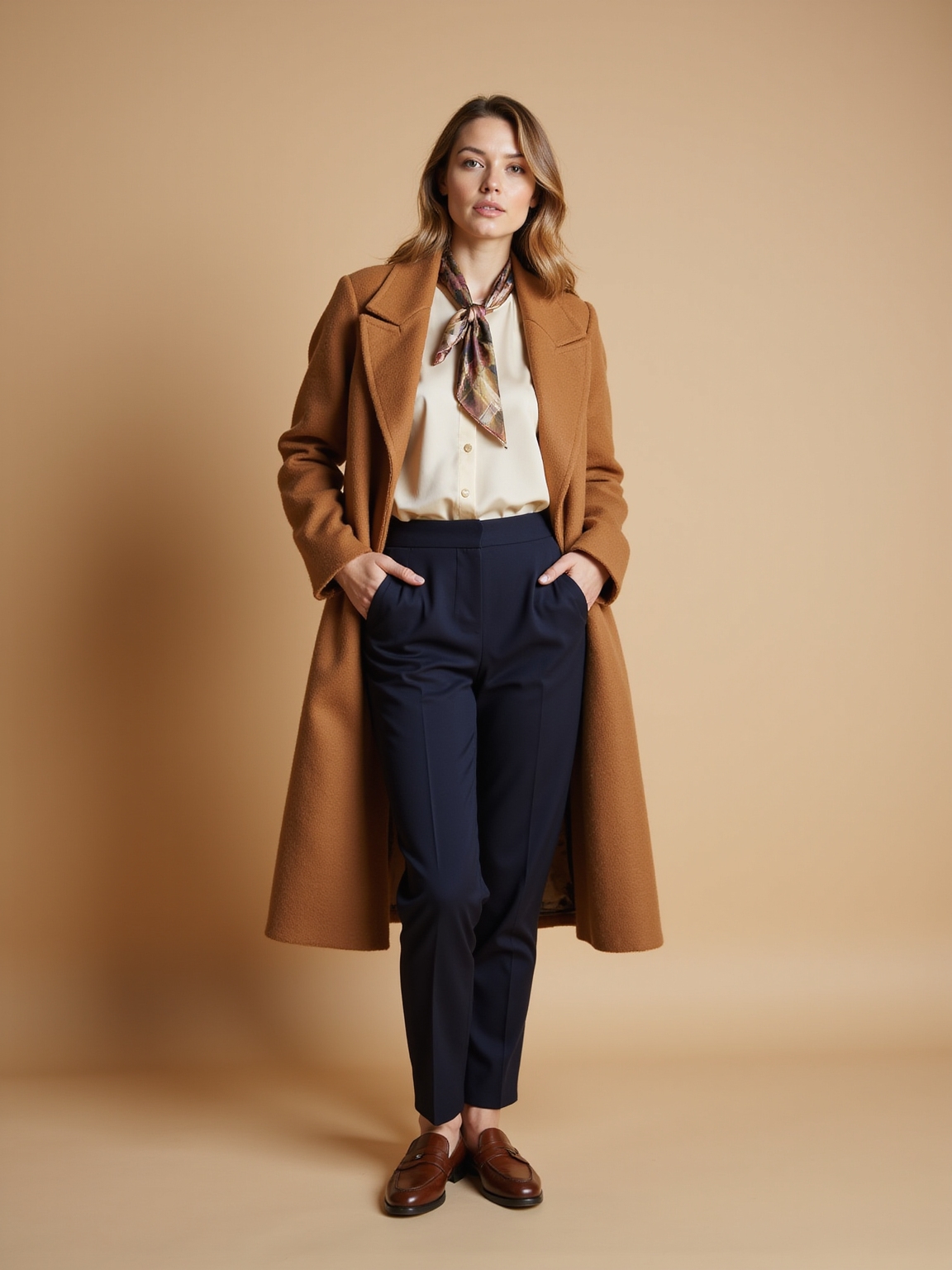
Start by simplifying: I focus on three straightforward shifts that instantly read as quietly wealthy—quality over logos, a subdued palette, and timeless tailoring.
I recommend investing in fabrics that age gracefully, choosing muted seasonal hues, and prioritizing fit.
Rotate pieces seasonally, favoring textured neutrals in fall and crisp linens in summer.
Small, thoughtful edits elevate the whole without shouting.
Consider adding classic accessories like a leather tote or silk scarf to complete the look and emphasize timeless elegance.
Core Principles: Quiet Luxury, Tailoring, and Restraint
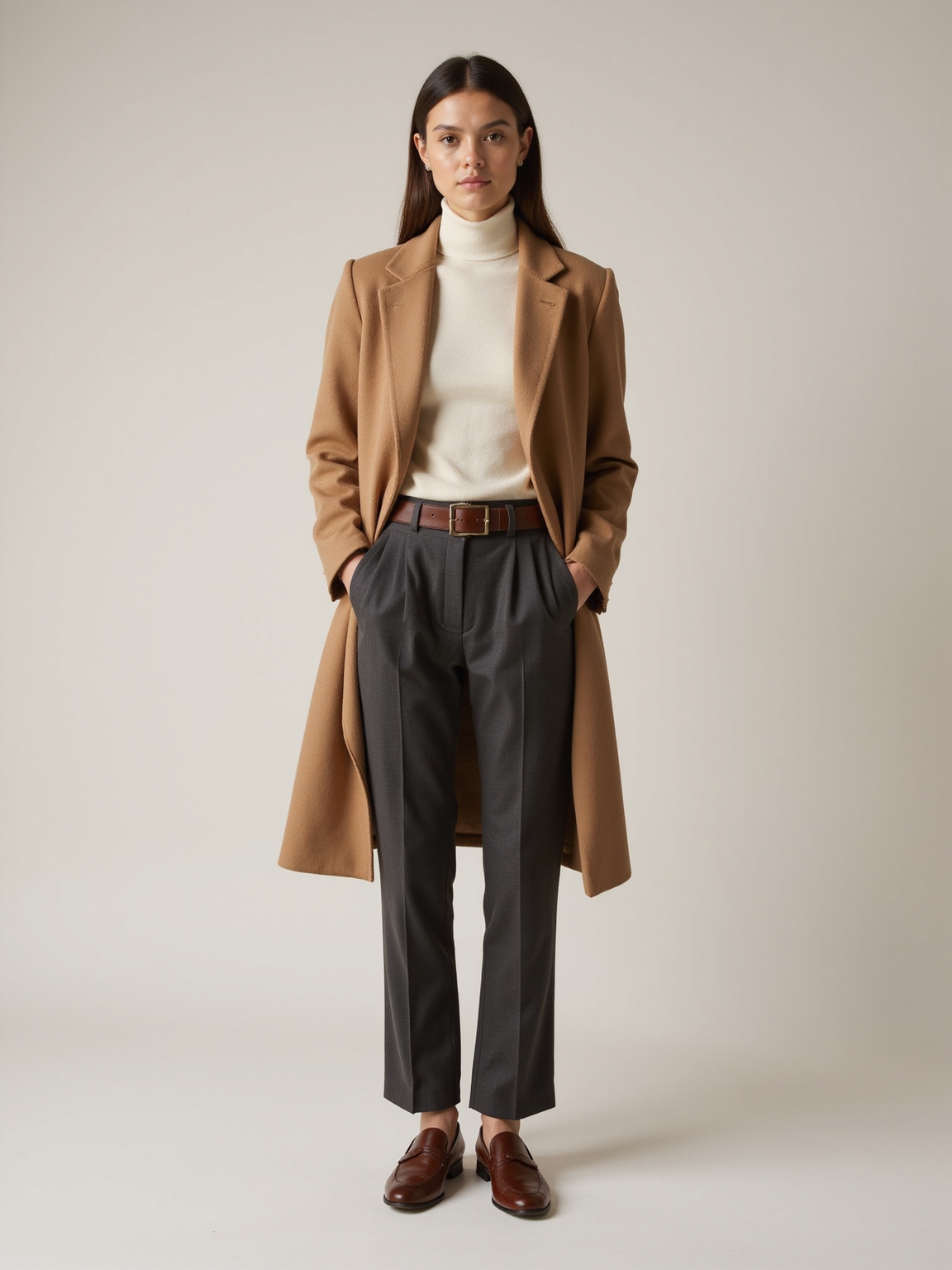
While I could list a dozen trends, I focus on three enduring principles—quiet luxury, precise tailoring, and practiced restraint—that define the old‑money aesthetic across seasons.
I choose muted palettes, clean lines, and impeccable fit so pieces read effortless whether rain or bright sun.
I edit impulsively, favoring fewer, better garments and subtle details that whisper pedigree rather than shout it.
Old money blazers exemplify these values, often characterized by timeless power and polish in cut and fabric.
Fabrics for an Old‑Money Wardrobe: Cashmere, Wool, Silk, Linen, Cotton
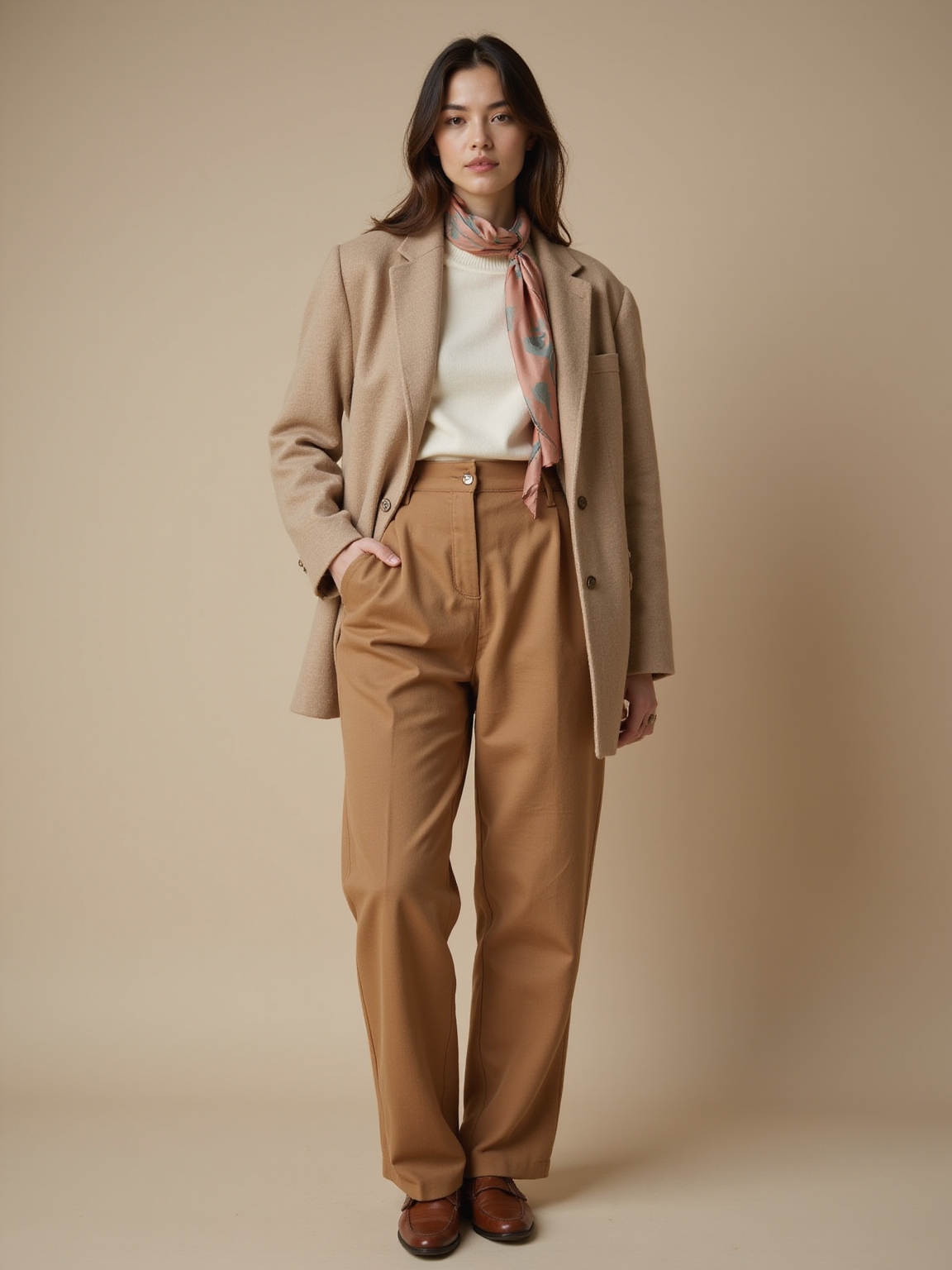
When I choose fabrics for an old‑money wardrobe, I look for materials that do the talking without trying—cashmere for its soft, insulating hush; wool for structure and weatherproofing; silk for cool polish; linen for breathable ease; and cotton for dependable everyday refinement.
I favor muted tones, tactile weight matching the season, and garments that age gracefully, whispering provenance rather than shouting labels.
Many old‑money wardrobes rely on timeless staples and classic silhouettes to convey effortless wealth and restraint.
Old‑Money Capsule Wardrobe Essentials
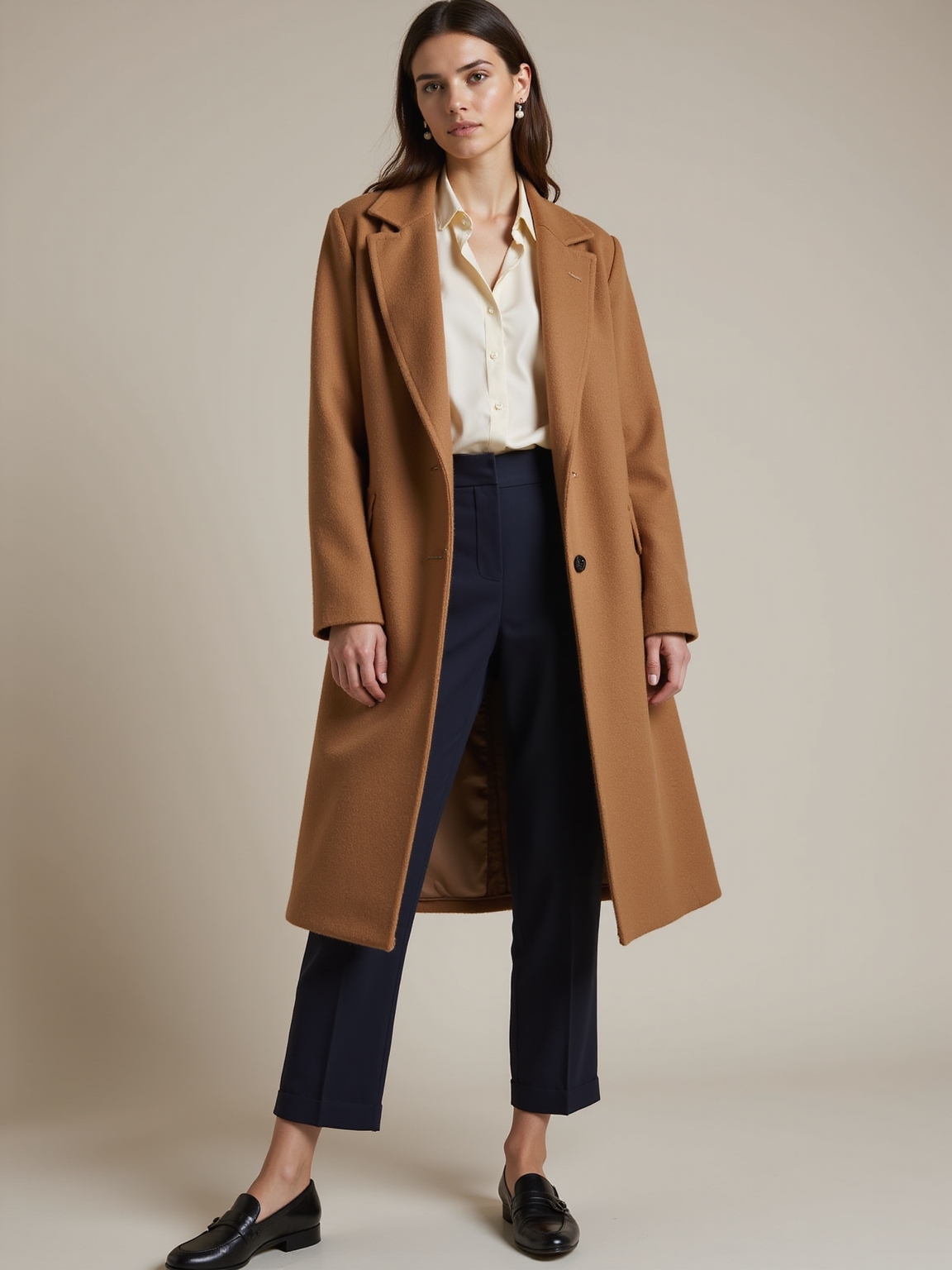
I keep a small, well‑edited capsule of timeless neutral basics—cream sweaters, navy trousers, a striped Breton—that carry me through every season with quiet ease.
On top of that, a few impeccably tailored coats and blazers in cashmere, tweed, or wool do the heavy lifting, instantly sharpening whatever I wear underneath.
Let’s look at how these pieces work together so you can build a compact, polished rotation that never feels out of place.
Many effortless looks rely on old money outfit ideas and simple combinations anyone can pull off with zero effort.
Timeless Neutral Basics
Because I choose pieces that endure, my old‑money capsule starts with neutral basics that read as effortless no matter the season. I favor silk camis, cashmere crewnecks, crisp white shirts, tailored chinos and a beige skirt—pieces that quietly elevate.
Neutrals let texture and fit speak: linen for summer, wool for winter, soft cotton layered for spring and autumn.
Old‑money style also emphasizes timeless craftsmanship in fabrics and tailoring to ensure longevity.
Quality Tailored Outerwear
Choose a well‑cut coat and you’ll lift every neutral in your wardrobe — a structured camel coat, a double‑breasted navy blazer, or a perfectly tailored trench becomes the quiet headline of an outfit.
I favor pieces with clean lines, quality wool or gabardine, and subtle details: horn buttons, a neat shoulder, a decisive hem.
They shelter, seasonally refine, and read effortlessly of taste. For freezing days, consider layering with timeless winter staples like cashmere sweaters and wool scarves to complete an old money look.
Classic Outerwear: Blazers, Trench Coats, and Overcoats
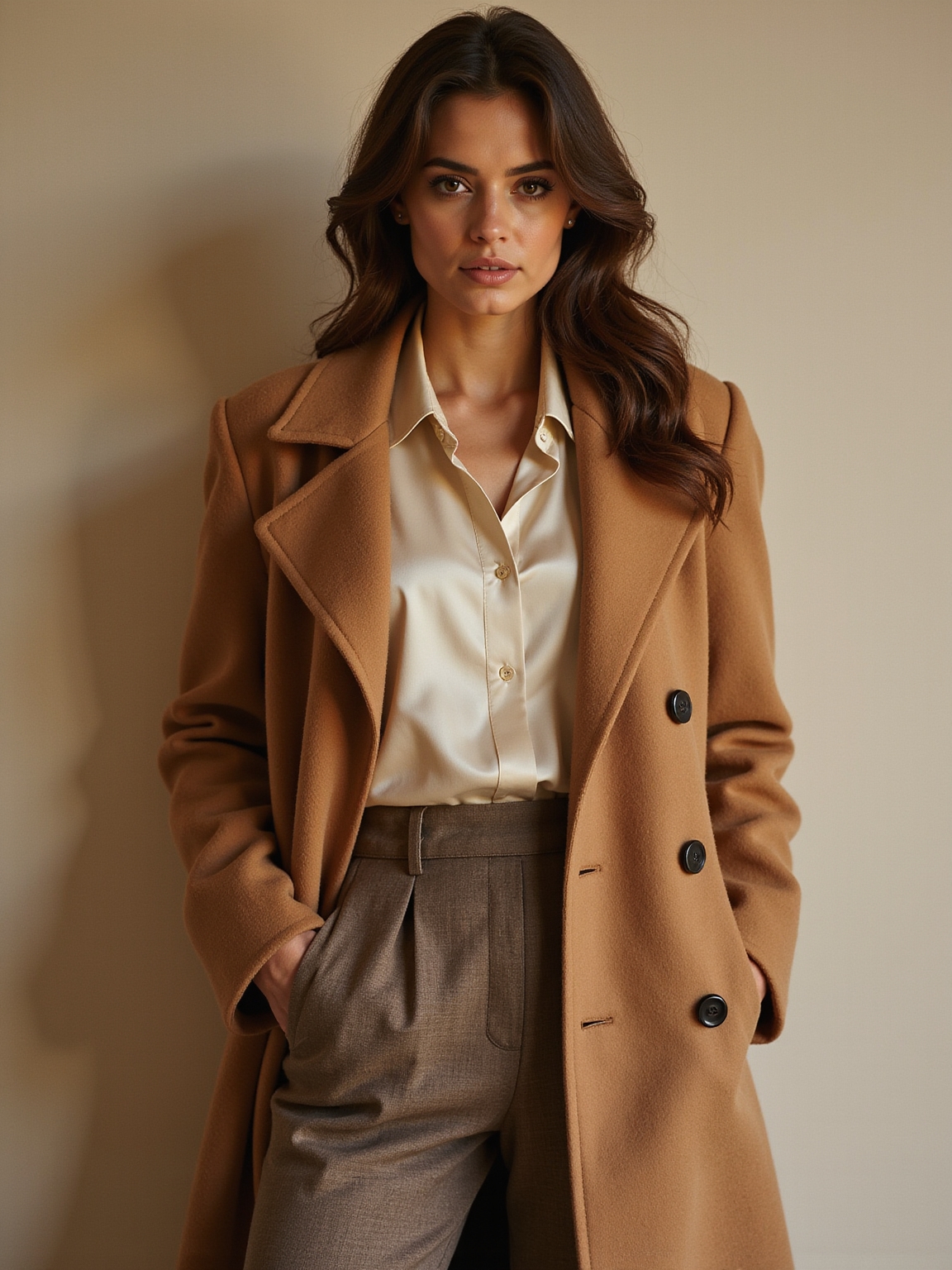
When autumn hushes the city, I reach for a blazer, trench, or overcoat as if they were gestures—each one sets the tone and keeps the season at bay.
I prefer clean lines, muted hues, and fabrics that age gracefully. A navy blazer, a camel trench, or a wool overcoat signals quiet confidence; they shelter without shouting and finish every outfit with effortless assurance.
Timeless pieces like blazers and overcoats create elegant looks that remain relevant year after year.
Tailoring: Fit Rules for Jackets, Trousers, and Skirts
I pay as much attention to how a jacket sits on the shoulder as I do to the fabric, because an inch makes the difference between effortless and off-kilter.
I insist trousers skim the waist and hit the break with intention, letting proportions feel inevitable rather than forced.
For skirts I watch hem and shape closely—seasonal lengths and clean lines are what keep an outfit quietly refined.
Old money office dressing prioritizes timeless silhouettes and quality materials to convey authority without ostentation, especially through classic tailoring.
Jacket Shoulder Precision
Feel the shoulder seam sit exactly where your bone ends and the arm begins — that’s where a jacket announces itself as tailored rather than borrowed.
I watch sleeves fall clean, no puckers, shoulders neither sloped nor squared too loud.
In autumn light, a perfectly set shoulder frames collars and scarves with quiet authority.
It’s the small geometry that makes an outfit unmistakably composed.
Trouser Waist And Break
Because trousers sit where posture meets purpose, I expect the waist to hug without pinching and to stay put whether I’m walking to tea or standing to greet.
I prefer a soft break that whispers elegance. Consider:
- Waist sits at natural crease.
- No gaping, minimal belt reliance.
- Gentle front break over shoe.
- Clean back line, no puddling.
These details read rich, quietly seasonal.
Skirt Hem And Shape
On crisp mornings and mellow afternoons alike, I let a skirt’s hem and silhouette do the speaking: they should skim the body with purpose, never cling or balloon.
I favor mid-calf pencil or gentle A-lines that move with a breeze, hemmed to flatter posture and footwear. Crisp seams, subtle drape and balanced volume signal restraint—timeless, effortless, and quietly authoritative.
Color Palette Secrets: Neutrals, Low‑Contrast Pairings, Accent Tones
When I choose an “old money” palette, I lean into quiet neutrals—cream, camel, navy, olive—and keep contrast low so each piece reads as part of a measured whole.
I favor restrained accents for seasonal warmth and polish:
- Layered creams for autumn light
- Camel and navy foundation
- Olive as soft edge
- One muted accent—burgundy or moss
Trust the hush; it signals refinement.
Shoes & Accessories: Loafers, Ballet Flats, Belts, and Watches
I rely on timeless leather loafers and simple ballet flats to anchor a wardrobe that feels effortless in crisp autumn light.
A slim leather belt and a modest watch finish the look without shouting, each piece chosen for enduring quality rather than trend.
Let’s look at how those understated signature accessories shape an old‑money aesthetic.
Timeless Leather Loafers
Often I reach for leather loafers first because they anchor an outfit with quiet assurance and a hint of old-world ease.
I slip into them for crisp autumn walks or mild spring afternoons, preferring polished lines and soft patina.
- Hand-stitched
- Slim sole
- Neutral hues
- Subtle hardware
They whisper refinement without showiness.
Understated Signature Accessories
Step into a quiet room of details and you’ll see how a few restrained pieces—loafers, ballet flats, a well-cut belt, and a modest watch—pull an outfit into its most composed form.
I choose soft leather and muted tones, swapping heavy boots for spring loafers or summer flats. A slim belt and classic watch finish the look, quietly seasonal and unmistakably deliberate.
Layering Rules: Proportions, Textures, Subtle Patterns
When the weather leans cools I build outfits by thinking vertically—each layer should have a clear purpose, a complementary texture, and a voice that doesn’t shout.
I favor balanced proportions, muted patterns, and richness in fabric. Consider:
- Thin merino base
- Cashmere mid
- Structured wool coat
- Silk scarf
Together they read composed, tactile, quietly affluent.
Balancing Investment and Budget Pieces for a Cohesive Look
I mix pieces with intention: a few true investments—think butter-soft coat, tailored blazer, classic leather shoes—anchor the outfit, while cheaper, well-chosen items add personality and practicality without stealing the stage.
I pair cashmere or wool staples with seasonal high-street finds—silk scarf, tactile knit, polished loafers—keeping color, proportion, and finish consistent so the whole feels quietly curated, not mismatched.
Care and Maintenance: Laundering, Repair, and Storage Tips
I tend to treat my wardrobe like an heirloom, using gentle cleaning methods that preserve fabric and shape rather than chasing temporary freshness.
I’ll air sweaters, spot-treat silk, and hand-wash delicates so pieces last into their next season.
Proper storage—wooden hangers for coats, acid-free tissue for knits—keeps everything ready to wear and quietly elegant.
Gentle Cleaning Methods
I usually treat old-money pieces as I’d delicate heirlooms: with steady hands, patience, and methods that prioritize fabric integrity over quick fixes.
I prefer gentle hand washes, spot treatments with mild soap, and professional care when needed.
Follow simple steps:
- Test a hidden seam.
- Use cool water.
- Blot, don’t rub.
- Air-dry flat, shaded.
Proper Storage Solutions
As seasons shift, I store old-money pieces the way I’d tuck treasured letters into a cedar-lined box: deliberately, sparingly, and with an eye for how climate and composition will change them over time.
I fold cashmere with tissue, hang structured coats on wide wooden hangers, use breathable garment bags, desiccant sachets for damp months, and rotate pieces—gentle attention keeps them poised, ready, and quietly impeccable.
Where to Shop: Brands, Vintage Sources, and Price Priorities
While I love the thrill of a perfect vintage find, I usually start with a short list of brands that consistently translate that old-money ease—think classic tailoring, high-quality knits, and timeless leathers—then fill gaps with carefully chosen secondhand pieces.
I favor neutral palettes and seasonal textures.
Where to shop:
- Heritage brands for staples
- Local vintage boutiques
- Online consignment platforms
- Artisan leathermakers and knitters
Styling Examples by Occasion: Work, Weekend, Travel, Formal
If you want old‑money dressing to feel effortless across situations, I map a small set of interchangeable pieces to each occasion—work leans on structured blazers and silk scarves, weekends call for cashmere cardigans and well‑worn loafers, travel prioritizes wrinkle‑resistant trousers and a roomy leather weekender, and formal moments get a simple, impeccably cut dress or tuxedo jacket.
I pair seasonal fabrics, muted palettes, and minimal, polished accessories.
Common Mistakes That Undo the Old‑Money Look: And Fixes
Although the right tailoring and palette make old‑money dressing feel effortless, I’ve seen a few recurring missteps—like overbranding, fussy trends, and ill‑fitting proportions—that instantly undo the effect.
I fix them simply:
- Ditch logos; choose quality fabric.
- Mend or tailor; fit matters.
- Favor timeless silhouettes over gimmicks.
- Limit accessories; let subtleties speak for the season.
Build a 12‑Piece Old‑Money Capsule Wardrobe, Step‑By‑Step
Because true old‑money style comes from restraint more than rules, I’ve laid out a 12‑piece capsule that lets you dress effortlessly for any season without fuss.
I recommend timeless staples: navy blazer, camel coat, white shirt, cashmere sweater, tailored trousers, dark denim, silk scarf, trench, loafers, ankle boots, wool skirt, leather tote.
Mix neutrals, textures, and wearability—seasonal elegance made simple.
I’ve shown you how to cultivate an old‑money wardrobe that whispers rather than shouts — think quiet investments, thoughtful tailoring, and fabrics that do the heavy lifting. Take these gentle nudges: edit ruthlessly, buy for longevity, and let fit do the talking.
You don’t need to parade wealth; you simply need to suggest it, season by season. Wear restraint like a soft scarf and watch the rest fall into place.